
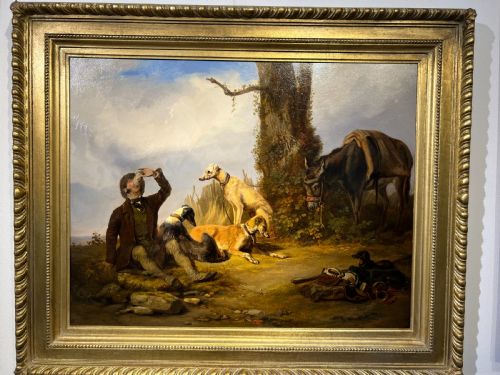


Victorian Hound Painting
A victorian hound painting captures the energy of the field or the quiet dignity of the kennel in oil or watercolour.
Victorian Hound Painting
A victorian hound painting brings nineteenth-century sporting life and canine portraiture directly into a room. These works range from intimate studies of individual dogs to wide landscape scenes of hunts in progress across winter moors.
Buyers meet both oil on canvas and watercolour formats produced across the nineteenth century and into the early twentieth century. Many pieces focus on specific breeds like bloodhounds and greyhounds, while others depict packs in full cry.
The subjects reflect the sporting culture of the period, recording named hunts such as the Berkeley alongside anonymous working dogs. Whether framed in giltwood or mounted simply, these works document a distinct era of animal painting.
What Varies in Quality
Anatomy and movement separate a master animal painter from a routine copyist, particularly in the rendering of muscle and bone under a hound's skin. The best works convey individual canine personality and accurate breed conformation rather than generic dog forms.
The management of light and background detail also determines distinction, with superior canvases integrating the hounds naturally into a landscape rather than isolating them against a flat backdrop. Condition of the original paint surface and framing likewise influence the character of the piece.
Framing materials recorded in the inventory include traditional giltwood and gold leaf alongside simpler wooden formats.
Sir Edwin Henry Landseer·Arthur Wardle·Colin Graeme Roe·Fannie Moody·Heywood Hardy·Thomas Blinks
The Victorian Hound Painting Glossary
- Giltwood
- Wood carved and covered with thin gold leaf or gilt powder. This material defined the formal framing style of the nineteenth century.
- Oil on Canvas
- Pigment mixed with drying oil applied to a woven fabric support. It allowed artists to build rich textures and deep tones over time.
- Watercolour
- Paint made of colourants suspended in a water-soluble binder. It was frequently used for lighter, portable sporting sketches.
- Victorian Sporting Art
- A genre dedicated to depicting field sports, horses and hounds. It flourished across the nineteenth century to satisfy country house tastes.
Victorian Hound Painting: Frequently Asked Questions
What subjects appear in these paintings?
The works depict individual dog portraits, pack scenes on winter moors, and dynamic hunting action with red coats. Common settings include snow-covered landscapes and open countryside.
Specific hunts and named hounds occasionally feature, alongside fictional or allegorical animal encounters.
How should I hang a hound painting?
These works suit traditional studies, dining rooms or hallways where wooden furniture and neutral walls complement the palette. Consider eye-level placement to appreciate the brushwork and detail.
Keep them away from direct sunlight and strong heat sources to protect the canvas and traditional framing.
How do I identify the period?
Look for canvas preparation, framing styles, and the specific clothing and equipment of any human figures in the composition. Signatures and artist attribution often provide direct dating clues.
Stylistic cues from nineteenth-century realism and sporting art traditions also help narrow the decade of creation.
What materials were used for framing?
Period frames are frequently made of wood finished with gold leaf or gilt. These ornate surrounds were standard for significant nineteenth-century canvases.
Simpler wood frames also appear on smaller watercolours and board paintings from the era.