

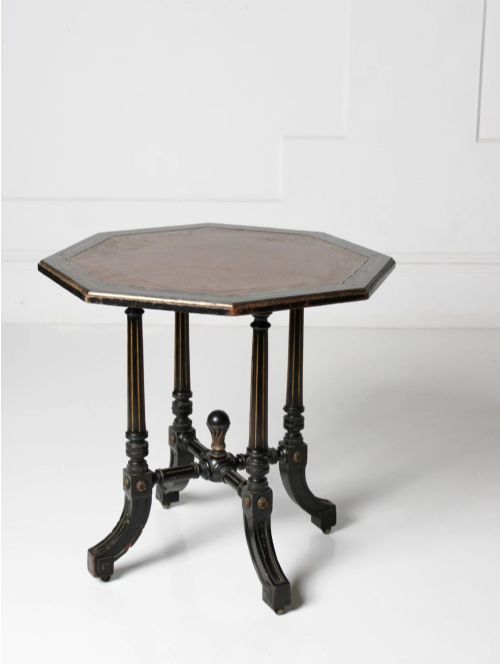
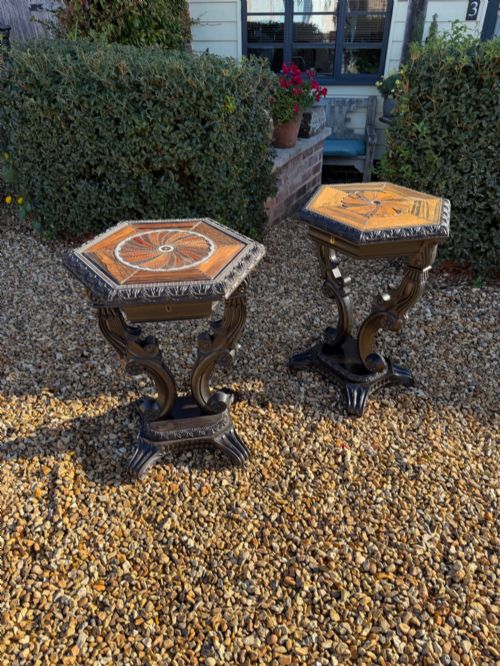
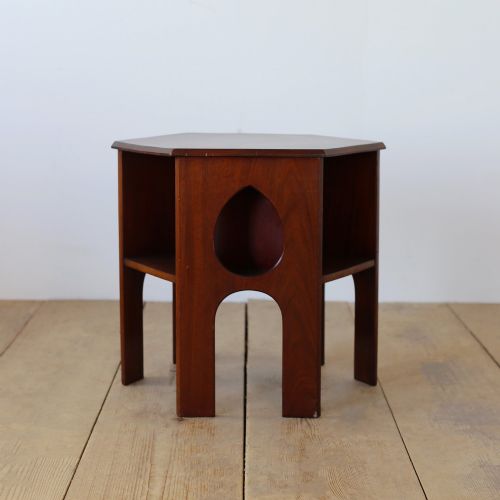

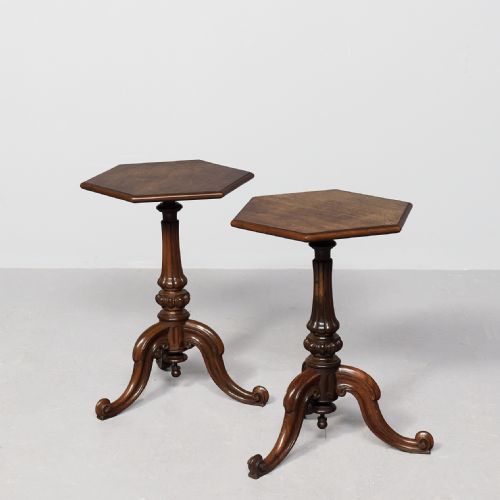
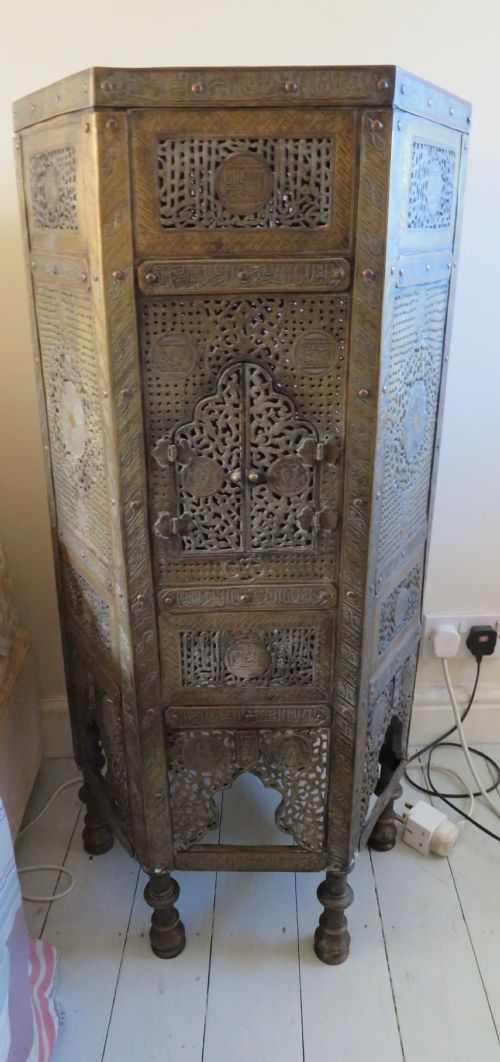


Victorian Hexagonal Occasional Table
These Victorian hexagonal occasional tables offer distinctive geometry and rich timber work, bringing compact surface utility and period character to any corner of a room.
Victorian Hexagonal Occasional Table
A Victorian hexagonal occasional table brings six-sided symmetry to smaller spaces, functioning readily as a lamp stand, a bedside support, or a decorative centrepiece in a reception room. You will frequently encounter rich timbers and intricate inlay work reflecting the eclectic design influences of the nineteenth century.
The materials and styles span from classic mahogany and walnut constructions to revivalist pieces showing Moorish, Gothic, and Anglo-Indian detailing. These varied origins mean you might find a traditional British tripod design alongside an elaborate inlaid Damascus table or a brass-inlaid Cairoware kursi.
While the phrase specifies a strict geometric form, the actual selection on offer often includes related occasional tables such as tear drop tables, tripod wine stands, and broader centre tables. Each brings a specific footprint and height, yet all share that practical versatility demanded by period interiors.
Materials and construction methods
Cabinetmakers relied heavily on dense hardwoods such as mahogany, walnut, and rosewood, often selecting timber with pronounced grain figures for the table tops. These sturdy foundations supported complex decorative surface treatments without warping or losing structural integrity over decades of use.
Surface ornamentation relied on meticulous hand craftsmanship, incorporating mother-of-pearl, white-metal, and copper inlays into timber bases or working directly with brass and copper sheeting. Marquetry techniques introduced contrasting wood veneers to geometric designs, while specialised workshops applied gilding and intricate openwork carving.
Structural joints demanded precision to maintain the tight angles required for a six-sided frame, particularly on folding or collapsible occasional tables. Turning lathes shaped slender pedestals and legs, while pedestal bases frequently balanced three or more feet to ensure stability on uneven floorboards.
Victorian Hexagonal Occasional Table Retail Price Guide 2026
Typical asking prices for victorian hexagonal occasional table among the pieces listed under this phrase on Sellingantiques today, from the lower quarter to the upper quarter. They describe what is for sale here now, not the wider market.
Design styles span Victorian, Gothic Revival, Moorish Revival, Mamluk Revival, and Anglo-Indian traditions.
Assessing quality and execution
Quality reveals itself in the crispness of the joinery and the precision of the inlay work, where superior pieces show no gaps between contrasting materials or wood segments. Lesser examples might display crude gluing or replacement inlay sections that disrupt the original geometric harmony.
The choice of primary timber and secondary framing woods dictates the structural endurance and heft of the table. Solid hardwoods with deep, natural figuring command greater respect than softer woods masked by heavy staining or careless dark finishes.
Artistic ambition sets the finest examples apart from standard factory production, particularly in revivalist pieces where authentic cultural motifs are rendered with depth and accuracy. A table featuring detailed metal inlay or sophisticated marquetry demonstrates a higher tier of workshop output than one relying solely on surface paint.
Liberty & Co
The Victorian Hexagonal Occasional Table Glossary
- Occasional table
- A small, movable table designed for minor tasks rather than a dedicated dining or writing purpose. These pieces could be easily shifted around a Victorian drawing room as guests required.
- Cairoware
- Brass or copper vessels and occasional tables featuring intricate silver, copper, and white-metal inlay work produced in Egypt for the Western export market. They reflect the late nineteenth-century European fascination with Islamic design.
- Marquetry
- The art of applying decorative pieces of veneer to a structural structure to form geometric patterns, pictures, or ornamental designs. Master craftsmen carefully selected different wood tones to create natural shading without the use of paint.
- Gothic Revival
- An architectural and decorative style drawing inspiration from medieval design principles, featuring pointed arches, heavy oak timbers, and quatrefoil motifs. This aesthetic appeared frequently in domestic furniture during the mid-nineteenth century.
- Tripod table
- A small freestanding table supported by a pillar resting on three legs. This configuration ensured the table remained stable even on thick Victorian carpets.
Victorian Hexagonal Occasional Table: Frequently Asked Questions
What is a hexagonal occasional table?
A small, movable stand featuring a six-sided top supported by a central pillar or legs. These tables served practical functions in period homes while offering a distinct geometric alternative to standard round or square surfaces.
They fit easily into corners or beside armchairs, providing a convenient platform for lamps, books, or decorative objects without dominating the room.
Where were these tables placed?
Victorian households positioned these small tables in drawing rooms, parlours, and hallways as flexible surface space. They were moved about easily depending on the daily activities of the household.
Their compact footprint made them ideal for filling awkward angles or serving guests during afternoon tea.
How do I care for inlaid wood?
Keep inlaid wooden surfaces away from direct sunlight and dramatic temperature swings to prevent the wood from shrinking and loosening the delicate metal or shell details. Dust regularly with a dry, soft cloth and avoid chemical polishes that can seep beneath lifted veneers.
Applying a traditional beeswax occasionally will nourish the timber and maintain a soft, protective sheen without harming the inlay.