


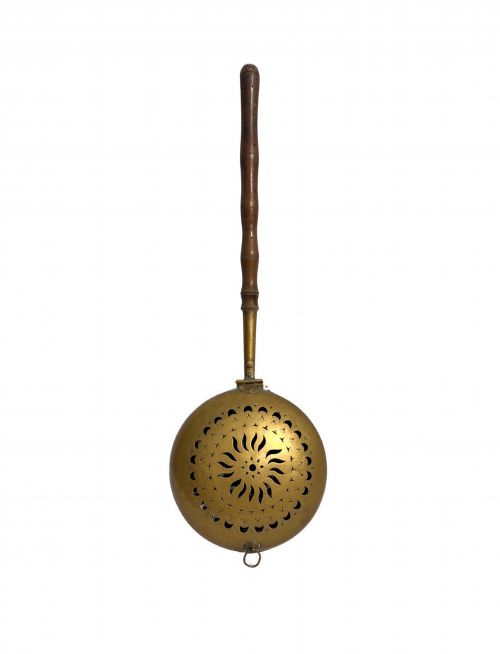


Victorian Hearth Decor
Victorian hearth decor brings together brass, copper, and cast iron to dress a fireplace with period utility and style.
Victorian Hearth Decor
Victorian hearth decor encompasses the functional and decorative metalwork that dressed British fireplaces during the nineteenth and early twentieth centuries. When you search for Victorian hearth decor, you encounter coal scuttles, fire screens, and companion sets designed to manage solid fuel fires while enhancing the room.
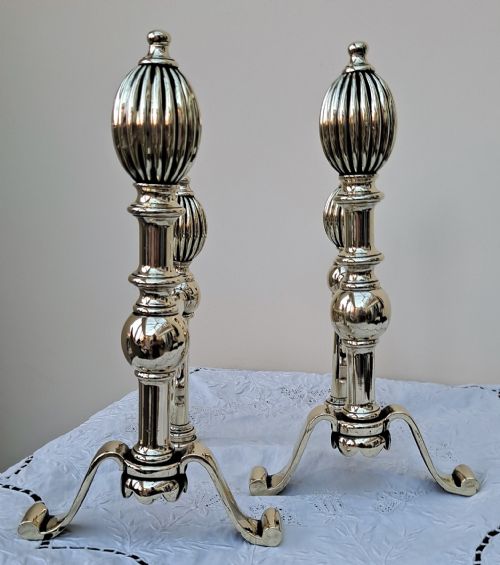
The objects span periods from the mid nineteenth century through the Edwardian era and into the nineteen twenties. Common forms include brass andirons, copper warming pans, and embossed fire screens that reflect English country house aesthetics.
Makers such as Benham and Froud and Henry Loveridge produced durable items in brass and copper. These pieces range from utilitarian coal buckets to decorative fireplace ornaments shaped like boots or crinoline figures.
Materials and construction
Makers utilised cast iron, wrought iron, brass, and copper to fabricate these functional accessories. Brass and copper sheets were often beaten, embossed, or spun, while iron components were cast in moulds to achieve robust forms capable of enduring daily proximity to flames.
Wooden elements, such as ebonised handles or accents, were incorporated into coal scuttles and companion sets for safe handling. Paint and patination were applied to finish metal surfaces, creating the characteristic warm metallic tones found beside the hearth.
Victorian Hearth Decor Retail Price Guide 2026
Typical asking prices for victorian hearth decor among the pieces listed under this phrase on Sellingantiques today, from the lower quarter to the upper quarter. They describe what is for sale here now, not the wider market.
Assessing quality
Quality in these items is determined by the weight of the metal and the crispness of the hand-finishing. Heavy gauge brass and thick copper sheets indicate superior construction that resists denting during daily use around the hearth.
Refined pieces display careful embossing, sturdy riveted joints, and well-turned wooden handles rather than simple stamped decoration. Maker marks from established firms like Benham and Froud further distinguish finer examples from anonymous workshop production.
Benham and Froud·Henry Loveridge
The Victorian Hearth Decor Glossary
- Andirons
- Heavy metal supports used to hold logs in an open fireplace. They often feature decorative brass fronts visible outside the hearth.
- Coal scuttle
- A bucket or helmet-shaped container designed for holding and transporting coal to the fire. Many Victorian examples feature hinged lids and swing handles.
- Fire screen
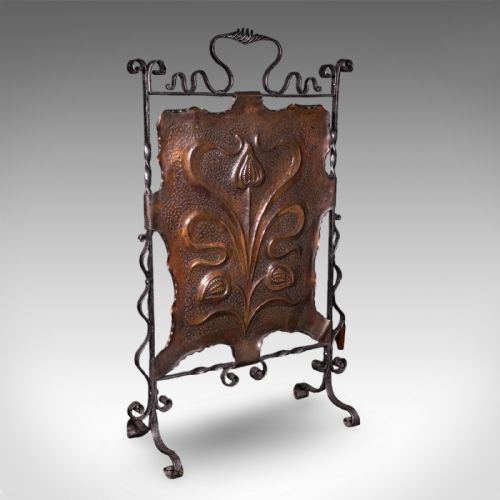
- A decorative panel placed before the fireplace when the fire is unlit. They are frequently made of embossed copper or brass to reflect ambient light.
- Warming pan
- A long-handled pan filled with hot embers and passed between bedsheets. The copper lids often feature chased or embossed ornamentation.
- Companion set
- A matched group of fireside tools including pokers, tongs, and shovels. They are typically displayed together on a stand or hung from a frame.
Victorian Hearth Decor: Frequently Asked Questions
What is Victorian hearth decor?
Victorian hearth decor comprises the metal accessories used around nineteenth-century fireplaces, including coal buckets, fire screens, and warming pans.
These pieces combine practical utility with decorative metalwork in brass, copper, and cast iron to complete the fireplace setting.
How were coal scuttles used?
Coal scuttles served as lidded containers to store and carry coal to the hearth for replenishing domestic fires.
Their swing handles and hinged lids allowed homeowners to transport fuel cleanly and pour it efficiently into the grate.
How do I identify Edwardian pieces?
Edwardian items often share materials and forms with Victorian pieces but date from the early twentieth century. They frequently show lighter construction and styles influenced by Art Nouveau or Arts and Crafts movements.
Makers' marks and registration numbers stamped into the metal can also help pinpoint the exact production era.
Where should I place a fire screen?
Fire screens are traditionally positioned directly in front of the fireplace opening when no fire is burning. This hides the empty grate during warmer months and reflects light from the room.
They also serve as decorative focal points within the interior scheme.