

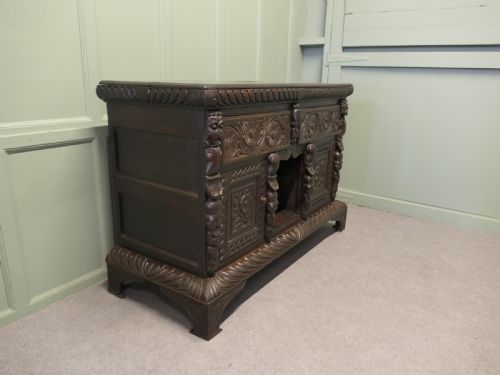


Victorian Green Man Dresser
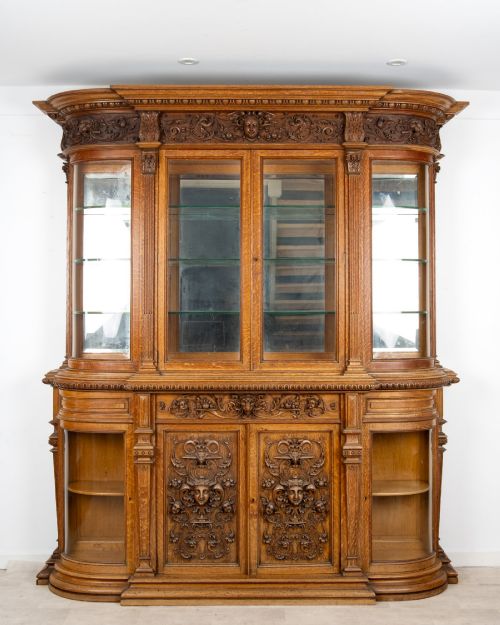
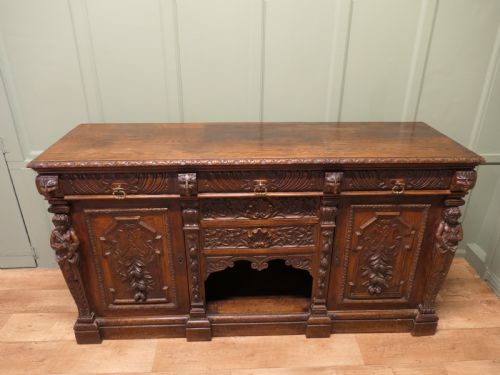
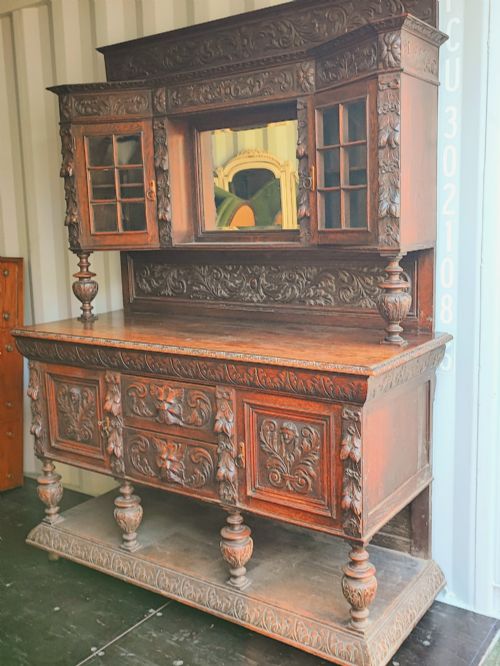
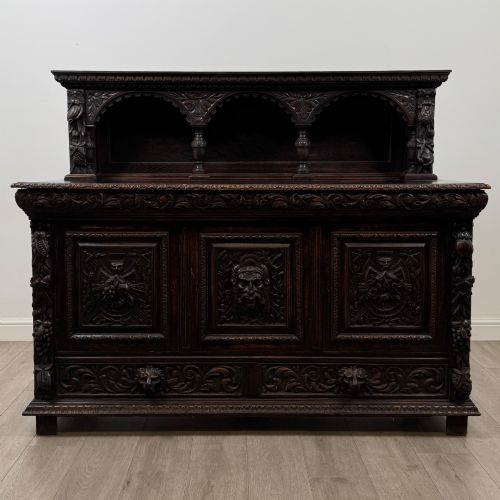
These Victorian green man dressers, sideboards and bookcases combine heavy oak construction with striking mythological relief carving.
Victorian Green Man Dresser
When you search for a victorian green man dresser, you encounter heavy oak furniture created during the Victorian, 19th Century, and Gothic Revival periods. These pieces take various functional forms including sideboards, buffets, bookcases, display cabinets, and chests of drawers.
The most common version you meet on this page is the carved oak sideboard or dresser base featuring prominent green man motifs. These items emerge from Victorian, Victorian Gothic Revival, Victorian Renaissance Revival, and Jacobean Revival traditions.
Makers of the era utilised substantial timber to build imposing storage furniture for domestic interiors. The green man carvings serve as both decorative centrepieces and symbolic representations of nature within nineteenth-century design.
Materials and construction
Craftsmen built these pieces primarily from solid oak, carving the dense timber by hand to achieve deep relief details for the grotesque green man faces and intricate foliage. This heavy wood provided the structural integrity required for monumental sideboards and library bookcases.
Makers incorporated functional hardware and glass elements, combining brass fittings, clear glass, and bevelled glass mirrors within the wooden frames. Lead occasionally appears in structural or decorative applications alongside the primary timber.
Victorian Green Man Dresser Retail Price Guide 2026
Typical asking prices for victorian green man dresser among the pieces listed under this phrase on Sellingantiques today, from the lower quarter to the upper quarter. They describe what is for sale here now, not the wider market.
Listed forms extend beyond standard dressers to include monumental library bookcases and bowfront chests of drawers.
Judging the carving and scale
The scale and proportion of the timber framework also dictate the stature of the piece. Monumental bookcases and heavily carved sideboards with well-balanced proportions command greater presence than simpler, more restrained counterparts.
The Victorian Green Man Dresser Glossary
- Green man
- A sculptural motif showing a human face emerging from or entwined with foliage and vines. It symbolises rebirth and the cycle of growth in architectural and furniture design.
- Gothic Revival
- An architectural and decorative style drawing inspiration from medieval design. It gained popularity during the Victorian era through pointed arches, heavy tracery, and dark woods.
- Bowfront
- A convex, curved front section on a cabinet, chest of drawers, or dresser base. This technique softens the rigid rectangular geometry typical of heavy oak furniture.
- Bevelled glass
- Glass panes featuring an angled, polished edge that catches the light. This treatment adds a refined decorative dimension to mirror plates and cabinet doors.
Victorian Green Man Dresser: Frequently Asked Questions
What is a green man?
A green man is a decorative carving depicting a human face surrounded by or sprouting from leaves, vines, and branches. This ancient symbol represents the spirit of vegetation and rebirth.
Victorian artisans adopted this motif enthusiastically during the Gothic Revival movement, incorporating the foliate heads into the woodwork of large sideboards, bookcases, and dressers.
Where were these pieces used?
These large oak items were principally designed for formal dining rooms, libraries, and entrance halls of substantial nineteenth-century homes. Sideboards and buffets held heavy tableware, while monumental bookcases stored extensive private libraries.
Their imposing scale and dark timber suited the grand interior aesthetics favoured by Victorian households.
How do I care for Victorian oak?
Maintain the timber by dusting regularly with a soft, dry cloth and avoiding modern silicone-based polishes that build up residue over time. Apply a traditional beeswax sparingly to nourish the dry oak grain.
Keep these heavy pieces away from direct heat sources and dramatic humidity fluctuations to prevent the solid wood from splitting.
How do I date a Victorian piece?
Examine the construction methods, secondary timbers, and surface patination to establish the period of manufacture. Nineteenth-century pieces often display hand-cut joinery alongside early machine-sawn elements.
Stylistic markers such as Gothic Revival tracery or Renaissance Revival motifs help narrow down the decade within the Victorian era.