


Victorian Gothic Dining Table
A victorian gothic dining table brings robust timber and architectural detail to the room, built for those who value heavy construction and historical character.
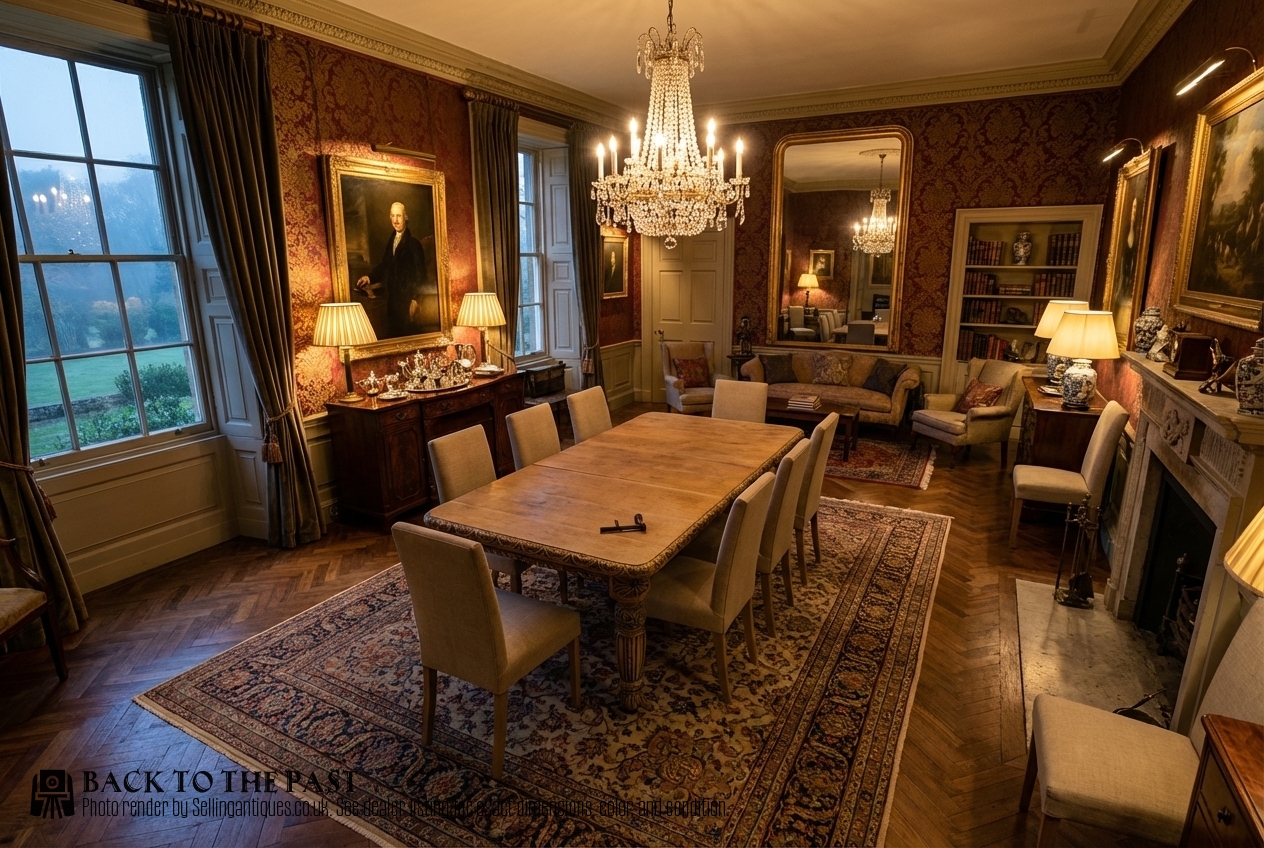
Victorian Gothic Dining Table
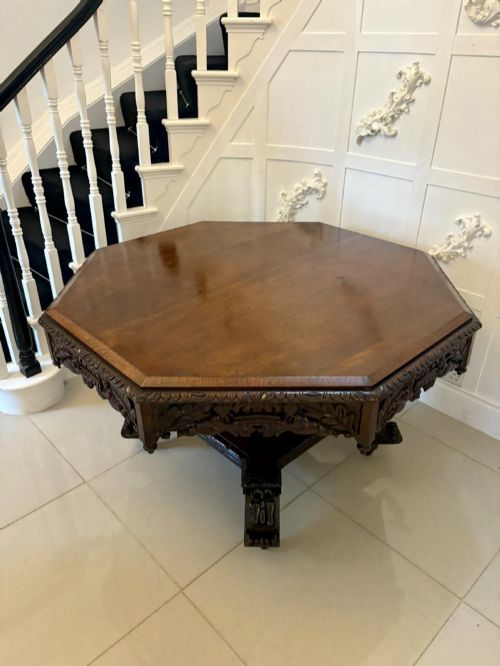
A victorian gothic dining table encompasses sturdy refectory, extending, and centre forms shaped by nineteenth-century revival movements. These heavy pieces draw on medieval and ecclesiastical architecture, featuring pointed arches, tracery, and solid timber construction.
Oak dominates the selection, appearing alongside pitch pine and walnut in substantial proportions designed to seat multiple guests. Pieces range from extending variants with wind-out mechanisms to refectory tables suited to large kitchens and dining halls.
The aesthetic bridges domestic utility and dramatic architectural ornament, with some examples displaying carved Green Man motifs or crisp chamfered legs. Most date from the nineteenth century, including specific decades such as eighteen-eighty, reflecting the era's enthusiasm for Gothic Revival and Reformed Gothic design.
How they were made
Carpenters relied primarily on solid oak, walnut, and pitch pine, selecting timber for density and durability in large furniture. Construction involved robust joinery, such as pegged mortise and tenon frames, to support heavy tops and extending mechanisms.
Decorative elements were carved directly into the structural wood, displaying deep relief work on friezes, legs, and brackets. Iron and brass hardware, including extending screws and structural brackets, provided necessary mechanical strength for large tables.
Keep a watchful eye out for hidden Green Man faces lurking beneath the dining leaves.
What varies in quality
The calibre of carving separates standard production from exceptional examples, with crisp undercutting and balanced proportions indicating skilled workshop execution. Hand-carved details like Green Man masks or architectural tracery show varying degrees of depth and artistic expression.
Timber selection and board width influence the structural integrity and visual weight of the top, particularly in refectory and extending formats. Smooth operation of mechanical extending systems and the original stability of the frame determine everyday usability.
The Victorian Gothic Dining Table Glossary
- Refectory table
- A long, narrow dining table originally used in monastic dining halls. These sturdy surfaces form a core part of nineteenth-century revival seating.
- Gothic Revival
- An architectural and decorative style drawing inspiration from medieval forms. Pointed arches and heavy timber framing characterise pieces from this movement.
- Extending table
- A dining table designed to accommodate extra leaves for larger gatherings. Wind-out mechanisms often assist the movement of the heavy top.
- Green Man
- A sculptural motif representing a face carved from or entwined with leaves and foliage. This symbol appears frequently in nineteenth-century carved woodwork.
- Reformed Gothic
- A late nineteenth-century design approach that simplified medieval ornament in favour of structural clarity. Pieces in this style emphasise clean lines alongside traditional timber construction.
Victorian Gothic Dining Table: Frequently Asked Questions
What is a victorian gothic dining table?
A victorian gothic dining table is a nineteenth-century wooden dining surface decorated with medieval architectural motifs such as pointed arches and tracery. These pieces draw on Gothic Revival styles to create a heavy, dramatic focal point for a room.
Most examples are constructed from solid oak with sturdy legs and substantial tops. They range from simple refectory formats to complex extending tables designed to seat large numbers of people.
How do I care for a historic oak table?
Historic oak tables require stable indoor humidity to prevent the solid timber from splitting or warping. Regular dusting with a dry cloth keeps the surface clean without damaging the finish.
Avoid placing wooden tables near direct heat sources or in strong sunlight. Natural wax can be applied periodically to nourish the grain and protect the carved details.
Did these tables always have extending mechanisms?
Extending mechanisms appeared on many nineteenth-century dining tables to allow households to adjust the surface length for guests. Screw-operated wind-out systems became common during the Victorian era for heavy timber tables.
Fixed refectory and centre tables were built without extending parts, relying on their permanent length. Both variants served large dining rooms and country houses.