
Victorian Gold Chain Bracelet
A victorian gold chain bracelet brings tactile weight and rich rose or yellow hues to the wrist, offering a lasting piece of history that remains endlessly wearable today.
Victorian Gold Chain Bracelet
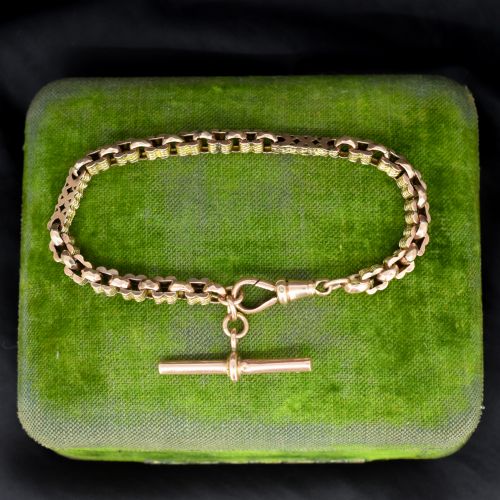
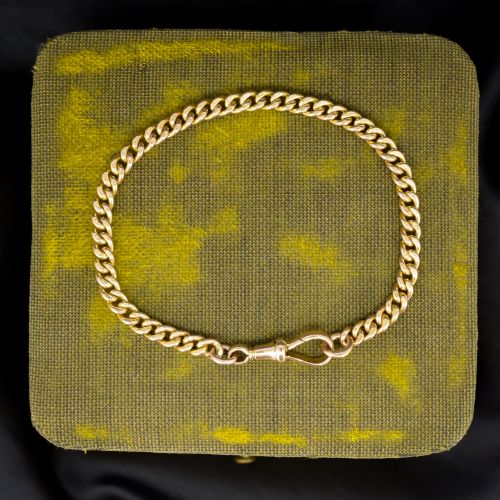
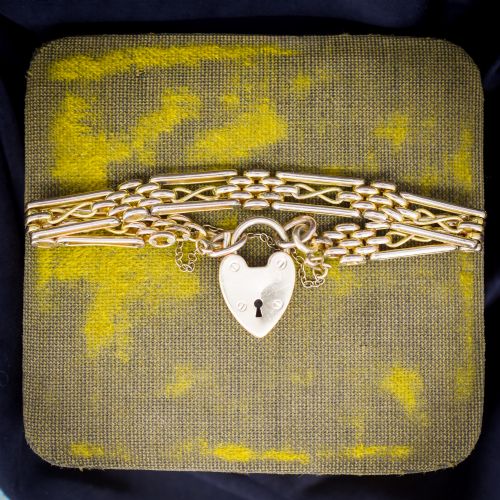
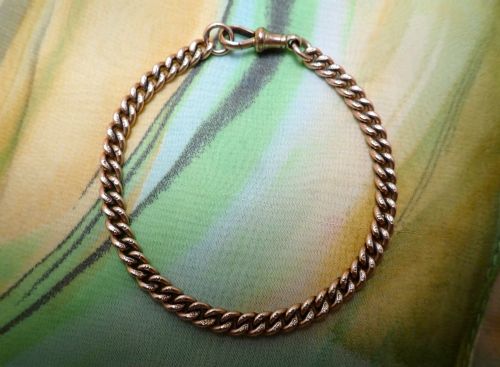
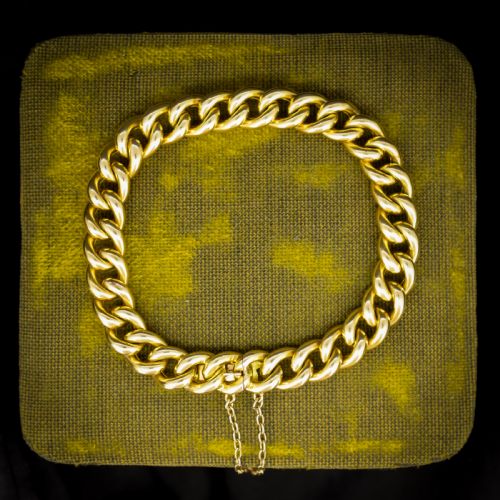
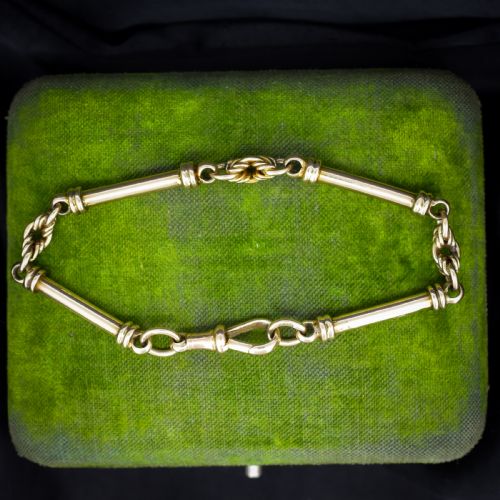
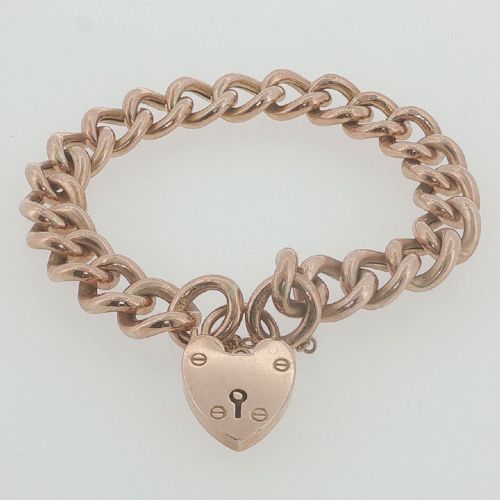
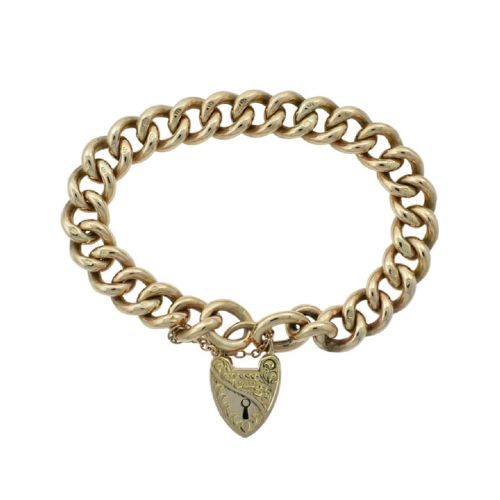
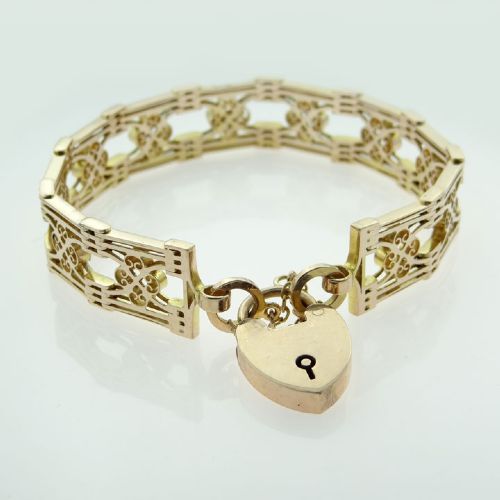
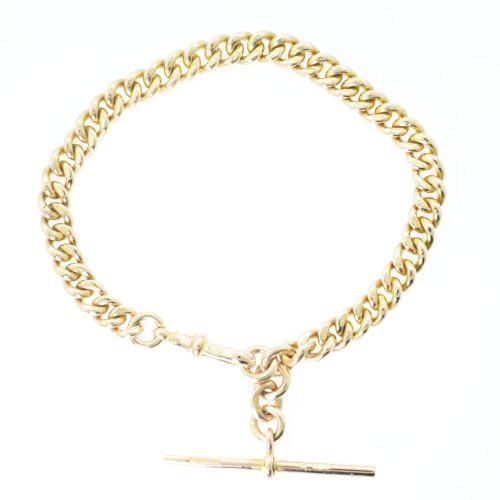
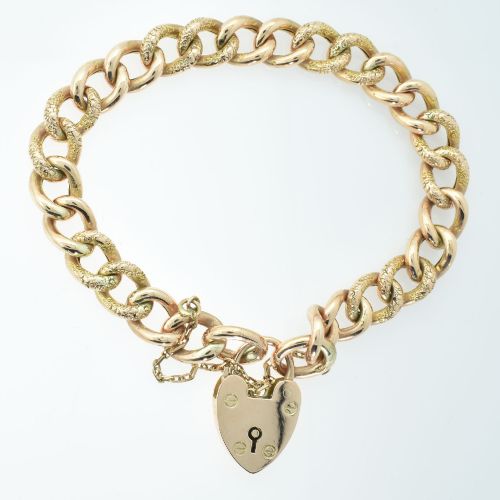
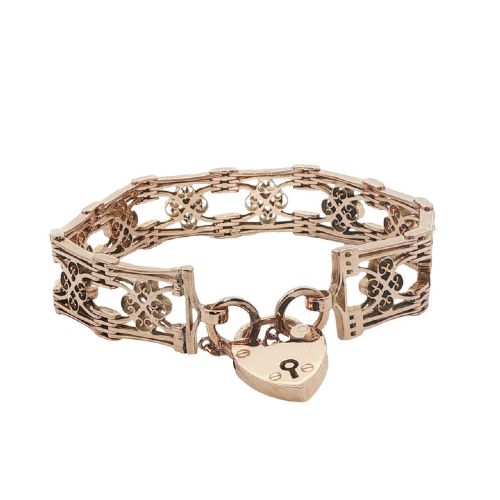
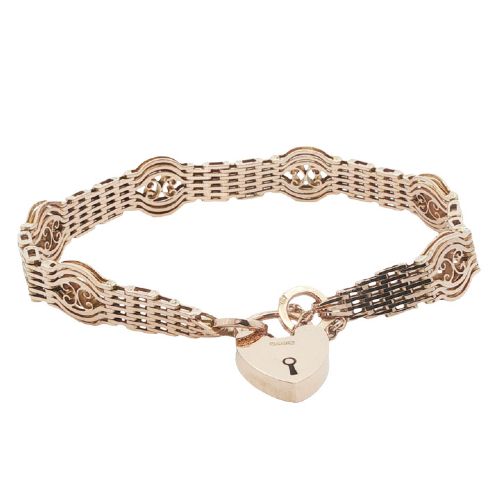
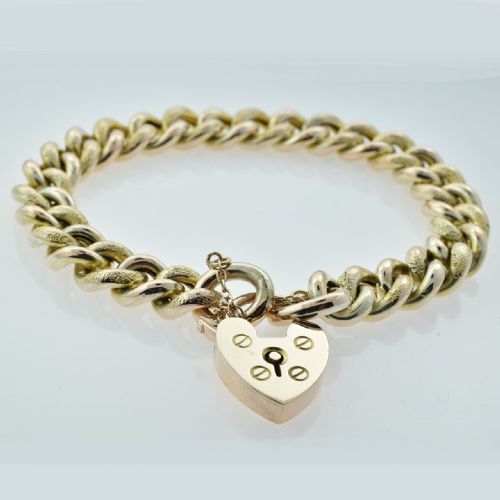
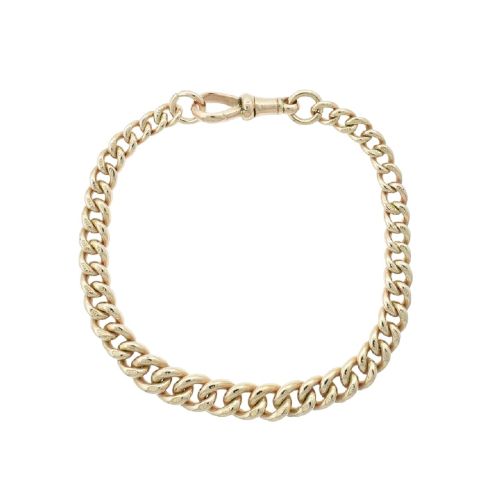
A victorian gold chain bracelet typically takes the form of a substantial curb link, a flexible gate link, or a repurposed pocket watch chain such as an Albert or Albertina. These pieces frequently feature secure fastenings like heart padlocks, dog clips, or T-bars that double as decorative centrepieces.
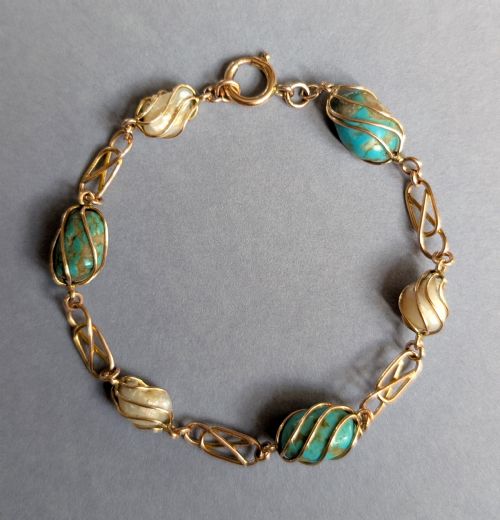
The materials span from nine-carat and fifteen-carat to eighteen-carat gold, often rendered in a warm rose hue characteristic of the period. Many examples incorporate gemstones including turquoise, pearls, amethyst, and opal, while others rely entirely on chased or engraved metalwork for their visual impact.
While most listings showcase authentic Victorian craftsmanship, the selection extends slightly into the Edwardian era and the early twentieth century. Buyers will encounter both hollow-formed everyday wear and heavy, solid gold links designed to sit securely on the wrist.
How they were made
Goldsmiths utilised varying purities of gold, predominantly nine-carat and fifteen-carat, shaped into interlocking curb, fancy, or tubular bar links. These metal structures were often hand-finished with half-engraving or chasing to catch the light along the wrist.
Gemstones such as seed pearls and turquoise cabochons were meticulously set by hand into gold mounts, sometimes arranged in floral or crescent motifs alongside heart padlocks. Metal forming techniques also included hollow stamping for lightweight volume and solid casting for substantial, heavy-weight chains.
The documented object types span standard bracelets, flexible bangles, and complete matching jewellery sets.
What varies in quality
The distinction between standard examples and the finest pieces often rests upon the heft of the gold and the crispness of the hand-engraving. Solid links and substantial gram weights command greater presence, whereas lighter, hollow constructions feel altogether different on the skin.
Quality is further measured by the originality of the components, such as matching safety chains, fully marked clasps, and securely flush-set stones. Pieces that retain their original dog clips, T-bars, or heart padlocks present a more complete historical character.
The Victorian Gold Chain Bracelet Glossary
- Curb link
- A type of chain composed of flat, interlocking links that lie relatively flat against the wrist. This sturdy form is frequently found paired with heavy padlocks.
- Dog clip
- A spring-loaded swivel fastening commonly utilised on pocket watch chains that has been repurposed to secure bracelets. It allows the clasp to rotate freely without twisting the links.
- Heart padlock
- A clasp shaped like a padlock in the form of a heart, often engraved on the front and functioning as both lock and ornament. These closures are quintessential hallmarks of the period.
- Albert chain
- Originally designed to secure a pocket watch through a waistcoat buttonhole, these substantial chains are frequently worn wrapped around the wrist as bracelets. They often include a T-bar at one end.
- Chasing
- A metalworking technique where patterns are hammered into the front surface of the gold rather than cut away. This method pushes the metal to create low-relief decorative motifs.
Victorian Gold Chain Bracelet: Frequently Asked Questions
How do I wear an antique chain bracelet safely?
Ensure the spring mechanisms on dog clips and heart padlocks snap shut firmly before wearing your piece out for the day. Many collectors also pair heavier bracelets with a discreet safety chain for extra security.
Store the bracelet flat in a dedicated jewellery box to prevent the links from kinking or tangling under heavier pieces.
Were these originally pocket watch chains?
Many robust chains found today, particularly Albert and Albertina styles featuring T-bars, were indeed originally manufactured to secure pocket watches to waistcoats or garments. Their substantial weight and secure clips made them natural candidates for conversion into wristwear.
Over time, these functional chains transitioned into dedicated bracelets prized for their durability and distinctive hardware.
What is the difference between nine-carat and fifteen-carat gold?
Fifteen-carat gold contains a higher proportion of pure gold than nine-carat alloy, resulting in a richer, deeper colour and greater intrinsic value. British makers stamped pieces with specific hallmark standards that indicate this exact metallic breakdown.
Both purities were widely utilised during the period, though fifteen-carat pieces often accompany finer gemstone settings and more intricate link configurations.
How can I tell if the padlock is original to the bracelet?
Examine the colour and tone of the gold across both the chain links and the padlock to ensure they share a consistent hue and wear pattern. Matching hallmarks or matching patination often indicate that the components have remained together since manufacture.
Even when added later during the period, a period-appropriate heart padlock remains a desirable and historically harmonious pairing.