



Victorian Glass Salt Dish
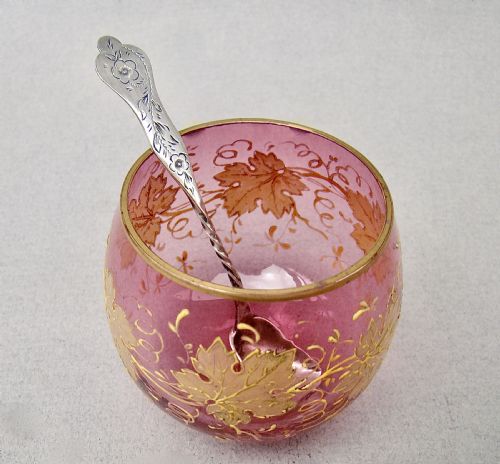
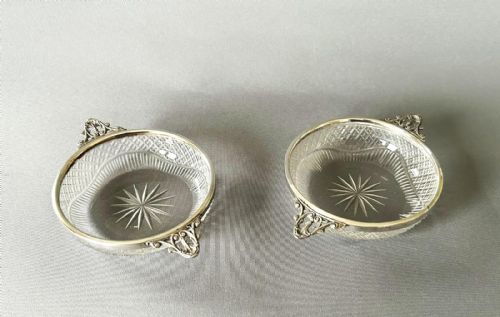
These small vessels are a Victorian glass salt dish, miniature table pieces that brought colour and texture to formal dining.
Victorian Glass Salt Dish
A victorian glass salt dish is a small open vessel designed to hold dry table salt for individual diners before the invention of the free-flowing shaker. These pieces range from simple pressed forms to heavy cut crystal and rich cranberry or cobalt glass.
You are most likely to encounter pairs or small sets of open salts, often paired with silver mountings or fitted with contrasting coloured glass liners. They appear alongside related tableware such as condiment sets, trinket dishes and small bowls from the nineteenth century.
How they were made
The body of a victorian glass salt dish was typically shaped through press-moulding or free-blowing, followed by hand-cutting and polishing to achieve deep facets and sharp geometric patterns. Coloured examples relied on precise mineral additions to the molten batch, producing deep cranberry hues, rich green opaline or intense cobalt tones.
Metal components such as sterling silver frames, rims and salt spoons were wrought and soldered separately, then combined with the glass bodies. Some decorative pieces also integrated gold leaf highlights or carved wooden elements like Black Forest bear figures to hold the glass.
Victorian Glass Salt Dish Retail Price Guide 2026
Typical asking prices for victorian glass salt dish among the pieces listed under this phrase on Sellingantiques today, from the lower quarter to the upper quarter. They describe what is for sale here now, not the wider market.
What varies in quality
Quality in a victorian glass salt dish lies in the crispness of the glass cutting, the weight of the metal mountings and the depth of colour within the material itself. Heavy lead crystal with sharp, defined facets sits at the upper end of the scale, showing superior clarity and ring when struck.
The presence of original matching glass liners, intact silver hallmarks and delicate extras such as gilt edges or paired silver spoons elevates the piece. Simpler pressed glass examples show softer edges and lighter substance, reflecting mass production rather than bespoke craftsmanship.
The Victorian Glass Salt Dish Glossary
- Cranberry Glass
- A rich red glass coloured with gold chloride, widely used during the nineteenth century for decorative tableware.
- Cobalt Glass
- A deep blue glass produced by adding cobalt oxide to the molten batch, frequently used for liners in open salts.
- Open Salt
- A small table vessel designed to hold loose salt, accessed directly with a salt spoon or fingers rather than poured.
- Opaline Glass
- An opaque or semi-translucent glass, often found in pastel shades with fire-polished surfaces during the nineteenth century.
- Salt Cellar
- A container used to hold salt on the dining table, encompassing both open dishes and lidded vessels.
Victorian Glass Salt Dish: Frequently Asked Questions
What is a victorian glass salt dish?
A victorian glass salt dish is a small open vessel used on nineteenth-century dining tables to hold individual portions of salt. They were placed beside each setting before salt shakers became common.
These pieces were made in various forms, from simple pressed glass to heavy cut crystal paired with sterling silver frames or coloured glass liners.
How were salt dishes used?
Diners used these open dishes to take pinches of salt using small spoons or clean fingers. They formed part of formal table settings alongside other condiment holders.
Because salt is corrosive, many designs utilised removable glass liners to protect metal mountings from tarnishing and damage.
How do I date a salt dish?
Dating relies on the style of the glass cutting, the presence of silver hallmarks, and the manufacturing techniques used in the body. Nineteenth-century pieces often feature hand-finished facets or distinct nineteenth-century colour palettes.
Silver mounts frequently carry date letters and maker marks that provide a precise year of manufacture.
Are coloured glass salts older?
Coloured glass such as cranberry and cobalt was popular throughout the nineteenth century, particularly during the Victorian era. The presence of rich colour does not automatically mean an earlier date, as production spanned several decades.
Shades of cranberry and blue appear across various nineteenth-century decorative glassware forms.
Can I use them today?
These pieces function well on modern tables as individual salt cellars, ring holders, or small catchalls for trinkets. Their compact size suits diverse domestic uses.
Hand washing is essential to preserve delicate silver mountings, gilt edges, and antique glass surfaces.