
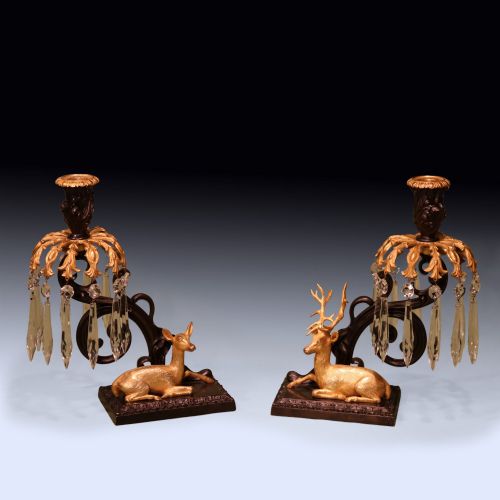


Victorian Glass Mantle Lustres
These Victorian glass mantle lustres are striking decorative candle lamps designed to catch the light on a shelf or fireplace.
Victorian Glass Mantle Lustres
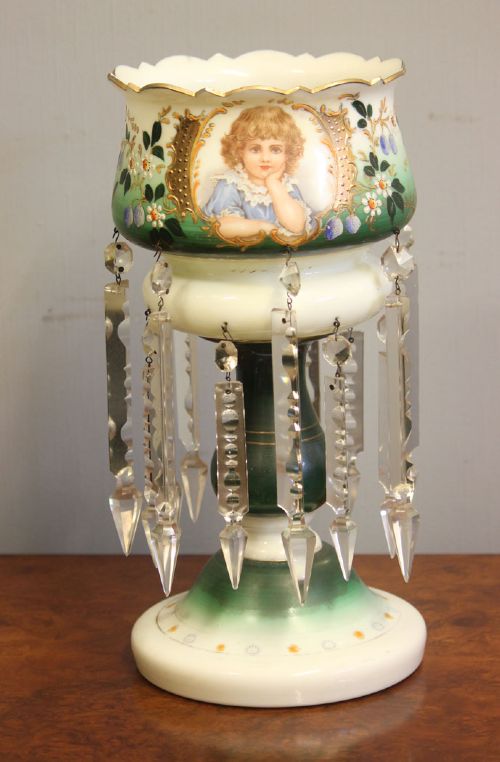
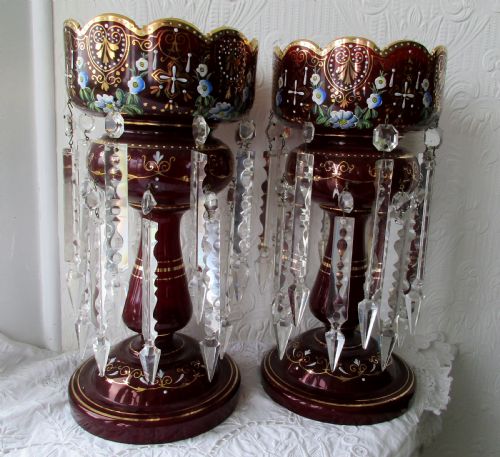
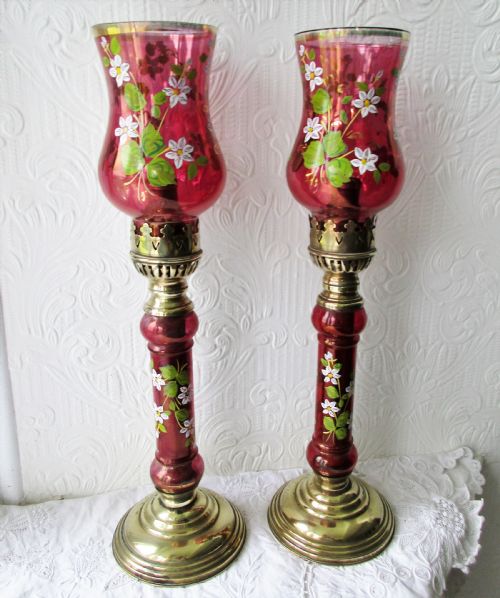
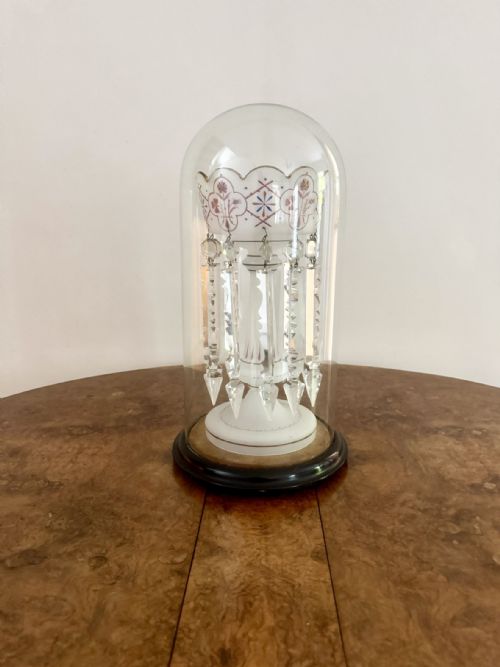
Victorian glass mantle lustres stand as decorative objects designed to adorn fireplaces and side tables with sparkling crystal or coloured glass. The selection here includes both pairs and single items, often taking the form of candlesticks or candle lamps fitted with hanging pendants.
Most examples date across the nineteenth century, drawing on Victorian and French Empire styles. Ruby glass, cranberry glass, and green glass feature prominently among the varied hues seen across the inventory.
Mantle lustres serve primarily to catch and reflect candlelight through their glass bodies and dangling prisms. Buyers encounter pairs most frequently, though single lustres and combinations with brass or bronze mounts also appear.
Materials and Construction
Makers shaped these pieces using glass, cut crystal, and lead crystal, frequently employing flash glass techniques to create deep ruby or cranberry colourways. Gold leaf, brass, bronze, and ormolu often provide structural support or decorative mounts.
Cut glass facets and suspended crystal drops work together to refract the light from candles. Metal components like brass and ormolu anchor the glass bodies securely to heavy bases.
Listings feature items spanning the nineteenth century, including specific dates from 1860 to 1900 alongside Regency examples.
Assessing Quality
Quality rests upon the depth of the glass colour and the precision of the cutting on the body and drops. Rich ruby and cranberry tones show careful control during the glassmaking process.
The presence of matching crystal drops and secure metal fittings distinguishes finer pairs. Lustres combining bronze, ormolu, or detailed brass work display a higher level of decorative ambition.
The Victorian Glass Mantle Lustres Glossary
- Lustre
- A decorative glass or porcelain vase fitted with hanging crystal prisms designed to reflect candlelight. These items became popular during the nineteenth century for mantle display.
- Flash glass
- A thin layer of coloured glass fused over a colourless glass base before being cut away to reveal the clear glass beneath. This technique creates rich ruby or cranberry effects.
- Ormolu
- Gilded bronze used for decorative mounts and fittings on nineteenth-century furnishings. It provides a bright gold-coloured contrast to coloured glass.
- Prism
- A cut glass pendant hung from the rim of a lustre to refract light. Pairs typically require a complete set of matching drops to be considered correct.
Victorian Glass Mantle Lustres: Frequently Asked Questions
What are mantle lustres used for?
Mantle lustres serve as decorative candle lamps placed on fireplace mantles or side tables. Their hanging glass drops catch and multiply the flickering light of a candle.
They functioned primarily as decorative objects in Victorian parlours rather than main light sources. Today, collectors display them for their vibrant colours and glasswork.
How do I identify Victorian glass lustres?
Victorian examples typically feature hand-cut crystal bodies in ruby, cranberry, or green glass paired with hanging glass prisms. Look for nineteenth-century manufacturing traits such as pontil marks on the base.
Styles range from simple pressed glass to elaborate pieces mounted in brass, bronze, or ormolu. The presence of Regency influences can also appear in earlier nineteenth-century pairings.
Can I burn candles in them?
While these pieces function as candlesticks, modern use usually avoids burning candles to protect the antique glass from heat damage and wax staining. The hanging drops are particularly sensitive to temperature changes.
Displaying them unlit preserves the fragile crystal pendants and coloured glass bodies. Gentle dusting keeps the glass clear without risking the mounts.
Are they sold in pairs?
Many mantle lustres survive as matched pairs intended for symmetrical placement on a mantlepiece. Single lustres also appear in the selection for smaller spaces.
Pairs generally hold more interest for traditional display, while single pieces offer a focused splash of nineteenth-century colour.