


Victorian Glass Candlesticks
Victorian glass candlesticks bring heavy refraction and coloured glass to a mantelpiece, catching candle flame through cut crystal and ruby glass.
Victorian Glass Candlesticks
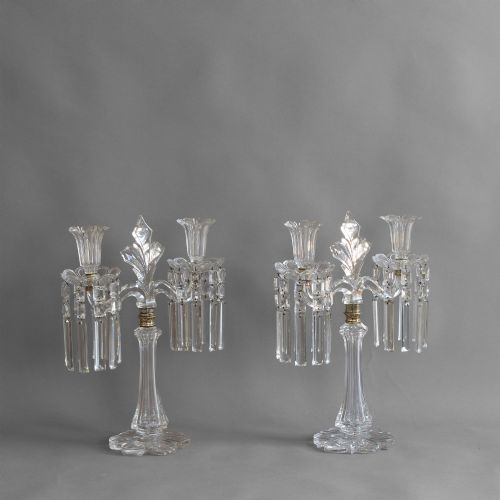
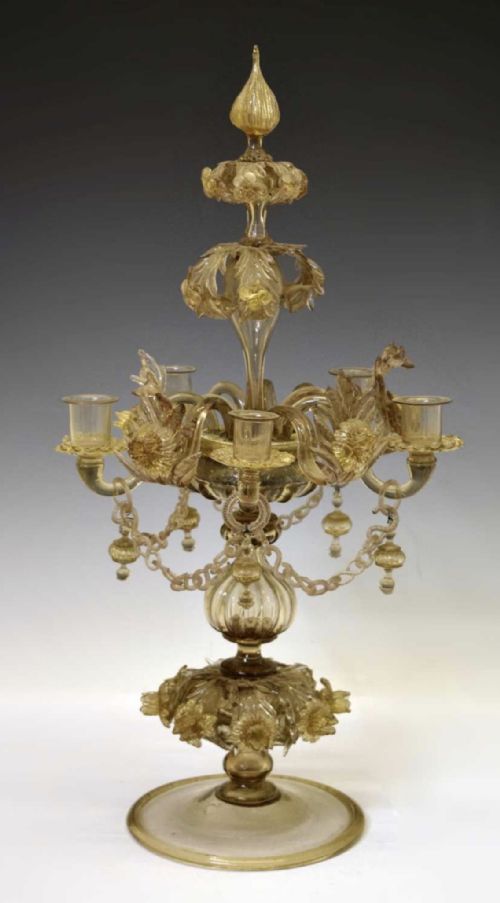
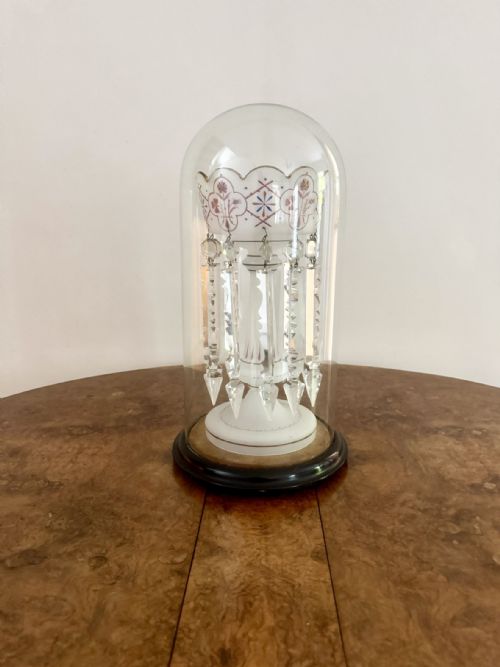
Victorian glass candlesticks comprise matched pairs and single holders designed for domestic illumination during the nineteenth century. Buyers frequently encounter ruby glass, cranberry glass, and cut glass forms alongside mantel lustres fitted with hanging crystal drops.
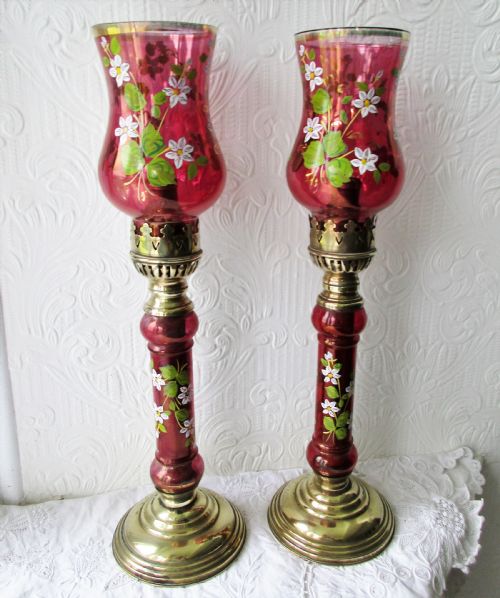
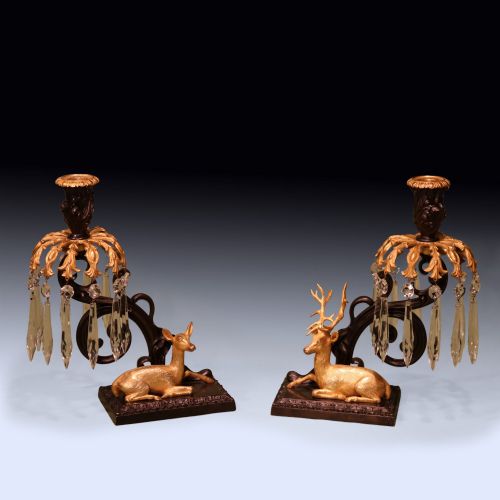
Makers combined glass bodies with brass, bronze, silver plate, and ormolu mounts, often incorporating storm shades or chimneys. Examples span from standard taper holders to elaborate multi-branch candelabra and table lamps.
The material palette ranges from opaque opaline and satin glass to mercury glass and green glass. Pieces appear across periods including the Victorian era proper, Regency, and William IV, reflecting diverse stylistic revivals.
Markers of Quality
Quality rests upon the depth of the glass cutting and the clarity of the crystal, where sharper facets create crisper light refraction. Heavy, stable metal mounts in brass or ormolu indicate superior manufacturing standards compared to thin stamped alternatives.
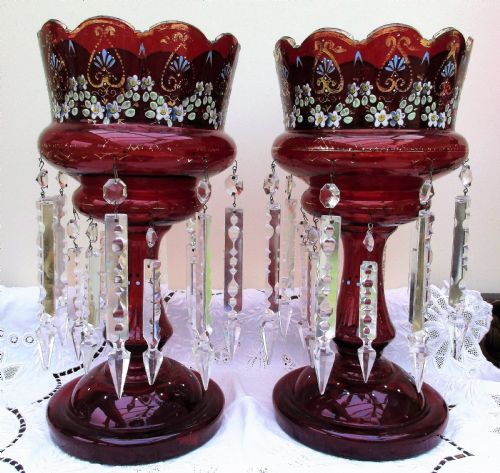
The presence of a complete, matching set of original crystal hanging drops distinguishes better lustres from assembled or replacement sets. Uniformity in colour saturation across paired ruby or cranberry glass columns further separates higher tier examples from standard production.
Listings feature cut glass, ruby glass, satin glass, brass, silver plate, and gold leaf across Victorian, Regency, and William IV periods.
The Victorian Glass Candlesticks Glossary
- Lustre
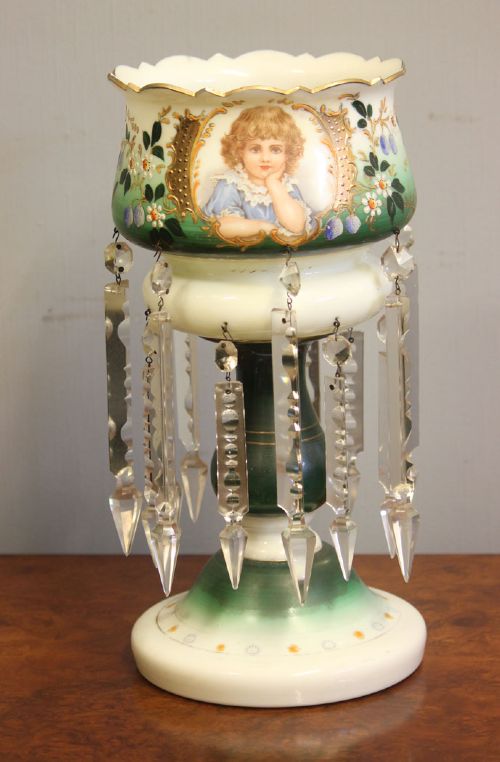
- A decorative tabletop vessel featuring a central socket and a ring of hanging crystal prisms. These drops catch and multiply the ambient candlelight.
- Cricklite
- A patented brand of night light and candlestick holder utilising specialised moulded glass shades. Clarke's patent pieces often incorporate brass framing.
- Opaline
- An opaque or translucent pale glass developed to imitate porcelain. It appears frequently in tinted shades on nineteenth-century lamp bases.
- Mercury glass
- A double-walled blown glass object silvered on the interior with a mercury solution. This technique creates a reflective mirror-like exterior finish.
- Cranberry glass
- A rich pinkish-red glass produced by adding gold chloride to the molten batch. It is a defining colour of the Victorian period.
Victorian Glass Candlesticks: Frequently Asked Questions
How do I clean Victorian glass candlesticks?
Wash the glass components gently in warm soapy water using a soft cloth, avoiding abrasive pads that scratch the surface. Remove crystal drops individually if possible to clean them thoroughly without straining the wire fixings.
Dry each piece completely before reassembly to prevent moisture spotting on the metal mounts. Keep brass and silver plated sections separate from water to protect their patination.
Are these candlesticks safe for modern candles?
Standard taper candles fit many nineteenth-century holders, but slight variations in socket widths mean you should check measurements beforehand. Use dripless candles or snug fitting adapters to prevent hot wax from running onto sensitive antique glass and metal surfaces.
Extinguish flames before they burn down close to the glass rim to avoid thermal shock cracking. Heat management remains essential when burning tapers in enclosed hurricane shades or peg lamp fittings.
What is the difference between a lustre and a candlestick?
A candlestick serves purely to hold a single taper candle aloft for direct illumination. A lustre incorporates a ring of hanging crystal prisms below the candle cup to refract and scatter light across the room.
Lustres often double as decorative mantel ornaments even when unlit, owing to their elaborate cut glass drops. Candlesticks focus primarily on the vertical shaft and base architecture rather than prismatic displays.
How can I date a pair of glass candlesticks?
Examine the base pontil mark, manufacturing seams, and the composition of the metal mounts for clues regarding the period of production. Victorian pieces often display moulded registry marks or heavier brass castings characteristic of nineteenth-century workshops.
Compare the glass colour palette, such as ruby or opaline tones, against known stylistic eras like Regency or Late Victorian. Patent stamps, including those for Cricklite items, provide definitive manufacturing windows.