


Victorian Gemstone Necklace Pendant
A victorian gemstone necklace pendant brings together rich stones and period goldsmithing in a way that catches the light and the eye.
Victorian Gemstone Necklace Pendant
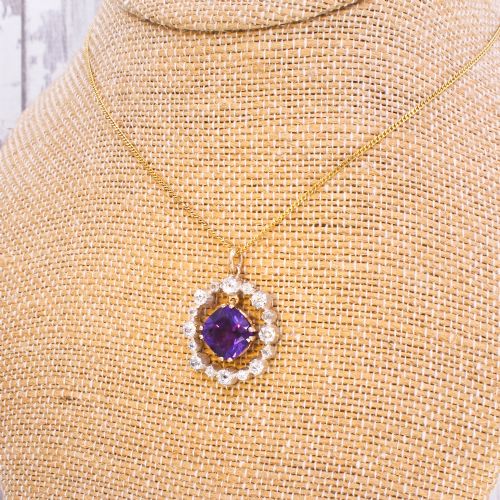
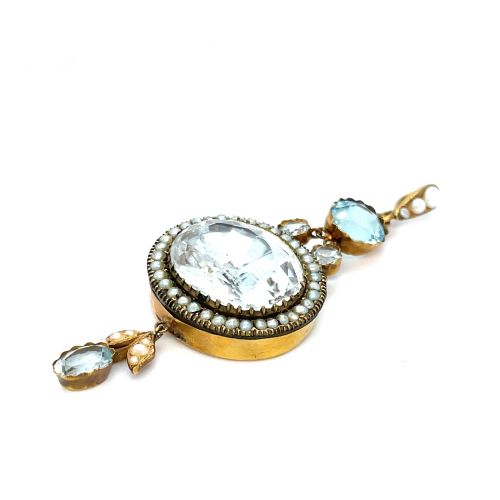
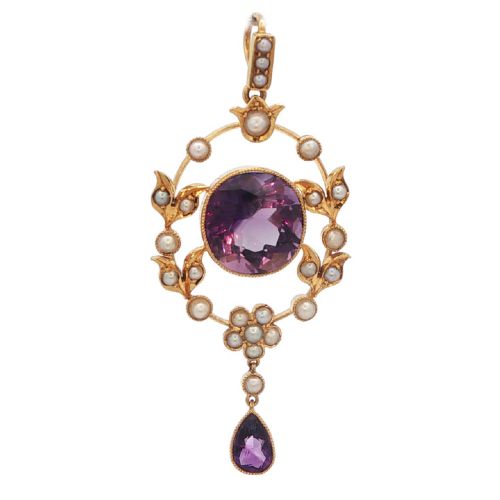
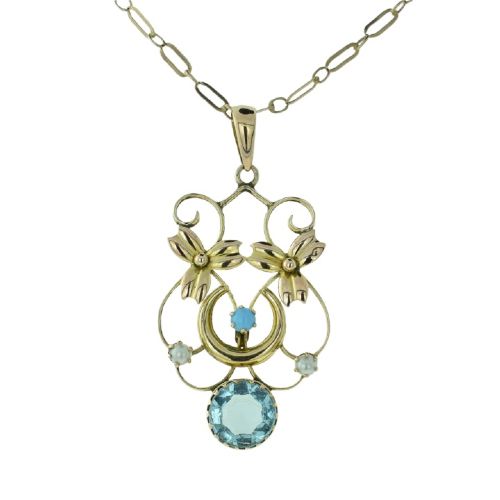
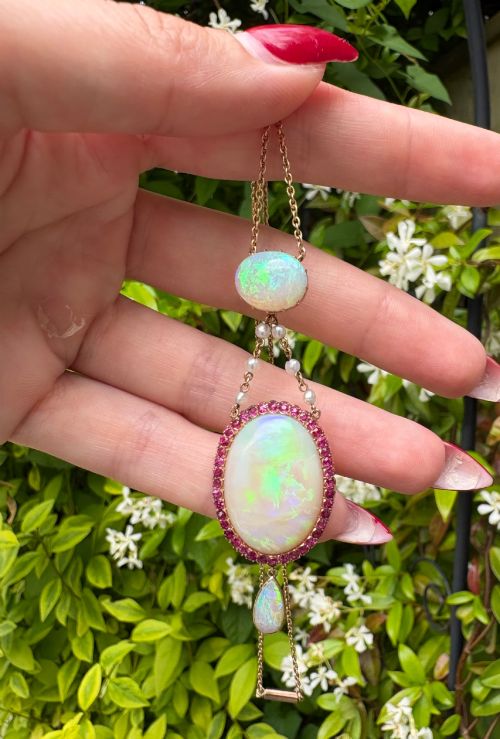
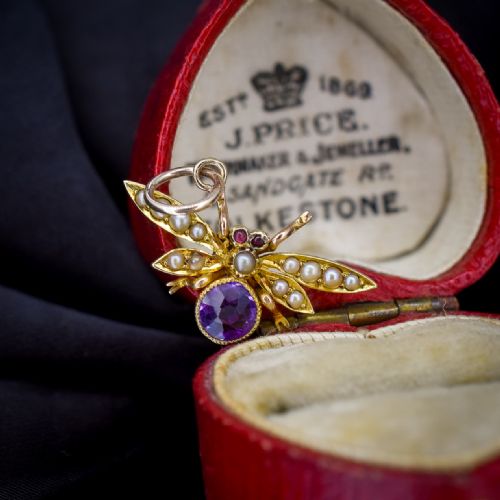
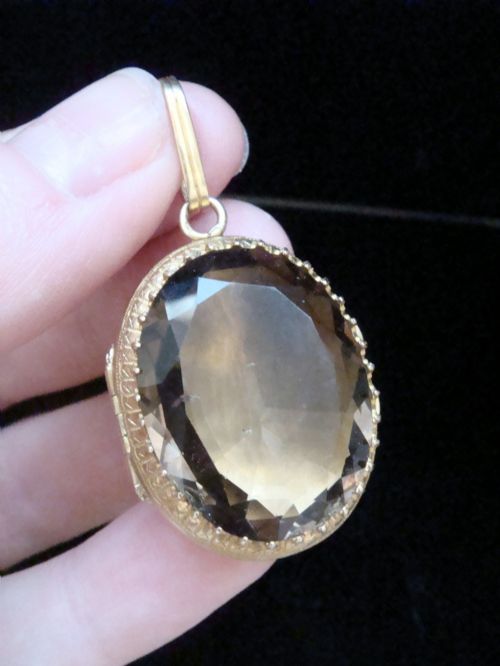
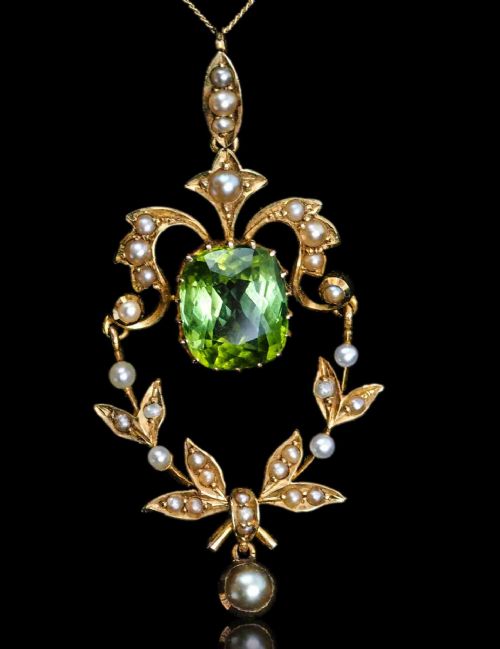
A victorian gemstone necklace pendant draws on nineteenth-century design, spanning early, mid, and late periods alongside related Edwardian and Art Nouveau aesthetics. These pieces combine central coloured stones such as amethyst, garnet, citrine, and opal with smaller accent gems like seed pearls and diamonds.
The format ranges from drop pendants and locket combinations to pendant brooches and fringe necklaces. Most examples on this page date from the Victorian era through to the early twentieth century, showing distinct stylistic shifts from foliate motifs to geometric Edwardian arrangements.
Makers and workshops of the period utilised gold alloys predominantly in nine-carat and fifteen-carat tiers, occasionally mounting work in silver or platinum. Buyers encounter both delicate cluster designs and substantial gemstone focal points suspended on period chains or fitted within original boxes.
How they were made
Goldsmiths constructed these pieces using yellow and rose gold, predominantly in nine-carat and fifteen-carat purities, alongside occasional eighteen-carat components, silver settings, and platinum highlights. Stones were hand-cut in faceted, oval, or cabochon profiles to suit the optical properties of amethyst, garnet, opal, peridot, and tourmaline.
Setting techniques relied on fine claws, closed foil backs for specific stones, and bezel mounts integrated into ornate wirework or stamped foliate frames. Seed pearls were drilled and threaded or pegged onto gold stems, while multi-gem necklaces incorporated articulated links and fringe drops for movement.
Listings span periods from early Victorian work through the Edwardian era to the 1930s, utilising amethyst, garnet, opal, and turquoise.
What varies in quality
The distinction between standard commercial pieces and finer workshop production rests in the depth of stone colour, the precision of gemstone cutting, and the complexity of the gold mount. Exceptional examples display well-matched natural pearls, clean old-cut diamonds, and substantial central stones with strong saturation.
Structural integrity and the survival of original components also separate tiers of quality, visible in the rigidity of pendant frames, the neatness of granulation or filigree work, and whether the piece retains its fitted presentation box or period chain.
Murrle Bennett·Hamilton and Co
The Victorian Gemstone Necklace Pendant Glossary
- Cabochon
- A gemstone shaped and polished with a smooth, rounded convex surface rather than faceted. This cut is typical for opals, moonstones, and certain garnets to display their internal glow.
- Seed pearl
- A very small, naturally occurring or early cultivated pearl, often drilled and used in clusters or borders around a central gemstone in Victorian jewellery.
- Foil back
- A technique where a thin sheet of metallic foil is placed behind a gemstone within a closed setting to enhance its colour and reflectivity under indoor lighting.
- Fringe drop
- A decorative arrangement of dangling gemstone pendants or metal chainlets suspended along the lower edge of a necklace or collar.
- Old-cut diamond
- A hand-faceted diamond cut before the standardisation of modern brilliants, characterised by a smaller table, higher crown, and open culet.
Victorian Gemstone Necklace Pendant: Frequently Asked Questions
How do I care for antique pearl pendants?
Antique pearls require gentle handling because organic nacre is sensitive to acids, cosmetics, and prolonged moisture. Clean them only with a soft, dry cloth after wearing and store them away from harder metal pieces.
Avoid submerging pearl and gemstone combinations in ultrasonic cleaners or chemical solutions. Keeping them in their original fitted boxes helps protect both the stones and the delicate seed pearl settings from accidental impact.
Can these pendants be worn on modern chains?
Most period pendants feature a fixed loop or bail that accommodates standard modern chains, provided the spring ring or clasp is narrow enough to pass through. Many surviving pieces retain their original period chains or are paired with complementary gold links from a similar era.
When transferring a pendant to a new chain, ensure the gold tone matches the piece, whether yellow or rose gold. A jeweller can easily add a small matching jump ring if the original suspension loop is too restrictive.
How do I distinguish Victorian from Edwardian styles?
Victorian pieces often display heavier gold weights, warmer rose or yellow gold hues, and robust organic motifs such as leaves, crescents, and foil-backed stones. The settings tend to be substantial and warm in character.
Edwardian designs shift toward lighter platinum and yellow gold frameworks, incorporating airy openwork, millegrain edges, and delicate diamond or pearl clusters. The overall visual weight becomes lighter and more lace-like.
Were these pieces originally worn as brooches too?
Many nineteenth-century gemstone designs were built as convertible pieces featuring a concealed folding loop and a pin finding on the reverse. This dual function allowed the owner to wear the item pinned to a bodice or suspended from a neck chain.
When examining a conversion piece, look for the hinge and catch mechanism safely tucked behind the main gemstone cluster. This versatility was common practice among Victorian jewellers making high-grade mounted items.