



Victorian Fuel Bucket
These robust victorian fuel bucket designs are practical fireside vessels built to hold coal and logs beside the hearth.
Victorian Fuel Bucket
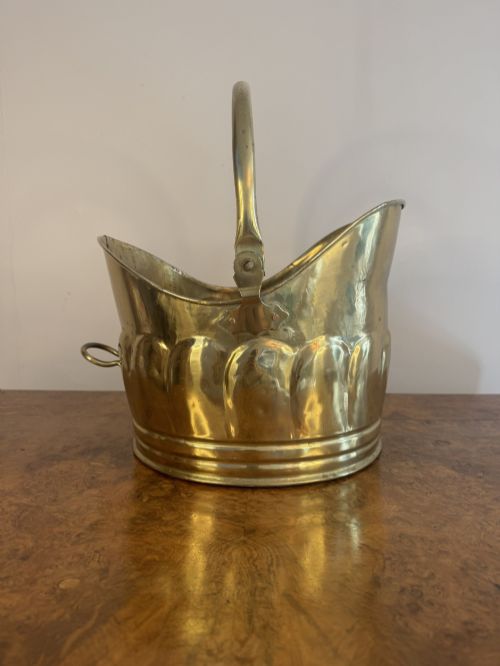
A victorian fuel bucket encompasses functional fireside vessels designed to store coal, logs, and kindling near the fireplace. The selection spans the nineteenth century through the early twentieth century, taking forms such as coal boxes, purdoniums, helmet scuttles, and lidded bins.
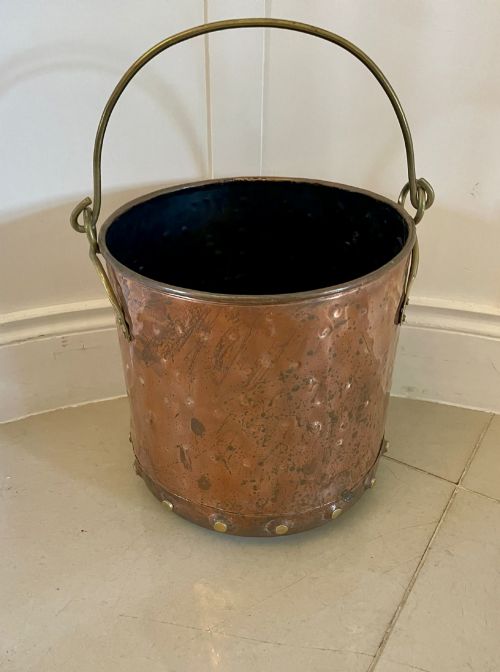
Origin details point towards English and French workshops, encompassing distinct Arts and Crafts styling alongside traditional Victorian designs. Buyers encounter everything from simple round copper buckets to elaborate carved wooden coal boxes complete with original shovels.
Materials and construction methods
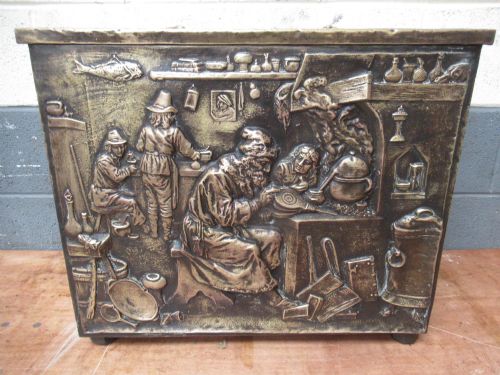
Metal vessels rely heavily on sheet brass and copper, shaped through beating, embossing, and riveting to create durable bodies that withstand daily hearth use. Iron components provide structural reinforcement, while repoussé decoration adds surface relief and visual texture.
Wooden variants utilise solid timber frames in oak, walnut, and mahogany, frequently enhanced by marquetry inlay or carved detailing. Joinery methods ensure the heavy weight of coal or logs remains securely contained within the box or purdonium structure.
Victorian Fuel Bucket Retail Price Guide 2026
Typical asking prices for victorian fuel bucket among the pieces listed under this phrase on Sellingantiques today, from the lower quarter to the upper quarter. They describe what is for sale here now, not the wider market.
Listings feature materials spanning brass, copper, oak, walnut, mahogany, and iron across the Victorian, Edwardian, and Arts and Crafts periods.
Judging quality in fireside vessels
The distinction between standard containers and finer pieces lies in the crispness of the metal embossing and the integrity of the joins. Hand-beaten repoussé work and tight riveting demonstrate superior workshop competency compared to plain stamped sheet metal.
Timber examples reveal quality through the depth of the carving, the precision of any marquetry inlay, and the retention of original interior linings or accompanying shovels. Heavy gauge metal and solid timber construction denote longevity and sustained utility.
Petrus Ramus
The Victorian Fuel Bucket Glossary
- Purdonium
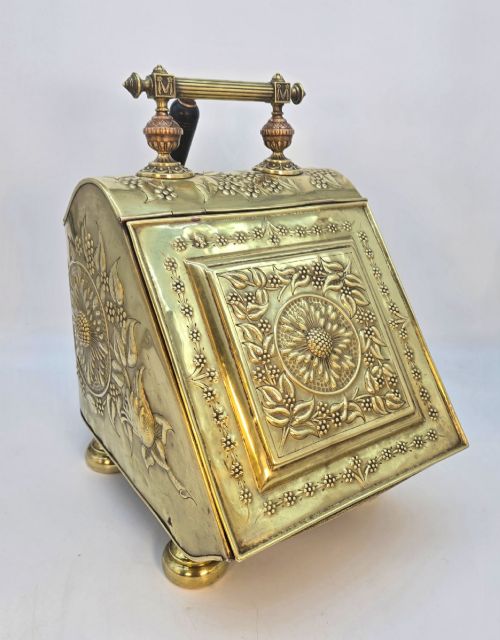
- A specialised coal box or bin, typically featuring a sloping front door or drop-down compartment designed to make shovelling fuel easier.
- Repoussé
- A metalworking technique where the artisan hammers the design from the reverse side to form raised relief patterns on the surface.
- Helmet scuttle
- A traditional fireside vessel shaped with a flared rim and a pivoting handle, resembling an inverted helmet for pouring coal.
- Marquetry
- The art of applying decorative pieces of veneer to a wooden structure to form intricate geometric or pictorial patterns.
Victorian Fuel Bucket: Frequently Asked Questions
What is a coal purdonium?
A coal purdonium is a specific type of fireside storage box featuring a downward-sloping front panel. This design allows easy access to the fuel inside.
Such vessels were common fixtures in nineteenth-century drawing rooms, keeping coal tidy and contained out of sight.
How do I clean a brass bucket?
Cleaning metal fireside vessels requires a gentle metal polish suitable for brass or copper to remove tarnish. Avoid abrasive pads that might scratch the embossed surface.
Preserving the natural patina often appeals to collectors who prefer age over a bright shine.
Can I use these for logs today?
These historical vessels function well for holding logs, kindling, or peat beside a modern wood-burning stove or open fireplace. Their robust metal or wooden construction remains entirely practical.
Checking for waterproof liners helps protect interior wooden floors from residual ash and moisture.
How do I spot an Arts and Crafts piece?
Arts and Crafts examples typically display hand-hammered copper surfaces, visible riveted construction, and stylized natural motifs such as galleon designs. They prioritise honest craftsmanship over ornate Victorian revival styling.
These pieces often date towards the turn of the twentieth century.