


Victorian Fretwork Rack
Victorian fretwork racks bring warmth and organisation to a room, offering practical display surfaces alongside intricate pierced woodwork.
Victorian Fretwork Rack
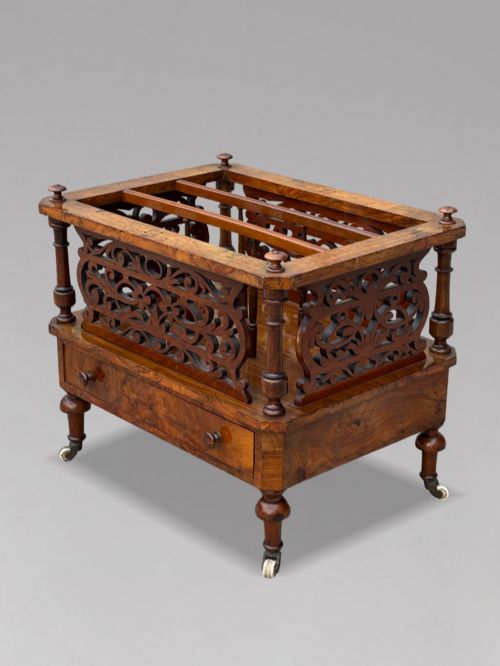
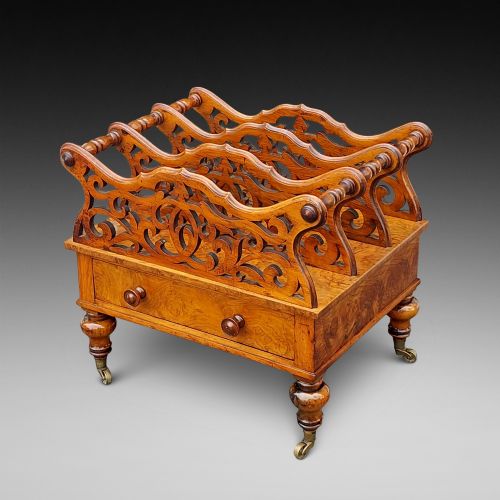
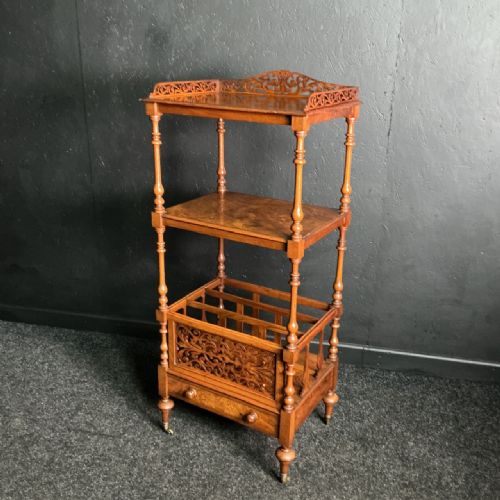
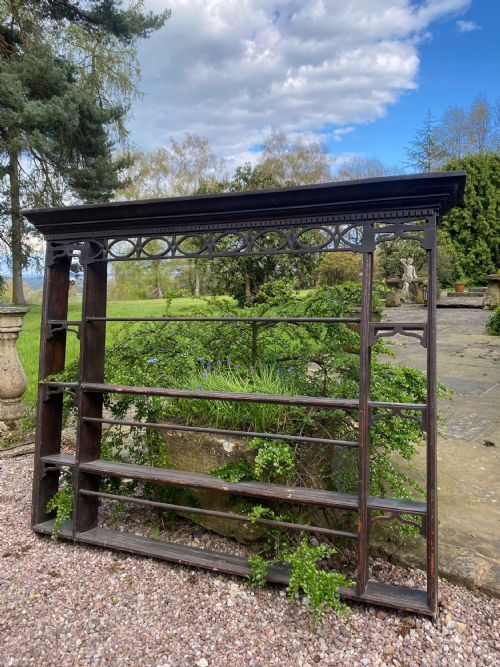
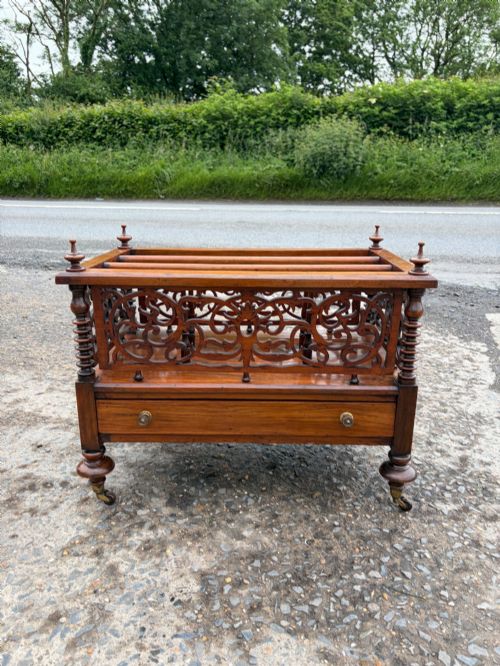
A victorian fretwork rack combines functional storage for magazines, books, or plates with decorative openwork woodwork characteristic of the nineteenth century. These pieces emerge primarily as canuterburys, whatnots, wall shelves, and magazine racks dating from the mid-to-late nineteenth century.
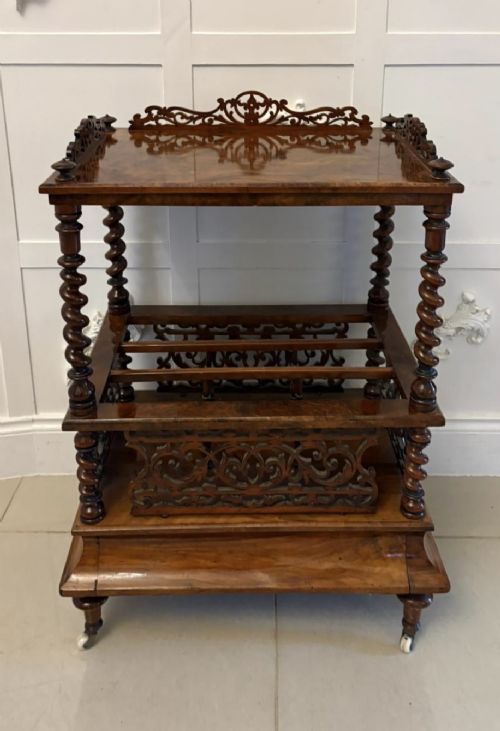
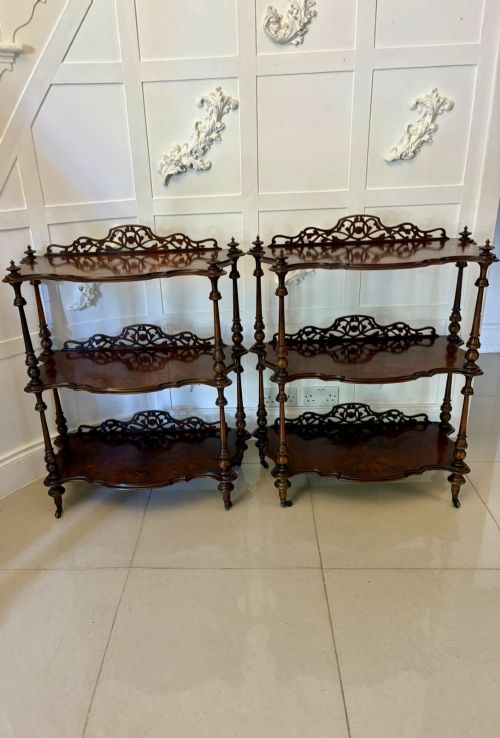
The version most commonly met on this page is the burr walnut canterbury or whatnot, often featuring multiple tiers or divided sections for paper and literature. Walnut and rosewood dominate the surviving forms, frequently enriched with inlaid details or fine pierced fretwork panels.
Makers of the period utilised these versatile furnishings in domestic settings ranging from drawing rooms to libraries. Their structural forms balance upright display utility with the lighter aesthetic introduced by revival styles such as Gothic and Chippendale.
How they were made
Cabinetmakers constructed these pieces using dense hardwoods like walnut, burr walnut, rosewood, and mahogany as the primary structural frames. Burr walnut veneers provided highly figured surfaces for table tops and tier shelves, while solid timbers formed the structural legs and uprights.
Pierced fretwork was achieved through meticulous hand-sawing and carving to create delicate scrollwork, foliate patterns, and geometric divisions. Inlaid elements in contrasting woods often decorated the panels, and brass hardware supported movable components or castors on freestanding floor pieces.
Canterburys, whatnots, and occasional tables represent the primary forms preserved from the nineteenth century.
What varies in quality
The distinction between standard production and exceptional work lies in the depth of figuring in the burr walnut veneer and the crispness of the hand-cut fretwork. Superior examples display symmetrical grain matching across panels and delicate, unbroken pierced scrolls without clumsy repairs.
Construction methods also separate tiers of quality, with finer pieces incorporating tight joinery, integrated drawers with dovetailed boxes, and high-grade secondary timbers. The elegance of the turned supports and the precision of any inlaid stringing indicate the skill applied in the workshop.
The Victorian Fretwork Rack Glossary
- Canterbury
- A low stand fitted with divisions to hold music sheets, books, or periodicals, often featuring a small drawer below. Originating in the late eighteenth century, it remained popular through the Victorian era.
- Fretwork
- Ornamental perforated woodwork created by cutting patterns through thin timber. It provides lightweight decorative screens and dividers on shelves and racks.
- Whatnot
- An open set of multi-tiered shelves designed for displaying ornaments, books, or porcelain. These pieces range from corner units to freestanding multi-tier tables.
- Burr walnut
- Timber taken from the wart-like growths on walnut trees, yielding rich, swirling grain patterns highly prized for decorative furniture veneers. Cabinetmakers used it on prominent surfaces.
- Gothic Revival
- An architectural and decorative style drawing on medieval ecclesiastical forms, featuring pointed arches and quatrefoil motifs. It influenced nineteenth-century furniture design.
Victorian Fretwork Rack: Frequently Asked Questions
What is a Victorian fretwork rack used for?
These pieces served primarily as domestic storage for literature, music sheets, and periodicals in nineteenth-century sitting rooms and libraries. Freestanding versions kept daily reading materials accessible near seating areas.
Wall-hung variants and multi-tiered whatnots provided display space for small decorative objects, plates, and personal collections. Their compartmentalised designs kept papers upright and organised before the era of modern shelving.
How do I identify a Victorian piece?
Nineteenth-century construction typically relies on dense timbers like walnut, rosewood, and mahogany combined with hand-cut pierced fretwork. Look for traditional joinery methods and patination that develops naturally over decades of handling.
Stylistic cues such as Gothic revival motifs, foliate marquetry, and turned wooden supports point directly to Victorian workshop practices. Comparing the hardware and internal secondary woods helps confirm the period of origin.
Can I use these racks for modern magazines?
Most antique canterburys and magazine racks accommodate contemporary periodicals within their original divided wooden slots. The sturdy hardwood construction handles standard publication weights without structural strain.
Care should be taken with oversized modern publications to avoid forcing them into narrower nineteenth-century compartments. Placing them away from direct heat sources preserves the antique veneers and prevents timber warping.
What is the difference between a canterbury and a whatnot?
A canterbury is specifically designed with vertical partitions for holding books, music, or magazines, often including a low drawer. They frequently stand on castors for easy movement around a room.
A whatnot consists of multiple open shelves supported by upright columns, built entirely for display rather than partitioned storage. While some hybrid forms combine both functions, their primary architectural intent remains distinct.