


Victorian Foldover Console Table
These Victorian foldover console table designs turn compact side pieces into wide surfaces for cards and tea.
Victorian Foldover Console Table
A Victorian foldover console table combines the daily function of a side table with a hinged top that opens to reveal a larger surface for card games or tea. The pieces listed under this search phrase span card tables, games tables, and tea tables from the nineteenth century.
How they were made
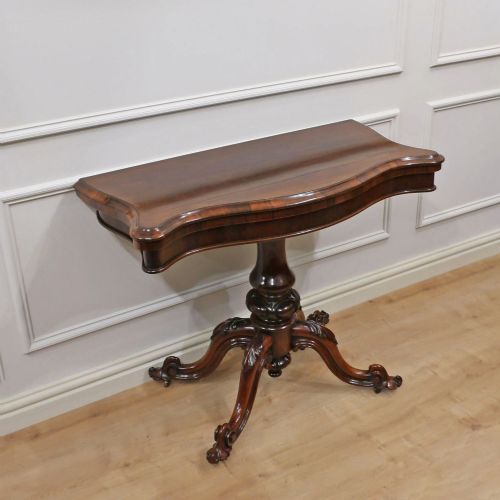
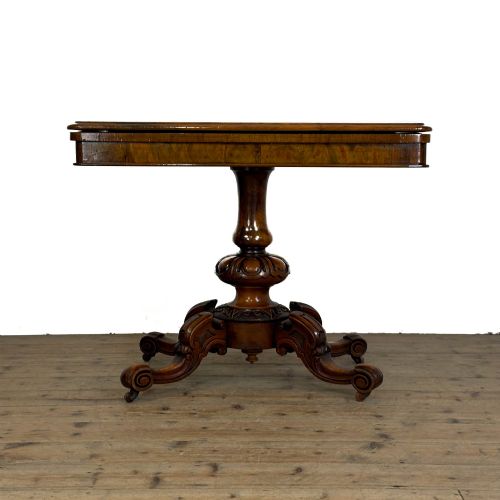
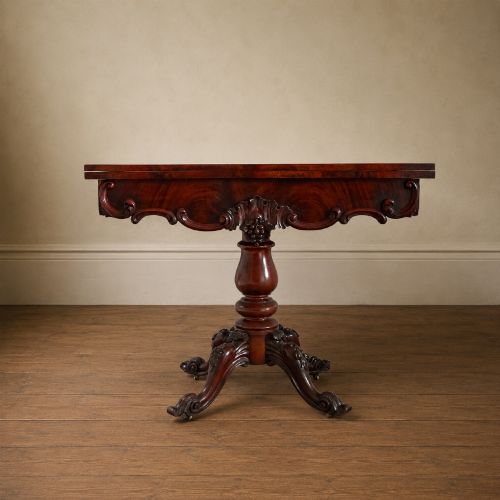
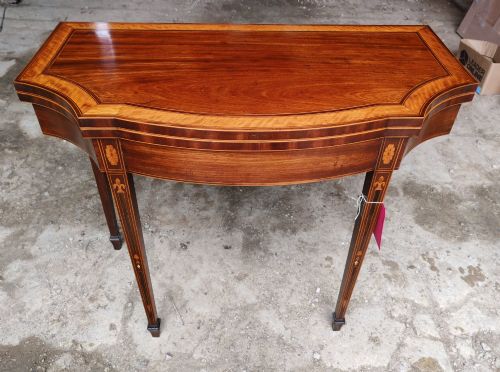
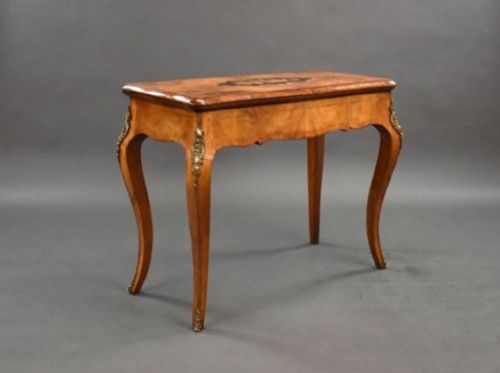
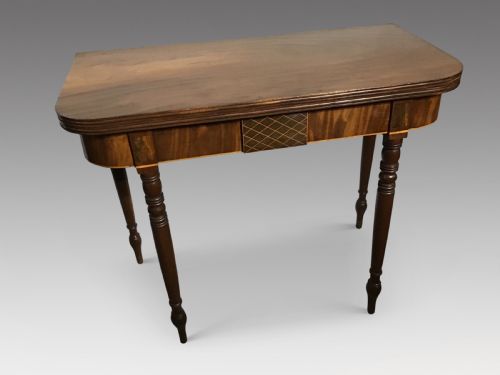
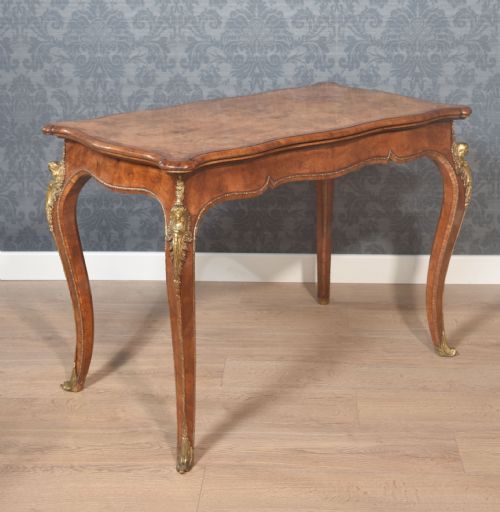
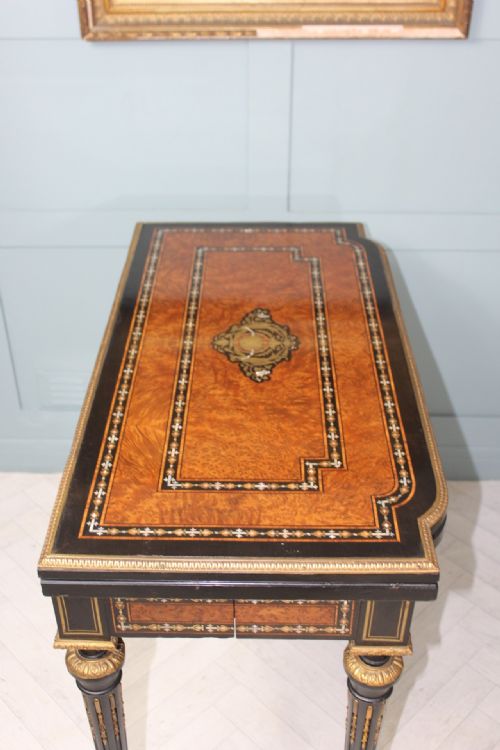
Cabinet makers utilised dense primary timbers including mahogany, rosewood, walnut, and burr walnut, often applying figured veneers to the pivoting top surfaces. Selected pieces incorporate marquetry inlay, satinwood details, brass fittings, or mother-of-pearl to ornament the timber.
Structural support is provided by turned pedestals, column bases, or carved wooden legs, paired with hinged leaves that rotate or fold out to bear the weight of the extended top. Ebonised finishes and Ormolu mounts appear on specific continental revival pieces within the range.
Card tables and games tables outnumber dedicated side tables within the recorded nineteenth-century inventory.
What varies in quality
The degree of refinement in a piece rests on the choice of timber figure, such as richly grained burr walnut or figured mahogany, and the precision of any marquetry inlay. Maker attribution also separates standard production from exceptional workshops.
Carved wooden details and the structural execution of the folding mechanism demonstrate the maker's hand. Higher quality pieces maintain clean movement in the turnover action and harmonious proportions between the closed console base and the open table top.
Edwards & Roberts·S&H Jewell
The Victorian Foldover Console Table Glossary
- Foldover top
- A hinged wooden surface that doubles in area when opened flat. It rests on a pivoting frieze or a swing leg.
- Card table
- A specialised table designed for gaming, typically lined with baize or felt on the interior surface.
- Tea table
- A small domestic table intended for serving tea, often featuring a folding or tilting top.
- Burr walnut
- A prized timber harvested from the warted growths of walnut trees, noted for swirling knot patterns.
- Marquetry
- Decorative veneer work arranged in pictorial or geometric patterns using various woods.
Victorian Foldover Console Table: Frequently Asked Questions
How do you open a foldover table?
The top leaf rotates on a pivot or lifts on hinges to swing outward, supported by the frame or a pull-out rule joint.
Once horizontal, the leaf reveals a finished playing surface or a polished timber interior for serving.
What is the difference between a card table and a tea table?
Card tables generally feature a green baize or felt lining inside the folded top to provide traction for gaming pieces.
Tea tables usually present a polished wooden surface on both sides, intended for holding porcelain and tea wares.
Where were these tables placed in a Victorian home?
They stood against a hallway or parlour wall as slim console tables when closed, conserving floor space.
During social gatherings, they moved into the centre of the room to accommodate card players or tea service.
How can you tell a Victorian table from a Georgian one?
Victorian examples frequently display heavier proportions, rosewood or burr walnut veneers, and ornate pedestal bases.
Earlier Georgian pieces lean toward simpler lines, solid mahogany construction, and straight or cabriole legs without heavy carving.