



Victorian Flow Blue Ceramics
Victorian flow blue ceramics bring deep cobalt hues and striking nineteenth century character directly to the table.
Victorian Flow Blue Ceramics
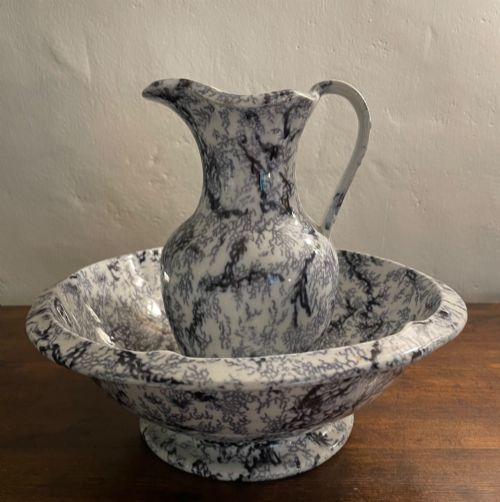
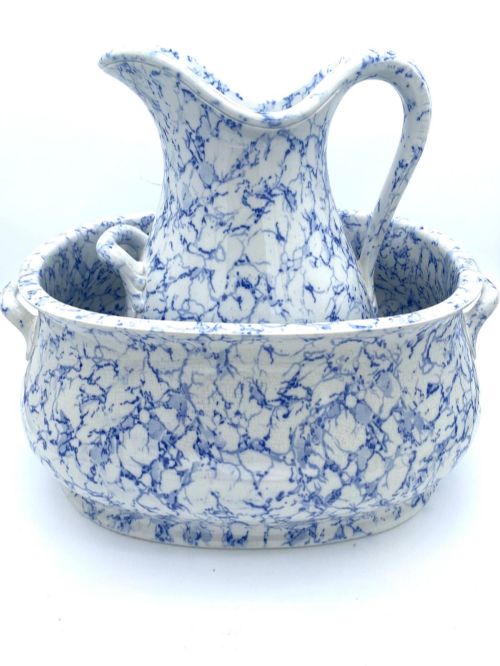
Victorian flow blue ceramics encompass a striking array of nineteenth century earthenware and porcelain items adorned with characteristic blurred cobalt decoration. Buyers searching for victorian flow blue ceramics encounter an assortment spanning utilitarian jugs, expansive wash sets, and intricate miniature tea services. Pieces from this tradition often display rich blue ornamentation that bled intentionally during the firing process to create a soft, hazy aesthetic.
The objects available range from large serving platters and footbaths to delicate children's services produced across the nineteenth century. Makers applied this distinct glazing technique to various forms, incorporating styles from Rococo Revival and the Aesthetic Movement. Each piece captures the industrial skill of the era while offering a decorative centrepiece for the home.
How they were made
Potters shaped these earthenware and ceramic bodies before applying cobalt glaze to the surface. During kiln firing, lime or chloride vapour was introduced into the atmosphere to cause the cobalt pigment to bleed across the white ground. This controlled chemical reaction blurred the sharp outlines of the printed transfer design into a soft wash.
Certain finer items received supplementary gilding or silver plate embellishments after the primary glaze firing to enhance their decorative appeal. The resulting objects combined mass production techniques with artistic finishing, creating durable wares suitable for daily utility or display.
Victorian Flow Blue Ceramics Retail Price Guide 2026
Typical asking prices for victorian flow blue ceramics among the pieces listed under this phrase on Sellingantiques today, from the lower quarter to the upper quarter. They describe what is for sale here now, not the wider market.
Listings feature earthenware and ceramic bodies spanning the nineteenth century, including pieces decorated with cobalt glaze and gilding.
What varies in quality
Quality in these ceramics rests on the crispness of the underlying transfer print prior to the intentional blurring of the cobalt. Superior examples maintain a balanced spread of the blue pigment that softens the design without obscuring the underlying motif entirely. Lesser pieces may exhibit muddy pooling or uneven saturation where the kiln atmosphere overwhelmed the pigment.
The refinement of the ceramic body and the complexity of the original form dictate the upper tier of the range. Items featuring additional hand-painted details, gilding, or unusual mouldings stand apart from standard utilitarian tableware through their superior craftsmanship.
Minton·Copeland·Doulton Burslem·Doulton Lambeth·Moorcroft Macintyre
The Victorian Flow Blue Ceramics Glossary
- Flow blue
- A nineteenth century ceramic glazing technique where cobalt blue pigment intentionally blurred during firing to create a hazy, atmospheric effect. This style originated in Staffordshire potteries and became a staple of Victorian tableware.
- Earthenware
- A porous type of ceramic fired at relatively low temperatures and typically covered with an opaque glaze. It formed the common body for the majority of Victorian domestic vessels and wash sets.
- Cobalt glaze
- A metallic oxide pigment used to produce deep, vibrant blue decoration on ceramic wares. When subjected to specific kiln vapours during production, it created the signature bleeding effect characteristic of flow blue.
- Transfer printing
- A method of applying pre-printed paper designs onto ceramic surfaces using inked copper plates. This technique allowed factories to produce intricate patterns rapidly across large runs of plates and jugs.
- Footbath
- A large, deep ceramic vessel designed for bathing feet in the bedroom before the widespread adoption of plumbed bathrooms. These substantial pieces frequently showcase the boldest floral and architectural flow blue patterns.
Victorian Flow Blue Ceramics: Frequently Asked Questions
What is flow blue pottery?
Flow blue pottery is a type of nineteenth century ceramic where cobalt blue transfer-printed designs were intentionally blurred during the kiln firing process. This created a soft, hazy aesthetic that spread beyond the printed lines.
Pots and platters decorated this way became immensely popular in British and American households for both display and everyday dining throughout the Victorian era.
How were these ceramics used originally?
Victorian households utilised these ceramics for a wide variety of domestic tasks, ranging from large wash sets in bedrooms to serving platters at the dining table. Miniature tea and dinner sets were also produced for children or cabinet display.
Larger pieces like footbaths served practical washing purposes before modern plumbing brought running water into bedrooms.
How do I date flow blue pieces?
Dating these items involves examining the registry marks, factory stamps, and stylistic cues present on the ceramic base. Pieces from the early nineteenth century often feature heavier earthenware bodies and simpler transfer patterns.
Later Victorian examples from the end of the century incorporate aesthetic movement or art nouveau influences alongside more refined ceramic pastes.
Can I use antique flow blue daily?
Many of these glazed earthenware and ceramic pieces remain robust enough for gentle everyday use, provided they are washed by hand rather than placed in a modern dishwasher. Avoiding thermal shock from boiling water protects the antique glaze.
Items featuring delicate gilding or silver plate additions are best reserved for careful display rather than heavy dining service.