





Victorian Floor Rug
These heavy woolen floor rugs combine nineteenth-century British interiors with traditional Persian and Indian craft, offering a rich anchor for large rooms.
Victorian Floor Rug
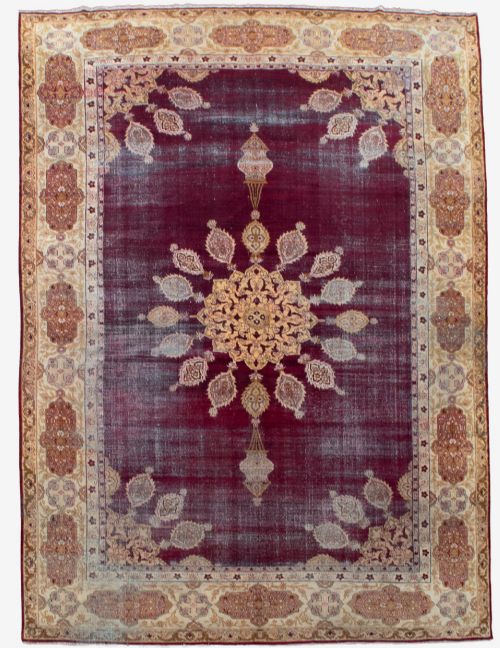
A victorian floor rug brings together nineteenth-century rooms and woven traditions from Persia and India. These textiles function as large area carpets, country house carpets, or long runners designed for hallways and corridors.
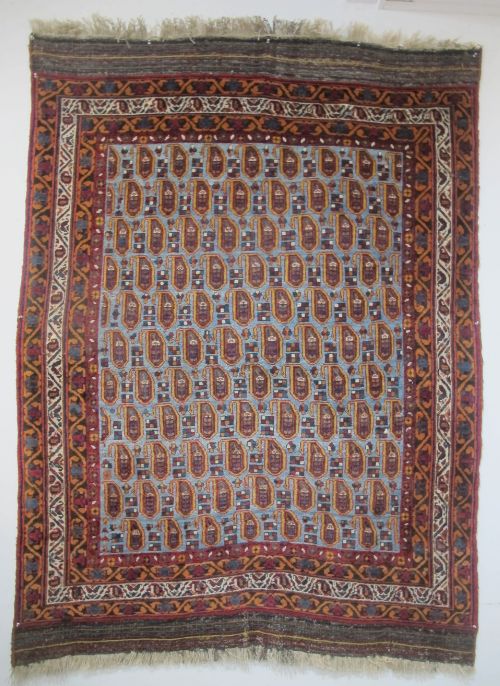
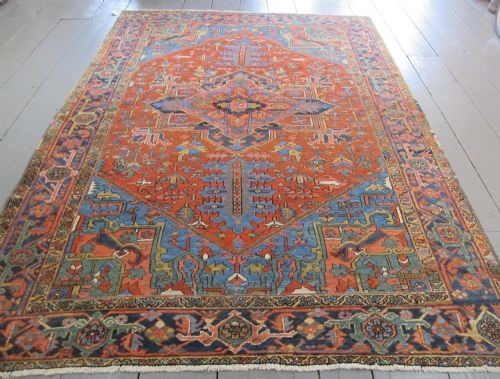
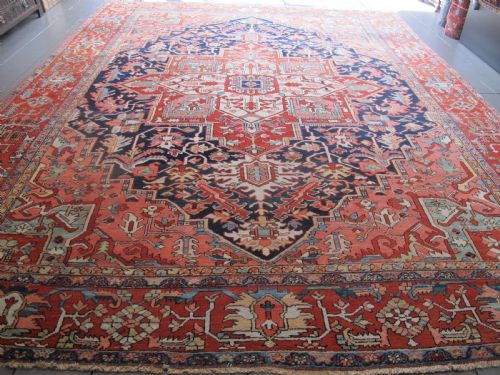
The pieces on this page span the 1870s, 1880s, 1890s, and the turn of the twentieth century. They include village weaves and city workshops from regions such as Heriz, Fereghan, Agra, and Amritsar.
Buyers encounter tribal designs featuring dragons, phoenixes, and shrub motifs, alongside grander geometric and all-over medallion compositions. The scale ranges from compact scatter sizes to room-sized carpets exceeding five metres.
Materials and Methods
These floor rugs rely on wool foundations and piles, combined with cotton warp and weft threads for structural stability. The fleece is knotted by hand to withstand heavy foot traffic in domestic halls and reception rooms.
Weavers utilised natural dyes to achieve deep reds, blues, and ivory grounds that soften gracefully over time. These organic colourants interact with the wool fibres to produce varied hues across individual carpets.
Victorian Floor Rug Retail Price Guide 2026
Typical asking prices for victorian floor rug among the pieces listed under this phrase on Sellingantiques today, from the lower quarter to the upper quarter. They describe what is for sale here now, not the wider market.
Materials across these listings rely entirely on wool and cotton, coloured with natural dyes.
Assessing the Weave
Quality rests on the density of the knotting and the precision of the drawing within the design. Finer city carpets display intricate floral curves, while robust village and tribal rugs show bolder, graphic lines.
The condition of the wool pile and the integrity of the original selvedges and ends determine the structural survival of each piece. Depth of natural dye and clarity of palette separate standard room coverings from exceptional examples.
The Victorian Floor Rug Glossary
- Warp
- The vertical threads stretched across the loom that carry the tension of the rug. The exposed ends of these threads often form the fringe.
- Weft
- The horizontal threads passed between the warp threads to hold the rows of knots in place. This structure gives the carpet its firmness on the floor.
- Selvedge
- The bound edge running along the outer sides of the rug. This finishing prevents the edges from fraying under heavy use.
- Natural Dye
- Colourants derived from plants, insects, and minerals rather than synthetic chemicals. These dyes produce complex, muted tones that age with character.
- Medallion
- A symmetrical central ornament placed in the field of the carpet. Many traditional Persian designs build their geometry around this focal point.
Victorian Floor Rug: Frequently Asked Questions
How do I place a long runner rug?
Long runner rugs suit hallways, corridors, and gallery spaces where they soften floorboards and direct movement. Their narrow proportions handle heavy foot traffic while framing the length of a passage.
Ensure the floor beneath is flat and consider a secure underlay to keep the heavy wool textile stable. These runners bridge different rooms with continuous pattern and colour.
What defines an Agra carpet?
Agra carpets originate from workshops in India during the nineteenth century, often adapting Persian designs for British and European homes. They typically feature balanced all-over patterns and substantial room-sized proportions.
These carpets combine Indian weaving expertise with traditional motifs like shrubs and palmettes. Their sturdy construction made them popular choices for grand Victorian country houses.
How do I care for a wool floor rug?
Regular gentle vacuuming without a beater bar removes grit that settles deep within the wool pile. Keep the rug out of direct, harsh sunlight to protect the natural dyes from fading unevenly.
Rotate the carpet periodically to distribute foot traffic and furniture weight evenly across the surface. Professional cleaning tailored to antique textiles preserves the integrity of the natural fibres.
What is a village rug?
Village rugs are woven by independent artisans in rural communities rather than large urban manufactories. They display geometric interpretations of traditional motifs handed down through generations.
These pieces often feature charming irregularities in line and colour that reflect the weaver's direct environment. Their robust construction makes them practical for everyday domestic use.