




Victorian Fire Bucket
These heavy-duty containers combine utility and robust materiality, serving collectors as both historical firefighting equipment and fireside storage.
Victorian Fire Bucket
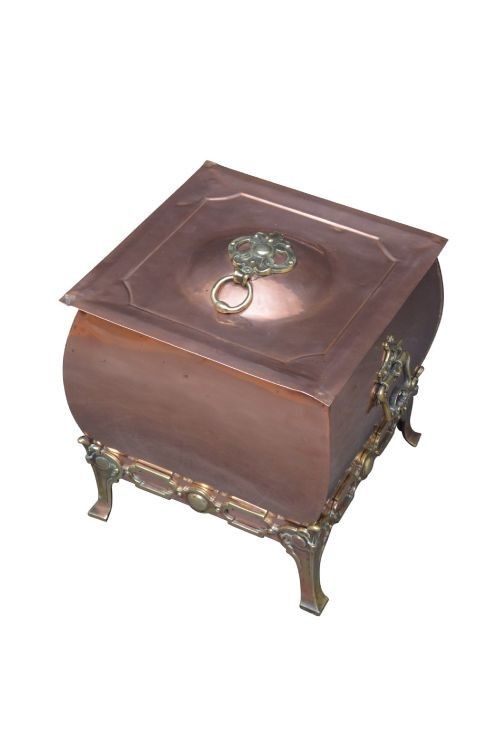
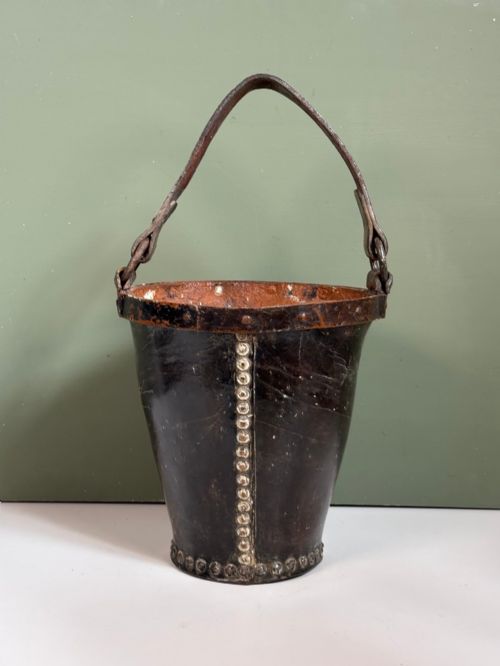
A victorian fire bucket represents practical utilitarian design from the nineteenth century, originally kept filled with water or sand for emergency use in public buildings, ships, and large country houses. Collectors searching for a victorian fire bucket frequently encounter pieces fashioned from stitched leather, oak staves with iron bands, and heavy riveted copper or brass.
The material evolution spans from traditional boiled and soft leather versions marked with royal or naval arms to later industrial metal boilers and arts and crafts copper vessels. Many surviving examples transitioned into domestic service beside the hearth as log bins, coal scuttles, and planters long before entering the antiques market.
Materials and construction
Makers constructed leather examples using heavy hides that were boiled or treated to hold water, often reinforced with stitched seams and interior coatings, while wooden variants relied on cooperage techniques using oak staves bound with iron hoops.
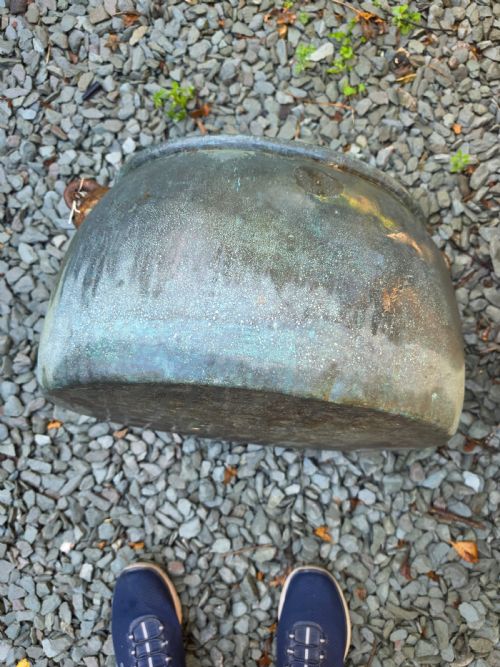
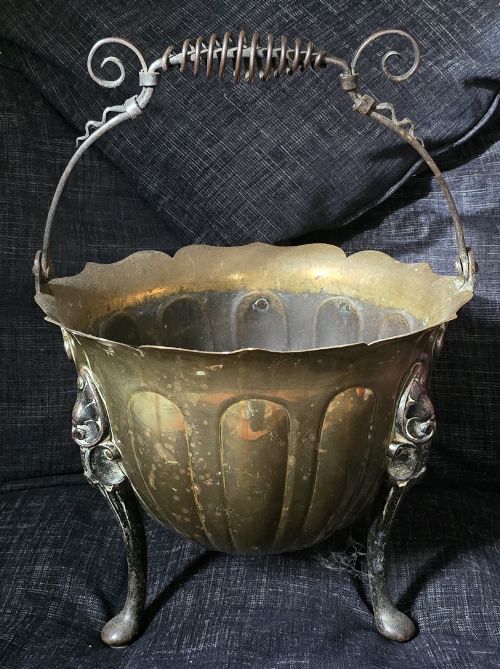
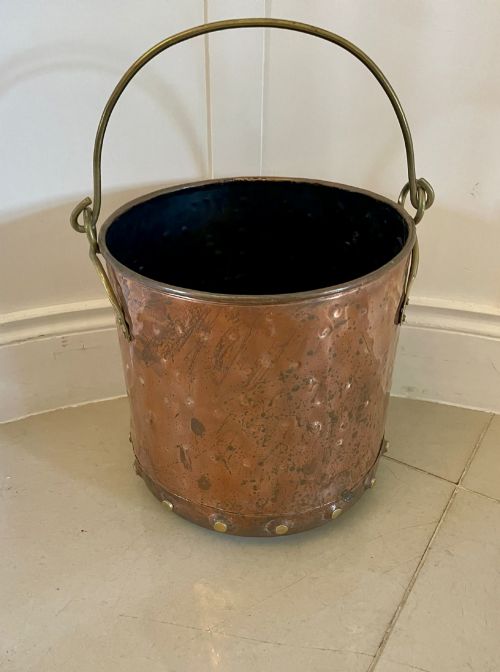
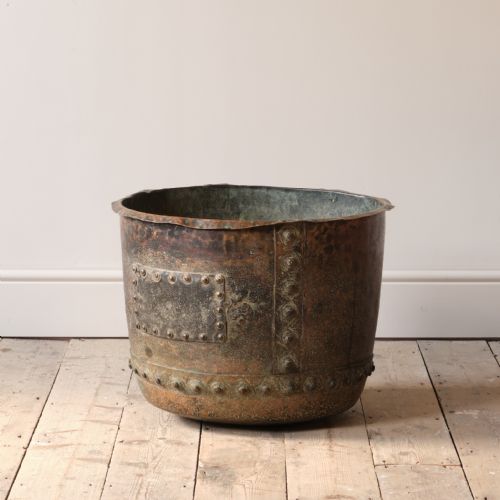
Metal versions demonstrate hand-beating and riveting techniques, utilising heavy gauge copper and brass sheets joined with structural rivets around sturdy iron handles and rims.
Victorian Fire Bucket Retail Price Guide 2026
Typical asking prices for victorian fire bucket among the pieces listed under this phrase on Sellingantiques today, from the lower quarter to the upper quarter. They describe what is for sale here now, not the wider market.
Some nineteenth century examples survived because salesmen carried miniature versions door-to-door to demonstrate fire extinguisher patents.
Assessing quality and authenticity
Quality rests in the integrity of the original construction, where tight copper riveting, uncompromised leather seams, and intact historical crests or armorial markings elevate a piece above standard utilitarian ware.
Patina and surface wear dictate desirability, with untouched oxidised copper surfaces and aged leather retaining their original character far better than aggressively polished or later restored examples.
The Victorian Fire Bucket Glossary
- Armorial crest
- A design denoting family lineage or institutional identity. These painted or embossed emblems frequently appear on naval and country house leather buckets.
- Boiled leather
- Material subjected to a hot wax or water treatment to harden the hide. This process made leather rigid and waterproof for container use.
- Riveted copper
- Metal plates joined securely with heavy metal pins. This structural method provided immense strength for large boilers and coal storage.
- Purdonium
- A specialised domestic coal box featuring a sloping front or drop-down door. These household items often shared floor space with traditional fireside buckets.
- Cooperage
- The traditional craft of making wooden stave vessels bound with metal hoops. Oak fire buckets utilised these exact watertight assembly methods.
Victorian Fire Bucket: Frequently Asked Questions
Were these buckets actually used for fires?
Original nineteenth century examples stood in designated hallway brackets ready to combat domestic or maritime blazes with water or sand.
Over decades of survival, many lost their strict emergency purpose and transitioned into domestic service by the hearth as log holders.
How do I clean copper fire buckets?
Preserving the historical surface requires minimal intervention, avoiding harsh modern abrasives that strip away decades of authentic oxidation.
Gentle dusting with a dry cloth maintains the dark patination valued by collectors who prefer age over a bright shine.
Are leather buckets still watertight?
Aged hide loses its original flexibility and structural sealing over generations, making modern liquid containment risky.
Displaying them dry protects the fragile stitching and historical coatings from further moisture damage.
What indicates a naval connection?
Stamped armorial crests, painted royal cyphers, and specific institutional markings identify items commissioned for maritime vessels.
These pieces often display sturdier construction designed to withstand the harsh conditions aboard nineteenth century ships.