
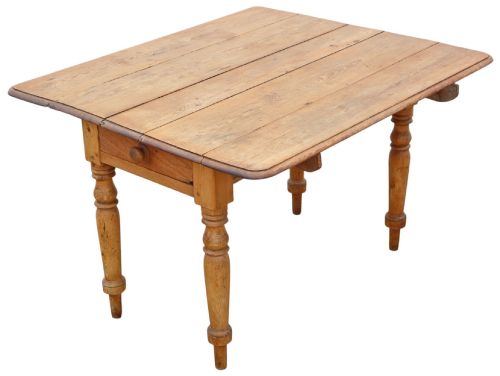
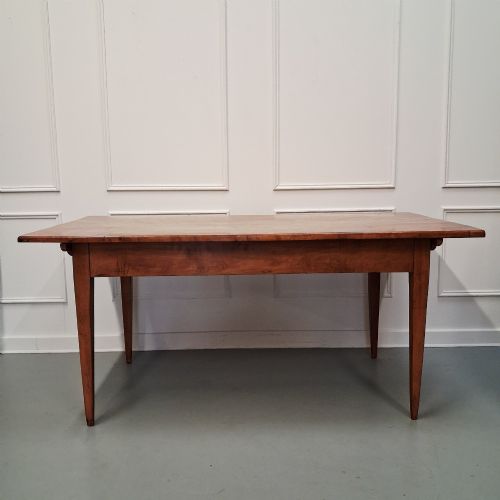
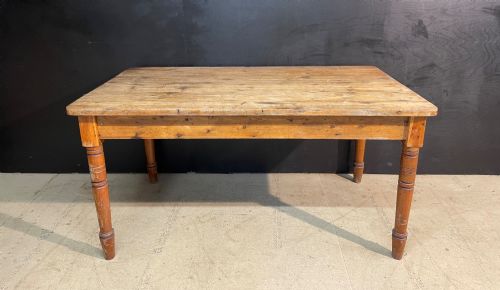
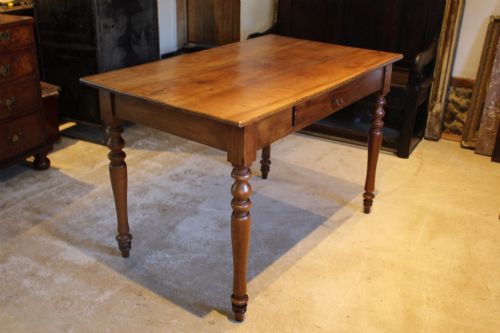
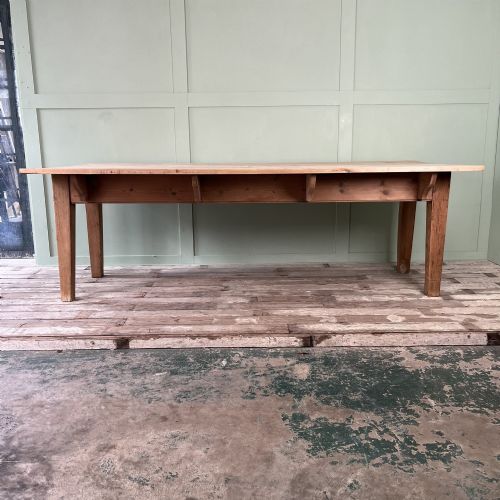
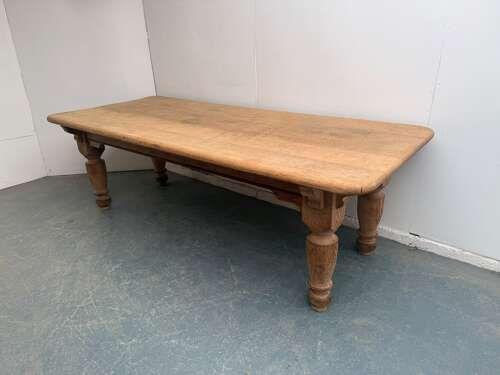
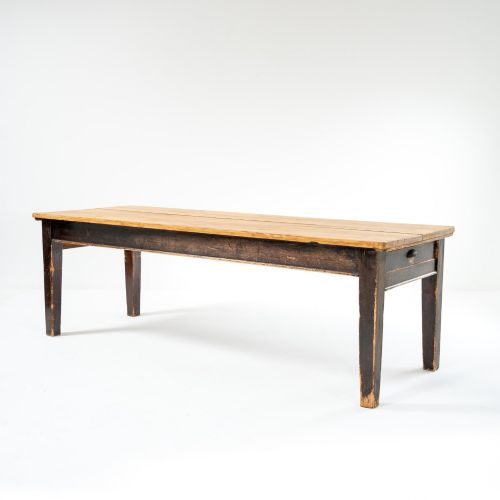
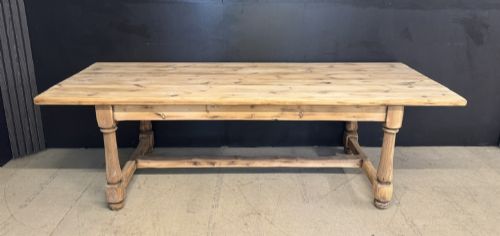

Victorian Farmhouse Kitchen Table
When you search for a victorian farmhouse kitchen table, you are looking at sturdy, hardworking wooden boards designed for daily domestic service.
Victorian Farmhouse Kitchen Table
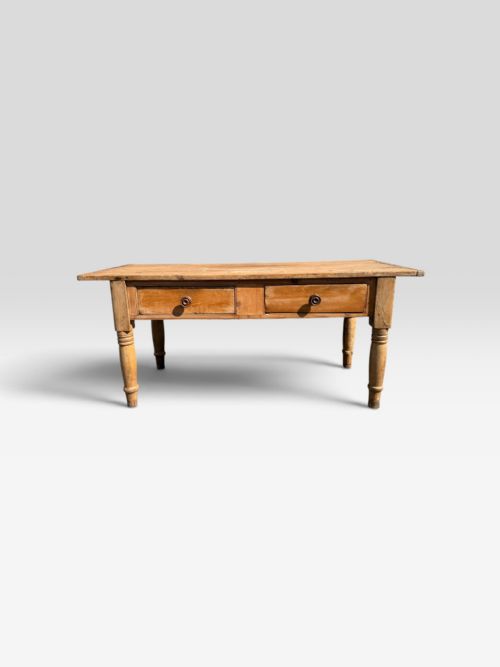
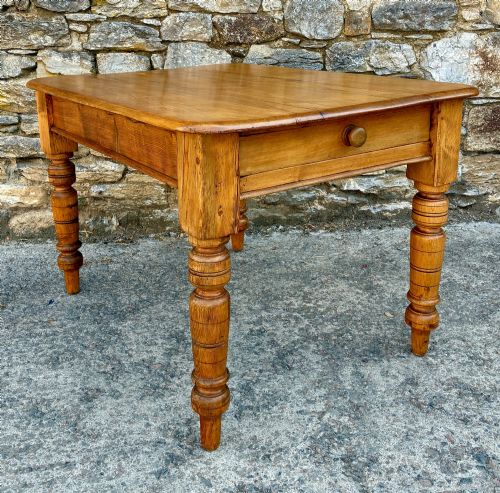
A victorian farmhouse kitchen table brings solid timber construction and practical utility into the modern domestic space. These surfaces served generations for food preparation, baking, and family meals in country kitchens.
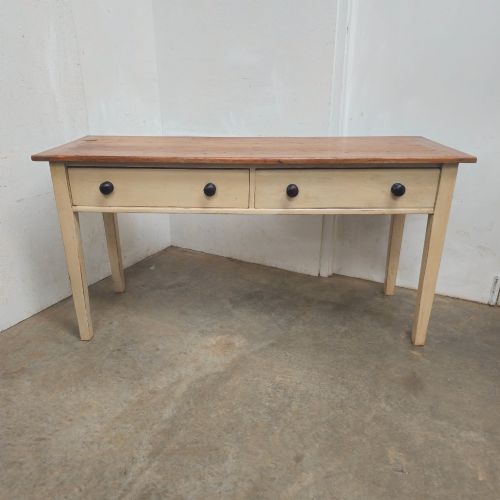
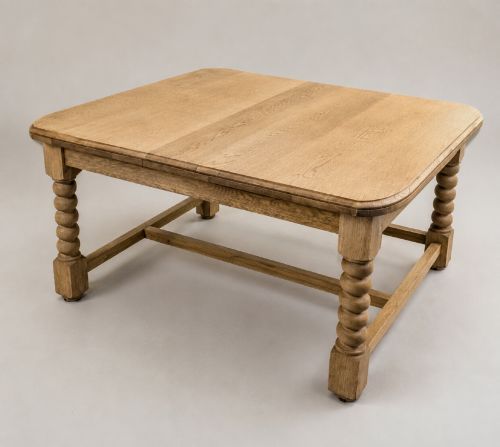
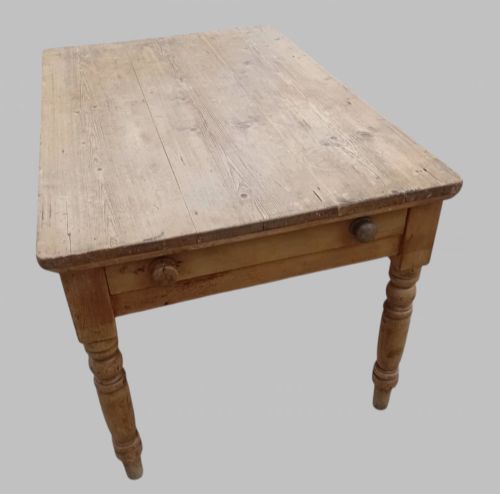
The version you are most likely to meet on this page is constructed from pine, often showing scrubbed tops or painted bases. Examples also appear in oak, elm, and pitch pine, spanning forms from drop-leaf mechanisms to large refectory boards.
How They Were Made
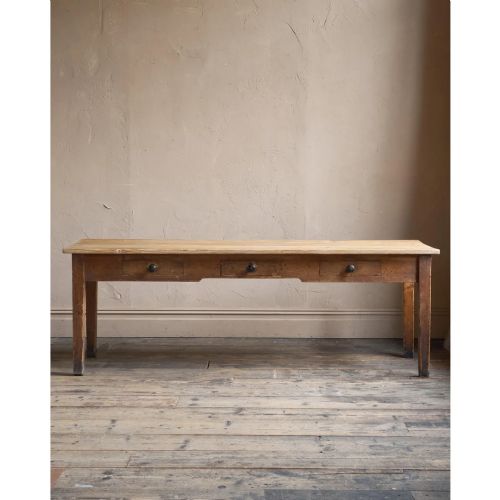
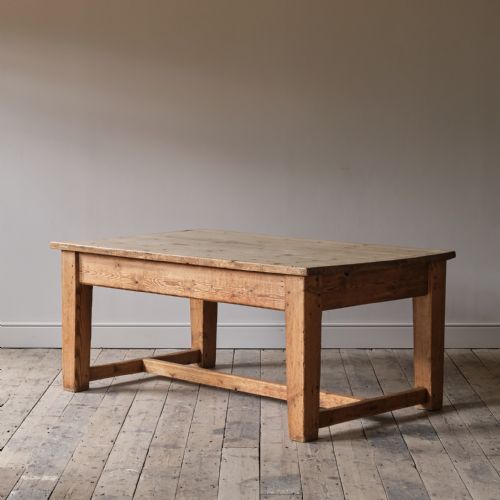
Cabinet makers built these pieces using dense domestic softwoods and hardwoods like pine, oak, and elm joined by sturdy stretchers and sturdy legs. Tops often consist of thick planks secured to simple aprons, sometimes incorporating drawers for utensil storage.
Surfaces frequently show the marks of decades of manual work, finished with natural wax, original paint, or scrubbed clean timber. Brass castors occasionally support the feet, while drop-leaf actions and extendable frames provide flexible proportions.
One clever piece includes a brass base beneath the timber top.
What Varies in Quality
The integrity of the timber forms the primary distinction between simpler utility pieces and finer examples. Dense old-growth pine and well-figured oak provide superior structural stability compared to softer, more reactive woods.
Originality of surface finish elevates certain pieces above standard workshop stock. Tables retaining genuine period paint or untouched scrubbed tops demonstrate higher integrity than heavily altered surfaces.
The Victorian Farmhouse Kitchen Table Glossary
- Scrubbable top
- A wooden table top designed to withstand repeated aggressive washing with water and scouring sand. This process wears away the softer grain lines and leaves the harder growth rings standing proud.
- Refectory table
- A long, narrow dining table traditionally used in communal dining halls. Nineteenth-century country versions adapt this proportion for domestic kitchens and dining rooms.
- Pitch pine
- A resinous North American pine species valued for its durability and strong grain pattern. Makers utilised it for heavy-duty kitchen and harvest tables.
- Drop leaf
- A table top configuration featuring hinged flaps that fold down to save space when not in use. Brackets or swing legs support the flaps when raised.
- Dairy table
- A specialised low-absorbency wooden surface used for milk processing and cheese making. These examples frequently feature scrubbed pine or painted elements.
Victorian Farmhouse Kitchen Table: Frequently Asked Questions
How were these tables used originally?
These tables functioned as the central workstation for rural households, accommodating everything from food preparation and dough kneading to laundry sorting and candle making.
Families also gathered around them for daily meals, making them the literal and social heart of the domestic interior.
Can I use a victorian table for daily dining?
These sturdy wooden surfaces suit daily family dining and entertaining exceptionally well. Their generous proportions easily accommodate modern seating arrangements.
Routine care involves simple wiping with damp cloths and occasional waxing to protect the timber grain from spills.
How do I identify a genuine period piece?
Examination of the construction methods reveals the age of the woodwork, including hand-cut joinery, timber shrinkage, and traditional fixings. Tool marks left by saws and planes differ noticeably from modern factory production.
Patina accumulated across decades of domestic service provides further visual confirmation of genuine age.
What is the difference between pine and oak versions?
Pine provides a lighter, softer surface that often shows the pale tones of scrubbed wood or traces of historic painted finishes. It forms the standard material for everyday domestic farmhouse furniture.
Oak offers a heavier, denser construction with pronounced grain patterns, typically reserved for grander refectory or dining variations.