



Victorian Equestrian Figures
Victorian equestrian figures bring the drama of the 19th-century stable and hunt straight into your home.
Victorian Equestrian Figures
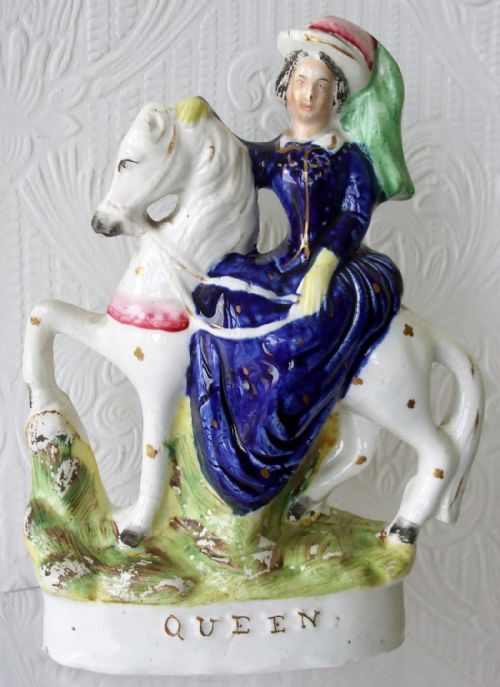
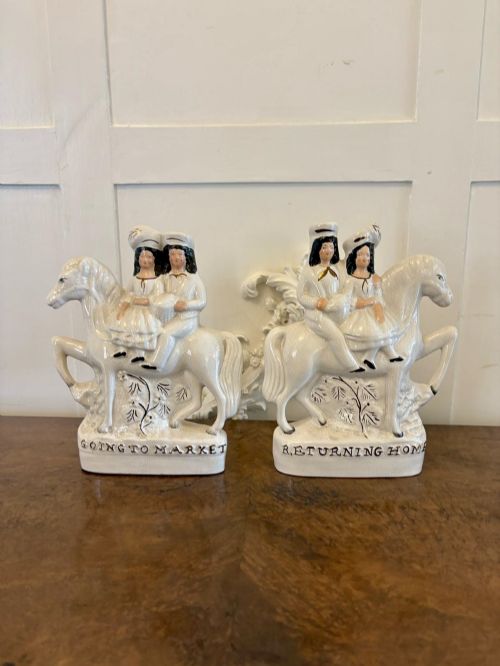
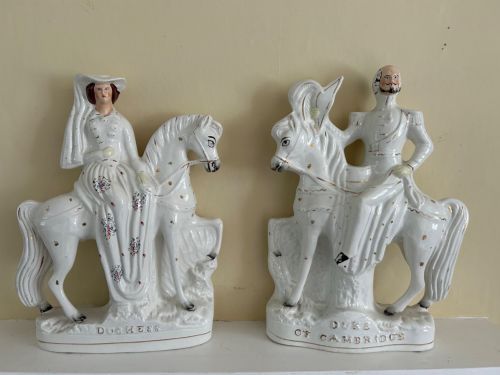
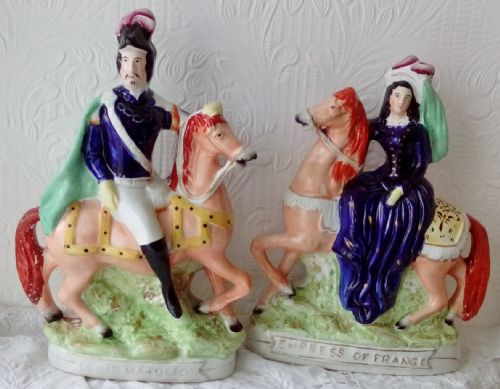
When searching for victorian equestrian figures, collectors encounter a diverse array of objects spanning Staffordshire pottery, cast bronze sculptures, and oil paintings depicting riders and horses. The most frequent iteration on this page is the Staffordshire flatback figure, portraying historical personages, royals, and literary heroes on horseback.
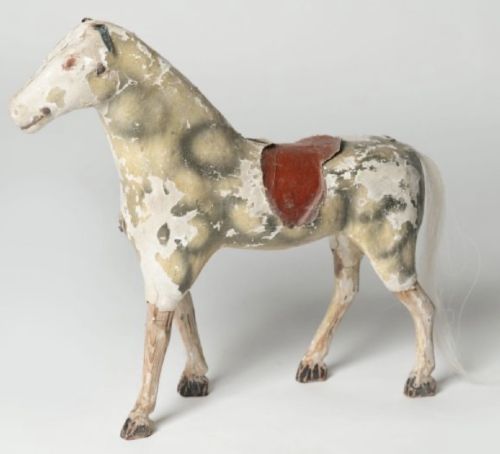
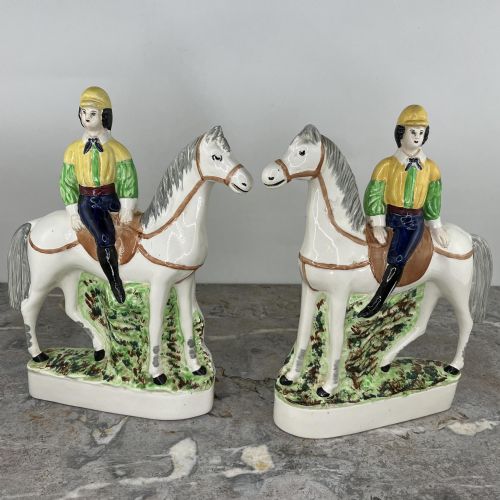
These ceramic and metal pieces capture the Victorian fascination with horsemanship, ranging from Scottish highlanders and jockeys to military figures and hunting scenes. Alongside earthenware pottery, the selection embraces bronze Animalier sculptures, brass doorstops, and genre paintings recording horses in domestic and rural landscapes.
Materials and Construction
The pottery examples rely on moulded earthenware, finished with hand-painted enamel colours and glazed surfaces to define the riders and mounts. Staffordshire potters shaped these flatback figures to sit neatly against mantelpieces, often adding gilt highlights to uniforms and harness details.
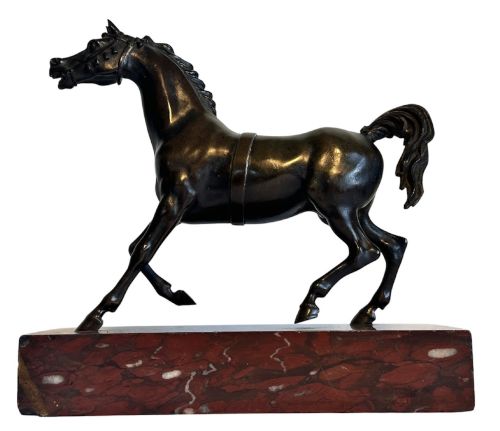
Metalworks utilise bronze and cast brass, frequently mounted on heavy marble bases for stability. Bronze pieces employ the lost-wax casting technique to capture muscular definition in animals, while paintings use oil and watercolour on canvas or paper to depict equine subjects.
Victorian Equestrian Figures Retail Price Guide 2026
Typical asking prices for victorian equestrian figures among the pieces listed under this phrase on Sellingantiques today, from the lower quarter to the upper quarter. They describe what is for sale here now, not the wider market.
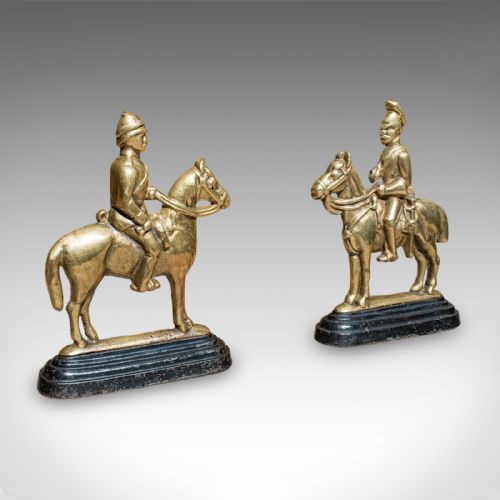
Victorian households propped open their parlours with heavy brass horses and mounted jockeys.
Assessing Quality and Execution
Quality rests upon the crispness of the modelling and the precision of the hand-painting in ceramics, where superior pieces retain clean enamel lines without blurring. In bronze sculptures, excellence shows in the anatomical fidelity of the horse and the depth of the chasing work on the metal surface.
The vitality of the composition separates standard decorative items from superior works. Whether in a painted hunting scene or a cast bronze stallion, a successful piece conveys natural movement and proportion rather than stiff execution.
John Willis Good·Léon Joseph Voirin·Pierre Jules·George Turner·Abraham Cooper·Thomas Blinks
The Victorian Equestrian Figures Glossary
- Flatback
- A Staffordshire pottery figure designed with an unglazed or partially finished flat reverse so it could stand flush against a wall. This construction method saved clay and time during production.
- Animalier
- A 19th-century sculptural style focused on the realistic depiction of animals, particularly horses and hounds in motion. French and British workshops produced numerous bronze examples of this genre.
- Earthenware
- A porous pottery body fired at lower temperatures, commonly used for Staffordshire figures. It requires an opaque glaze or enamel coating to hold water and colour.
- Animalier Bronze
- A cast metal sculpture celebrating animal subjects, often signed by the artist on the base. These works date predominantly from the mid to late 19th century.
- Doorstop
- A heavy utilitarian object, often cast in brass or iron, designed to hold doors open. Equestrian themes such as horses and jockeys were popular motifs for these household items.
Victorian Equestrian Figures: Frequently Asked Questions
What periods do these figures cover?
The listings span the 19th century, with a strong concentration in the Victorian era between 1860 and 1890. Items range from early primitive pottery to detailed late-century bronzes.
Most dated pieces cluster around the middle and final decades of the 19th century, reflecting the peak of Victorian Staffordshire pottery and Animalier metalwork production.
How were Staffordshire figures displayed?
Pottery figures were typically made with flat backs designed to stand on mantelpieces, shelves, or sideboard tops in Victorian homes. Their flat reverses allowed them to sit flush against the wall.
Many were produced in pairs to balance symmetrical mantel arrangements, depicting corresponding historical figures or matching riders.
What materials are common?
Ceramics and earthenware dominate the pottery groups, decorated with bright enamel colours and clear glazes. Bronze and cast brass appear frequently in the sculptures and doorstops.
Additional materials include marble bases for bronze figures, giltwood frames for paintings, and occasional porcelain or paper elements.
How do bronze and pottery differ?
Bronze sculptures utilise cast metal to achieve anatomical precision and muscular detail in horses and riders, often mounted on heavy stone. Pottery figures rely on moulded clay and painted glazes for a more decorative, folk-art appearance.
While bronzes capture realistic movement, Staffordshire ceramics emphasise bright colour and narrative storytelling through historical subjects.