

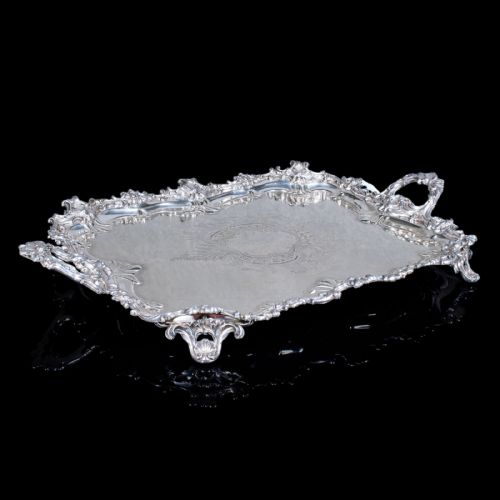


Victorian Engraved Silver Tray
A victorian engraved silver tray brings considerable weight and ornate surface detail to the table, making these serving pieces enduringly popular for formal entertaining.
Victorian Engraved Silver Tray
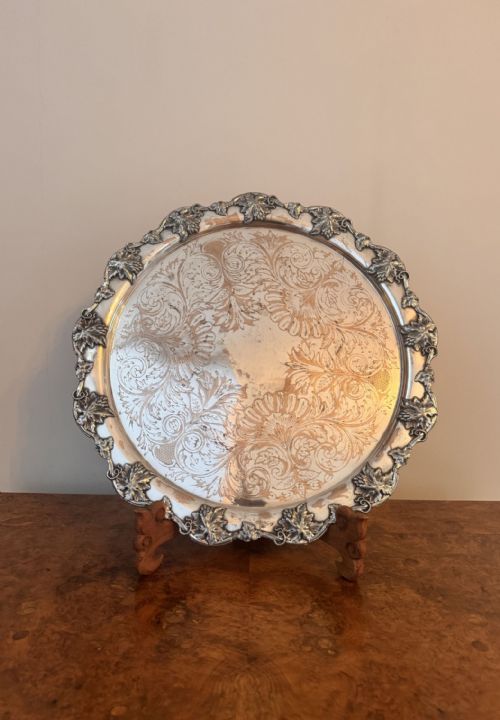
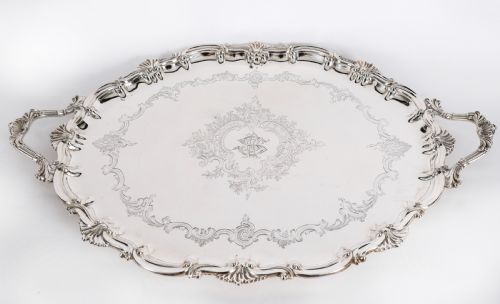
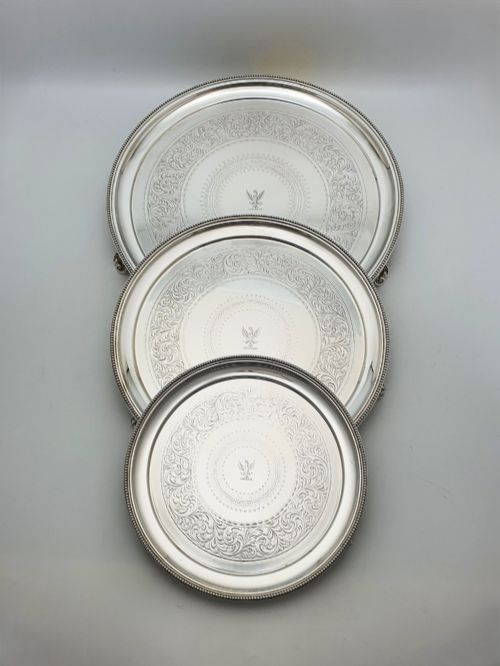
A victorian engraved silver tray encompasses a variety of serving forms, from circular salvers and oval platters to gallery trays with raised pierced rims. These items date primarily from the nineteenth century, including specific decades such as the eighteen-eighties and eighteen-nineties alongside broader Victorian and Edwardian periods.
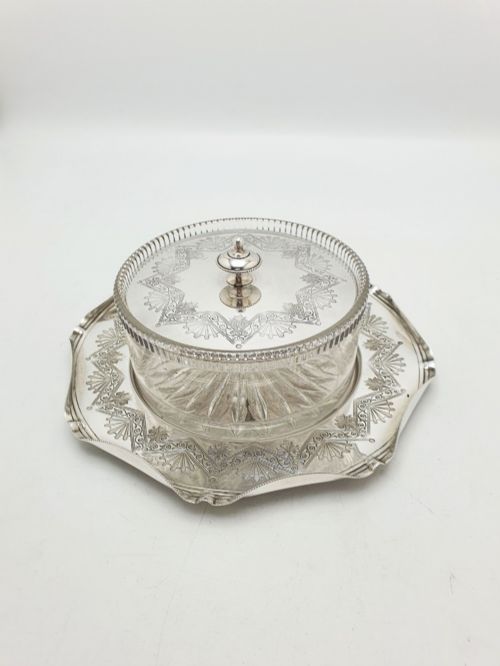
The most common examples encountered on this page are silver plated or electroplated nickel silver serving trays, though sterling silver pieces also appear. Alongside standard serving trays, related serveware such as biscuit barrels, ink stands, and butter dishes occasionally share these listings.
How they were made
Makers utilised techniques such as silver plating over base metals like nickel silver, alongside traditional Old Sheffield plate methods where a thin sheet of silver was fused to a copper core. Sterling silver versions were shaped from solid silver and hallmarked accordingly.
Surface ornamentation relied heavily on hand engraving, creating floral, foliate, and scroll motifs across the metal. Rims were often cast separately with detailed pierced, reticulated, or beaded borders before being soldered to the main body.
One extraordinary tray carries the crest of the Lister family alongside a proud association with the Chicago World Fair.
What varies in quality
The crispness and depth of the hand engraving set superior pieces apart from simpler, shallower work. Artisans who spent more time cutting intricate floral or armorial details produced surfaces that catch the light with greater distinction.
Substantial gauge metal and robust construction ensure that better trays resist warping and hold their weight firmly in the hand. The quality of the original plating or the purity of the sterling silver dictates how well the surface ages over generations.
Thomas Bradbury And Sons·Elkington·John Harrison·Walker And Hall·Padley Parkin·J Dixon And Sons·Tiffany And Co·Fenton Russel·Lee And Wigfull
The Victorian Engraved Silver Tray Glossary
- Salver
- A flat tray, usually with feet, used for serving food or drinks. They are traditionally circular or shaped with cut corners.
- Gallery tray
- A tray featuring a pierced or solid upright gallery rim around the edge to prevent items from sliding off. These rims are frequently cast and pierced by hand.
- EPNS
- Electroplated nickel silver, a common base metal method developed in the nineteenth century. It provided the appearance of solid silver at a lower production cost.
- Old Sheffield Plate
- An early plating technique created by fusing a layer of silver to a copper ingot before rolling them into sheets. Edges often reveal subtle copper seams upon close inspection.
- Reticulated
- Openwork decoration formed by piercing a pattern into the metal sheet. This technique creates delicate lattice or geometric borders.
Victorian Engraved Silver Tray: Frequently Asked Questions
How do I clean a silver tray?
Use a soft cloth and a dedicated silver polish designed to lift tarnish without abrading the engraved details. Avoid harsh chemical dips that can strip the underlying silver plate.
Rinse the tray thoroughly in warm water and dry it immediately with a lint-free cloth to prevent water spots from forming on the engraved surface.
Can I use these trays for daily serving?
These pieces function well for serving drinks or afternoon tea, provided you handle them with care to protect the vintage surfaces. Placing soft liners beneath heavy decanters helps prevent surface scratching.
After use, wipe the tray down with a damp cloth rather than submerging it in water, particularly if the piece is silver plated.
What is the difference between a tray and a salver?
Salvers are traditionally smaller, formal serving trays that stand on small feet and are typically circular or square. Trays encompass a broader range of shapes, including long oval serving platters with handles.
Both forms feature similar engraved decoration, but salvers are generally designed to hold glasses or letters rather than heavy dinner service.
How do I date a Victorian tray?
Examine the piece for maker's marks, registry marks, or silver hallmarks that indicate the exact year of assay or production. Stylistic clues, such as Rococo Revival motifs or Aesthetic movement engraving, also narrow down the decade.
Construction methods, including the presence of copper seams on older Sheffield plate or electroplate stamps on later nineteenth-century items, provide further chronological context.