


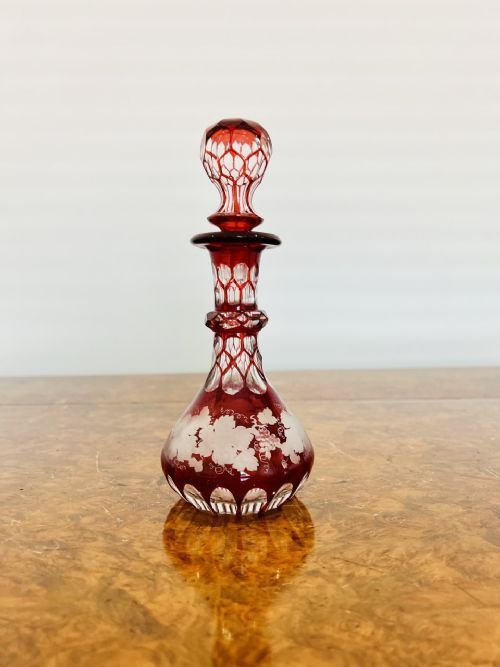


Victorian Engraved Glass Bottle
These Victorian engraved glass bottle pieces are functional vessels combining cut crystal and sterling silver mounts, prized for their decorative wheel-engraved motifs.
Victorian Engraved Glass Bottle
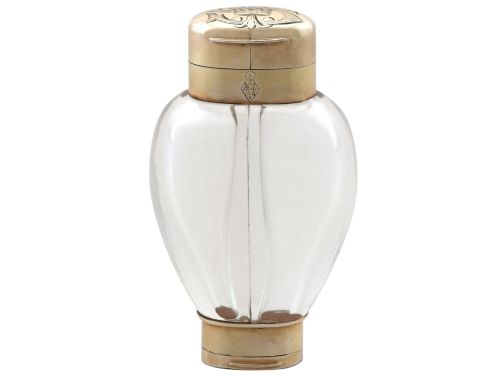
A victorian engraved glass bottle brings together functional glassware and precious metal mounts, serving primarily as scent bottles, perfume decanters, and table decanters. These items emerge frequently from the nineteenth century in forms ranging from small pocket scent vials to large shaft and globe decanters.
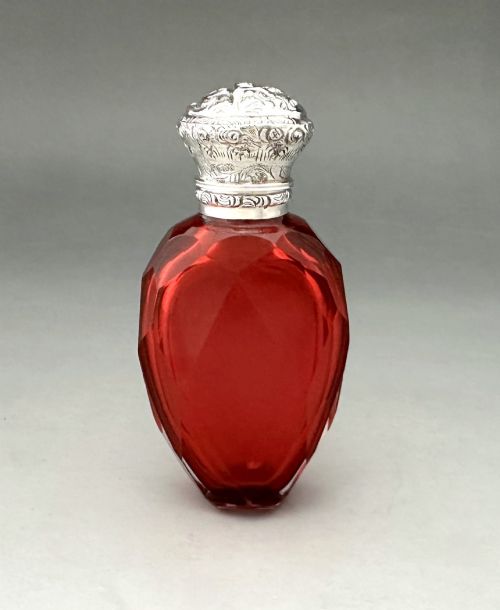
The selections span clear cut crystal, ruby glass, and amethyst glass, often enhanced with silver collars, caps, or casing. Buyers encounter both single-ended vanity jars and double-ended perfume containers designed for dressing tables and travel.
How they were made
Makers utilised lead crystal and coloured glass bodies, shaping them through blowing, moulding, and heavy facet cutting. Artisans then applied wheel-engraving directly to the glass surface to create detailed floral, foliate, or heraldic designs.
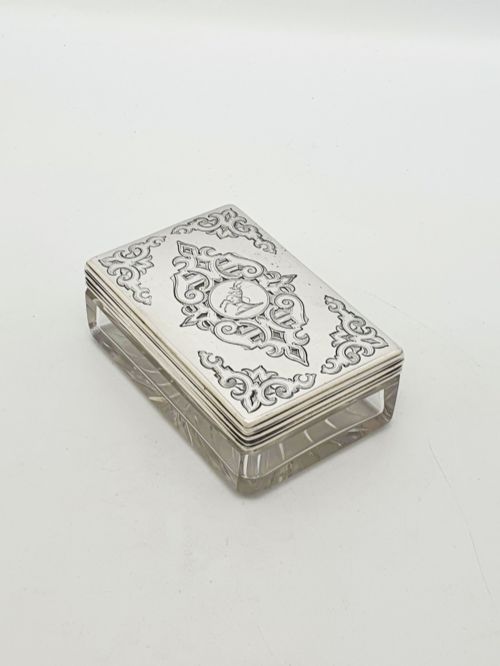
Silver components such as collars, caps, and casing were fabricated separately from sterling silver, frequently featuring chased or engraved details before being secured to the glass neck or body.
Victorian Engraved Glass Bottle Retail Price Guide 2026
Typical asking prices for victorian engraved glass bottle among the pieces listed under this phrase on Sellingantiques today, from the lower quarter to the upper quarter. They describe what is for sale here now, not the wider market.
Materials documented across the inventory include clear cut crystal, ruby glass, amethyst glass, and solid sterling silver.
What varies in quality
The depth and crispness of the wheel-engraving dictate the visual standard of the glass, distinguishing fluid, hand-cut motifs from shallow surface etching. Clarity of the crystal and richness of the ruby or amethyst colour further separate standard examples from finer works.
The weight and integrity of the sterling silver mounts influence overall execution, where substantial collars and well-fitted caps demonstrate superior manufacturing standards compared to thin or replacement hardware.
S. Morden and Co
The Victorian Engraved Glass Bottle Glossary
- Shaft and globe
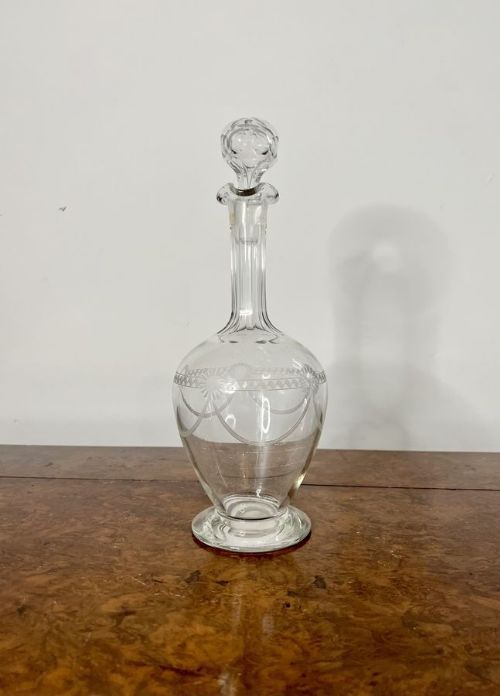
- A decanter form featuring a long slender neck rising above a rounded spherical body. This proportion provides stability and accommodates engraved decoration along the lower chamber.
- Double-ended
- A perfume bottle design featuring hinged or screw caps at both extremities, allowing access to two distinct compartments. These vessels often store different scents within a single symmetrical glass tube.
- Sterling silver
- An alloy of silver containing 92.5 percent pure silver by mass and 7.5 percent other metals, usually copper. This standard appears on the collars, caps, and outer casings of many portable glass containers.
- Ruby glass
- Deep red glass created by adding gold chloride or copper to the molten batch during production. The resulting rich hue is characteristic of nineteenth-century dressing table accessories.
- Lead crystal
- Glass containing a high proportion of lead oxide, which increases weight, brilliance, and refractive index. This material allows deep facet cutting that catches light effectively.
Victorian Engraved Glass Bottle: Frequently Asked Questions
How were Victorian scent bottles used?
These small vessels carried liquid perfumes for personal refreshment during social outings. Owners kept them in pocketbooks or displayed them on dressing tables alongside matching vanity items.
The hinged or screw silver caps secured volatile contents while allowing controlled application of the fragrance using a glass stopper or metal rod.
What is a shaft and globe decanter?
This descriptor refers to a specific silhouette defined by a narrow vertical neck and a spherical lower body. The design offered a secure grip for pouring while keeping sediment settled in the base.
Craftsmen often covered the globe portion in wheel-engraved foliate patterns to contrast with the plain or faceted neck above.
How do I care for antique glass bottles?
Clean glass vessels using lukewarm water and a soft brush, avoiding harsh chemical detergents that might harm aged surfaces. Keep silver components dry to prevent tarnish accumulation and protect delicate engravings.
Store pieces away from direct sunlight and rapid temperature fluctuations to maintain the structural integrity of both the crystal and any internal cement.
Why are some bottles coloured ruby or amethyst?
Manufacturers added metallic oxides to the molten glass batch to achieve specific decorative hues popular in nineteenth-century interiors. Gold and copper produced deep red tones, while manganese created purple shades.
These coloured glass bodies provided a striking contrast against bright sterling silver mounts and enhanced the visual depth of surface engravings.