



Victorian Enamel Trinket
A Victorian enamel trinket brings vibrant colour and meticulous miniature craft to a dressing table or pocket, offering a tangible piece of nineteenth-century decorative history.
Victorian Enamel Trinket
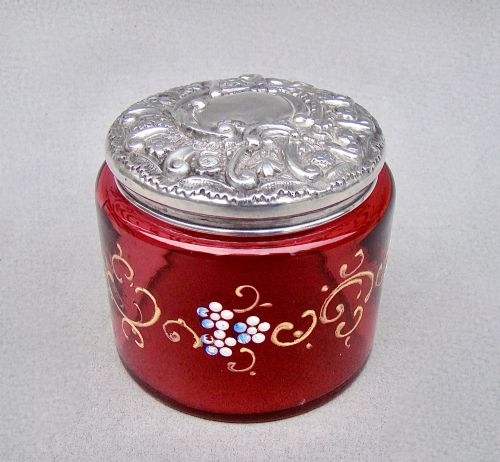
A Victorian enamel trinket encompasses small containers such as pill boxes, snuff boxes, dressing table jars, and jewellery caskets intended for personal items and vanity displays. These pieces bridge utilitarian function and decorative display, serving as tactile objects that reflect nineteenth-century taste.
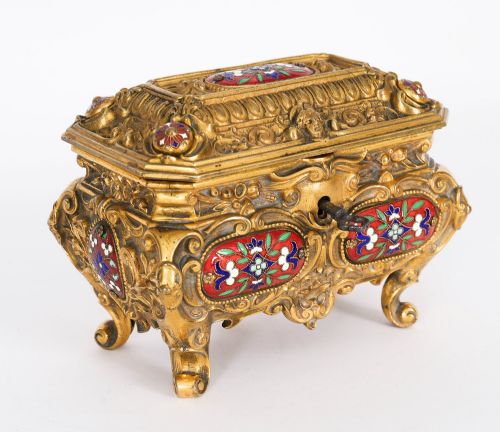
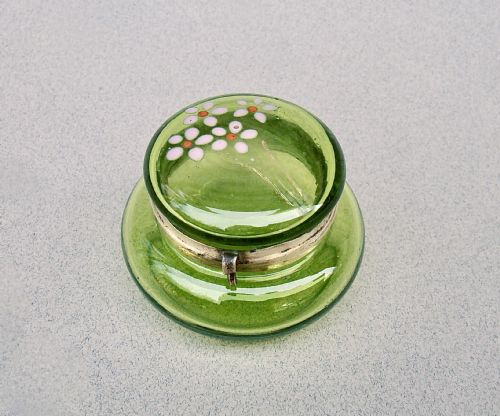
The versions most commonly met on this page originate from France and Britain during the nineteenth century, spanning periods from the 1800s through the Edwardian era. Forms range from round porcelain boxes and glass dressing table sets to elaborate gilt bronze and champleve enamel table boxes.
Makers and workshops utilised diverse structural bases, pairing glass, porcelain, and metal with surface enamel work. Collectors encounter both simple Bristol blue glass jars and highly ornate Renaissance Revival table boxes featuring cameo and gold appliques.
Materials and Technique
Makers constructed the foundation of these trinkets using cast gilt bronze, brass, blown glass, and hard-paste porcelain, often housing them within metal mounts. These materials provided rigid structural integrity necessary for daily use on dressing tables and inside waistcoats.
Surface decoration relies heavily on champleve enamel, hand-painted porcelain miniatures, and applied gold leaf. Craftsmen fused powdered glass to metal surfaces through firing, or applied detailed hand-painting over green and blue glass and porcelain bodies.
Victorian Enamel Trinket Retail Price Guide 2026
Typical asking prices for victorian enamel trinket among the pieces listed under this phrase on Sellingantiques today, from the lower quarter to the upper quarter. They describe what is for sale here now, not the wider market.
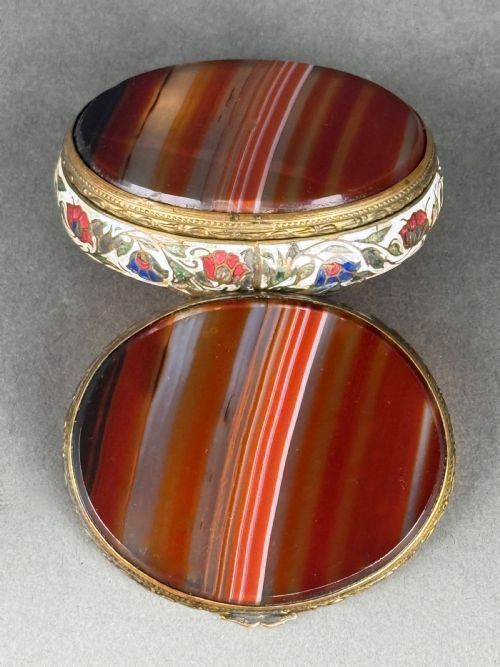
Listings feature items spanning the 1800s, Victorian, and Edwardian periods, utilising materials including banded agate, porcelain, gilt bronze, and glass.
Assessing Quality
The refinement of the enamel work and the crispness of the gilt bronze mounts separate finer examples from standard production. Superior pieces display precise cell work in champleve or detailed hand-painted brushwork on porcelain miniatures.
Material combination and structural complexity also define the tier of a piece. Trinkets incorporating banded agate, cameo appliques, or multi-part hinged metalwork represent a higher standard of nineteenth-century craftsmanship than plain glass or single-material boxes.
The Victorian Enamel Trinket Glossary
- Champleve enamel
- An enamelling technique where troughs or cells are carved into a metal surface and filled with vitreous enamel before firing. This method creates bold coloured patterns bounded by thin metal lines.
- Gilt bronze
- Bronze that has been treated with a thin layer of gold or gold leaf to give the appearance of solid gold. It provides a durable, lustrous metal mount for glass and porcelain boxes.
- Renaissance Revival
- A nineteenth-century stylistic movement drawing inspiration from fifteenth and sixteenth-century art and architecture. Pieces in this style often feature classical motifs, cameos, and dense ornamentation.
- Banded agate
- A variety of chalcedony quartz featuring natural parallel bands of differing colours. It was frequently cut and polished to form the lids and bodies of small boxes.
Victorian Enamel Trinket: Frequently Asked Questions
What were Victorian trinket boxes used for?
These small containers held personal items such as pins, rings, small cosmetics, and pills. Owners kept them on dressing tables or carried them in waistcoats for everyday convenience.
Their robust construction in metal, glass, and porcelain ensured they could withstand regular handling while protecting delicate contents.
How do I care for antique enamel boxes?
Keep enamel trinkets away from direct sunlight and excessive moisture to protect the glass fusion and metal mounts. Dust them gently with a dry, soft cloth rather than using liquid cleaners.
Avoid abrasive materials that can scratch the soft glass enamel surface or wear away the gilt finishes on bronze and brass.
How can I tell the period of a trinket box?
Examine the materials, mounting techniques, and stylistic clues such as French Rococo Revival or Renaissance Revival influences. Nineteenth-century pieces often display hand-applied enamelling and specific hinge constructions typical of the period.
Comparing the decorative motifs against dated examples helps narrow down whether a piece originates from the mid-nineteenth century or the Edwardian era.
Are French and English boxes different?
French boxes from the nineteenth century frequently employ champleve enamel, gilt bronze, and Limoges porcelain miniatures. English pieces often lean toward functional glass items like dressing table sets and Mary Gregory style glassware.
Both origins share a high standard of decorative application, though French examples lean heavily into ornate metalwork revival styles.