



Victorian Ecclesiastical Seating
Victorian ecclesiastical seating brings heavy timber and Gothic lineage straight from chapel and cathedral into the domestic interior.
Victorian Ecclesiastical Seating
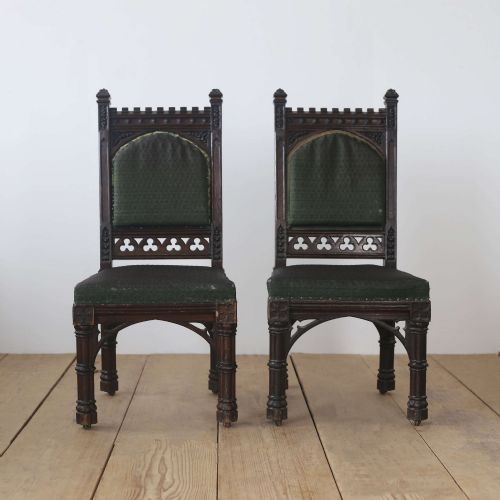
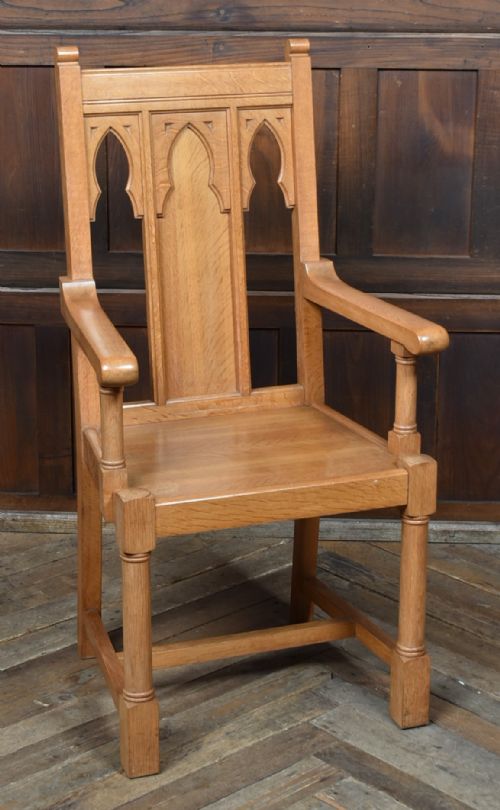
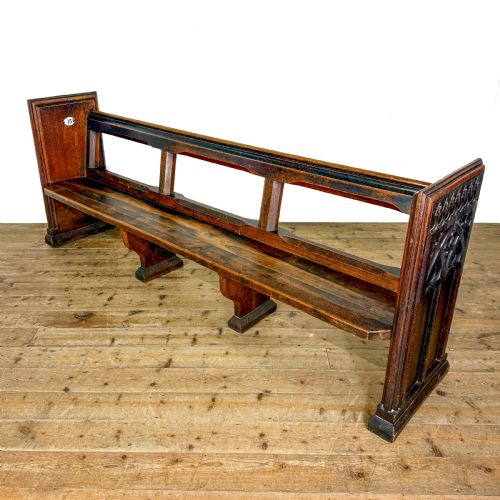
Victorian ecclesiastical seating comprises heavy wooden chairs, benches, and pews built for churches, chapels, and cathedrals during the nineteenth century. Buyers seeking victorian ecclesiastical seating typically encounter robust oak or pitch pine armchairs, side chairs, and long pews rooted firmly in the Gothic Revival style.
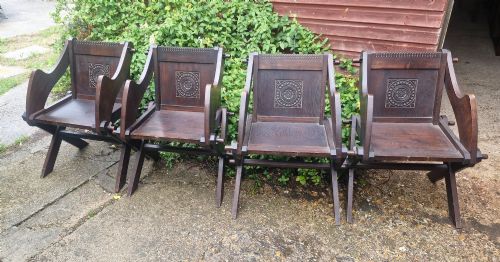
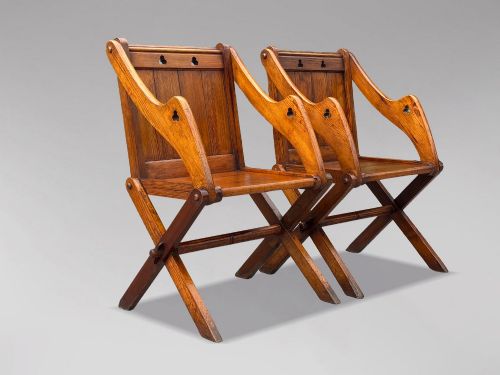
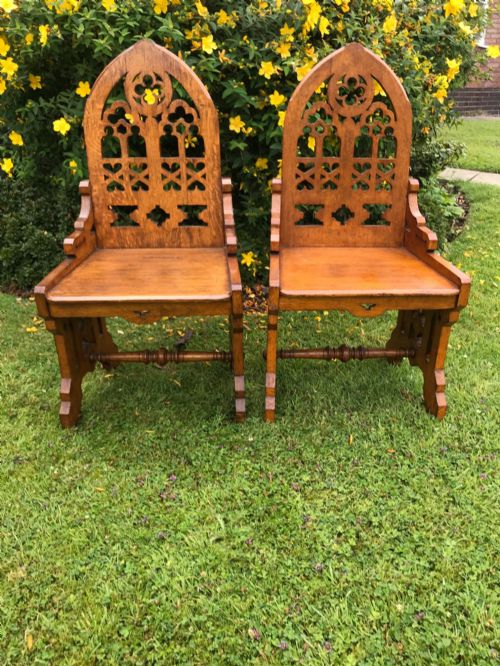
The selections span distinct forms including Glastonbury armchairs, chapel thrones, prie-dieu prayer chairs, and organist benches. Pieces range from straightforward pine pews originating in local parishes to monumental oak seating commissioned for major London and Scottish cathedrals.
These items serve equally well in modern hallways, dining rooms, and studies where substantial timber presence anchors a room. The structural design prioritises vertical lines, pointed arch motifs, and solid joinery intended to withstand generations of communal use.
Quality Variations
Quality rests heavily on the provenance and original destination of the piece, distinguishing items made for major cathedrals or specific commission from generic parish furniture. Marked pieces bearing institutional stamps command greater interest due to their verified historical association.
The integrity of the timber and the depth of the carving separate ordinary utility items from finer workshop output. Crisp execution of Gothic architectural details and heavy, unwarped structural sections indicate superior cabinetmaking standards.
Proportion and scale dictate the visual success of the piece within a home environment. Tighter joinery and thoughtful adaptation from larger church interiors preserve the architectural dignity intended by the nineteenth-century makers.
Victorian Ecclesiastical Seating Retail Price Guide 2026
Typical asking prices for victorian ecclesiastical seating among the pieces listed under this phrase on Sellingantiques today, from the lower quarter to the upper quarter. They describe what is for sale here now, not the wider market.
Listings feature oak and pitch pine predominantly, with occasional rosewood and rush appearing across nineteenth-century Glastonbury chairs and chapel pews.
The Victorian Ecclesiastical Seating Glossary
- Gothic Revival
- An architectural and decorative style drawing inspiration from medieval Gothic forms. It dominates nineteenth-century church furniture with pointed arches and heavy vertical emphasis.
- Glastonbury Chair
- A specific type of folding armchair with X-frame legs and a sloping panel back. This form appears frequently in oak and pitch pine across the Victorian period.
- Prie-Dieu
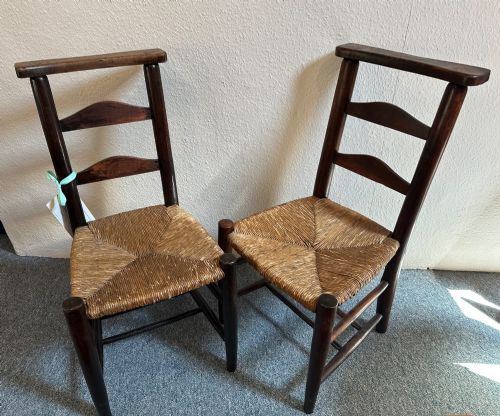
- A devotional prayer chair featuring an upright back topped with a narrow shelf or rest. Users knelt behind the seat while resting arms or books on the upper rail.
- Pew
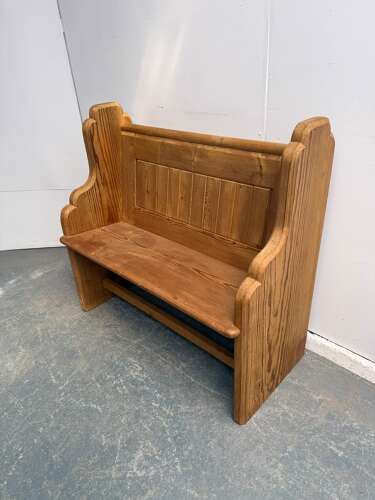
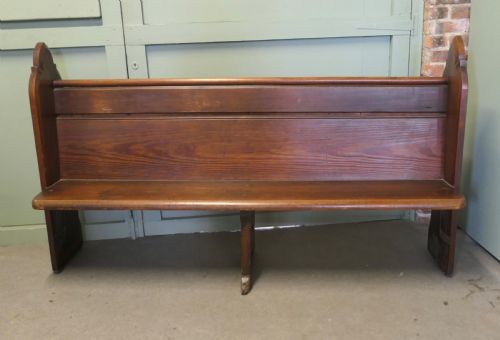
- A long wooden bench designed for communal seating in a church or chapel. Examples are constructed from solid oak or pitch pine with high backs and ends.
- Tracery
- Stonework-inspired openwork patterns carved into wood panels and chair backs. It mimics the decorative stone windows found in ecclesiastical architecture.
Victorian Ecclesiastical Seating: Frequently Asked Questions
How do I use a church pew at home?
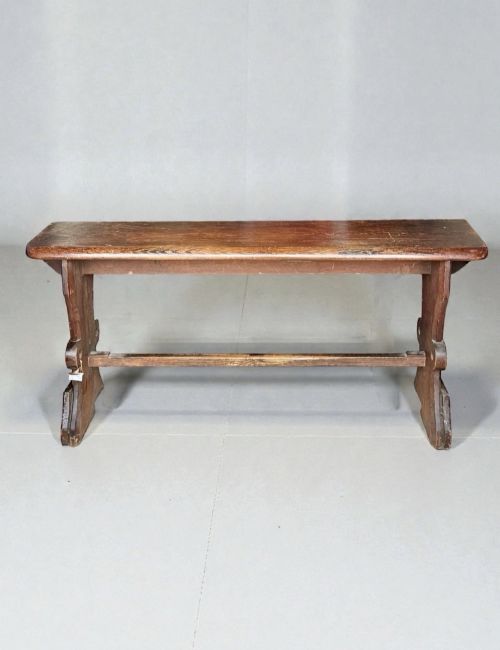
Church pews and benches fit naturally along a hallway wall, behind a dining table, or as a seating anchor in a living room. Their narrow footprints make them practical for tight spaces where standard sofas prove too bulky.
Pairing a long pitch pine bench with a wooden table creates functional seating while retaining the striking architectural character of the original interior.
How do I identify a prayer chair?
Prayer chairs, known as prie-dieu chairs, feature a distinctive tall upright back with a flat padded or wooden ledge at the top. They were built for kneeling devotion in domestic or ecclesiastical settings.
Their compact proportions and narrow seats distinguish them from standard side chairs, often accompanied by rosewood or oak frames and turned front legs.
Are these chairs comfortable for daily use?
Ecclesiastical seating was originally designed for upright posture during services rather than lounging. Most feature solid wooden seats and high straight backs that encourage proper alignment.
Adding a loose fabric cushion or squab easily adapts these historic chairs for modern dining or desk work without altering the underlying wooden frame.