

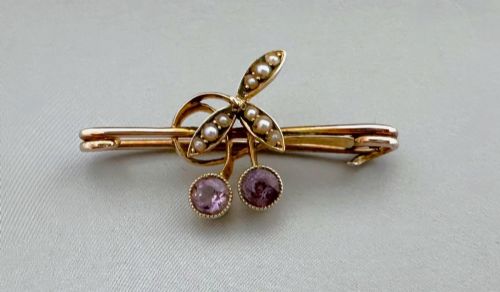


Victorian Dress Brooch
These victorian dress brooch pieces are remarkable items of period jewellery, combining precious metals and gems to offer genuine historic charm.
Victorian Dress Brooch
When you search for a victorian dress brooch, you encounter a range of fastened ornaments spanning the nineteenth century and into the early twentieth century. The selection includes bar brooches, cluster forms, chatelaines, and kilt pins created during the Victorian, Edwardian, and later periods. These items served both decorative and functional purposes on period garments.
You are most likely to meet gold and silver pieces featuring floral motifs, foliate designs, or gemstones such as diamonds, rubies, and garnets. Regional variations such as Scottish Revival basket-hilted broadsword kilt pins also appear alongside French 19th-century silver gilt designs. Each piece reflects the aesthetic preferences of its specific era.
Makers utilised various configurations, from simple bar pins to intricate bird and swirl cluster designs. The forms demonstrate how nineteenth-century jewellers adapted precious materials to suit contemporary fashions in dress ornamentation. These surviving examples illustrate the diverse output of period workshops.
How they were made
The construction of these pieces relies heavily on worked gold, silver, and silver gilt. Goldsmiths employed 9ct, 15ct, 18ct, and unspecified gold alongside silver settings, frequently combining both metals in traditional jewellery techniques. Silver gilt also appears on larger chatelaine and brooch formats.
Gems such as diamonds, rubies, sapphires, garnets, pearls, paste, agate, chalcedony, and almandine garnets are integrated into the designs. Stones are secured using flush settings, claw settings, or flat cut arrangements depending on the specific style. These materials demonstrate the technical competence of period artisans.
Victorian Dress Brooch Retail Price Guide 2026
Typical asking prices for victorian dress brooch among the pieces listed under this phrase on Sellingantiques today, from the lower quarter to the upper quarter. They describe what is for sale here now, not the wider market.
Listings feature items from the Victorian, Edwardian, and early twentieth-century periods, utilising gold, silver, diamonds, rubies, and garnets.
What varies in quality
Quality in these ornaments is determined by the refinement of the metalwork and the selection of stones. Finer examples display meticulous detailing in floral and foliate motifs, alongside well-matched diamonds, rubies, or garnets. Less intricate pieces rely on simpler bar structures or paste stones.
The sophistication of the design execution distinguishes different grades of work. Elaborate constructions involving multi-part motifs, such as birds or triple leaf clusters, indicate higher workmanship. The integrity of the original settings and the weight of the gold or silver further define the tier of the piece.
The Victorian Dress Brooch Glossary
- Bar brooch
- A narrow horizontal pin design often centred with gems or floral motifs. This form was widely popular during the nineteenth century.
- Silver gilt
- Silver that has been coated with a thin layer of gold. This technique provides the appearance of solid gold while utilising a silver base.
- Almandine garnet
- A deep red variety of garnet frequently utilised in Victorian jewellery. It is often flat cut to enhance its dark colour.
- Chatelaine
- A decorative belt hook worn to suspend utilitarian items such as keys or scissors. They often feature elaborate metalwork and rococo decorations.
- Paste
- Hand-cut glass used to imitate gemstones in historic jewellery. High quality paste can display significant brilliance and careful faceting.
Victorian Dress Brooch: Frequently Asked Questions
What is a victorian dress brooch?
A victorian dress brooch is a wearable ornamental fastener produced during the nineteenth century or under nineteenth-century stylistic influence. These items were pinned to garments as decorative accessories.
They incorporate metals such as gold and silver alongside various gemstones and decorative stones. Their designs range from simple bar pins to complex floral and animal motifs.
How were these brooches worn?
Historically, these ornaments were fastened to the front of dresses, collars, lapels, or shawls. They served to secure garments while adding a decorative focal point to an outfit.
Heavier pieces like kilt pins were used on heavier woollen fabrics. Chatelaines performed a dual role of decoration and suspension for personal accessories.
What materials are used?
These pieces utilise precious metals including 9ct, 15ct, and 18ct gold, alongside silver and silver gilt. Gemstones such as diamonds, rubies, sapphires, pearls, and garnets are frequently present.
Alternative materials like agate, chalcedony, and paste also appear in the designs. The combination of metal and stone varies according to the specific period and style.
How do I care for my brooch?
Care for these historic ornaments requires gentle handling due to their age and delicate settings. Cleaning should be done with a soft cloth, avoiding harsh chemical dips that might damage softer stones or antique gold.
Storage should be in a dedicated jewellery box to prevent scratching or bent pins. Regular inspection of the pin mechanism helps ensure safe wearing.
Can I date a piece accurately?
Dating relies on stylistic markers, metal purity hallmarks, and construction methods. Pieces often span the Victorian, Edwardian, and early twentieth-century eras.
Specific design revivals, such as Scottish Revival or Rococo Revival, provide additional clues to the era of manufacture. Hallmarks on gold and silver components offer further chronological evidence.