



Victorian Drawers C1860
These victorian drawers c1860 bring solid nineteenth-century timber and honest storage to any room.
Victorian Drawers C1860
Victorian drawers c1860 encompass chests of drawers, desks, and vanity boxes spanning the nineteenth century. Buyers searching for victorian drawers c1860 encounter practical four-height chests and specialised writing furniture.
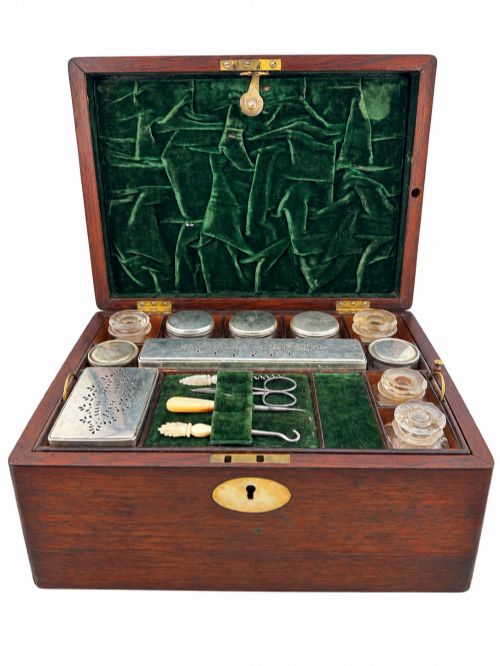
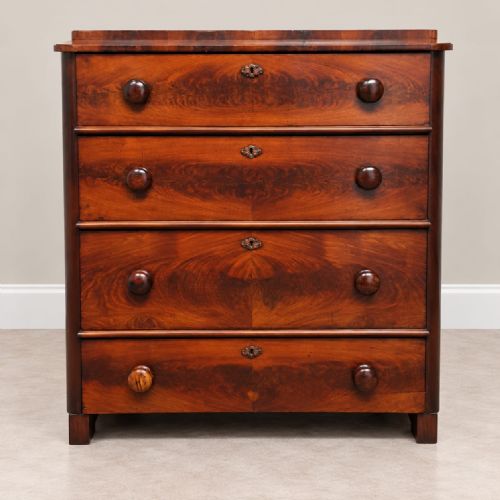
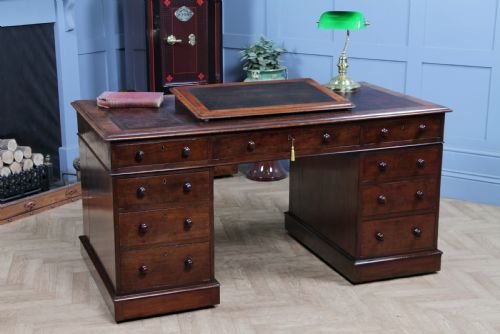
The pieces listed on this page range from flame mahogany and burr walnut chests to rosewood dressing boxes and twin pedestal desks. Oak writing tables and Biedermeier cabinets also appear among these nineteenth-century forms.
Maligning the diversity of these pieces misses the point, as cabinetmakers of the era adapted the form for varied domestic and professional uses. A buyer is most likely to meet mahogany four-height chests or pedestal desks when exploring these listings.
Materials and construction
Cabinetmakers built these pieces using dense hardwoods such as mahogany, rosewood, and burr walnut, often selecting flame veneers for visual depth. Secondary timbers and boxwood stringing provide structural support and subtle contrast.
Details such as brass handles, leather writing surfaces, mother-of-pearl inlay, and glass components enhance utility. Secret drawers and internal compartments demonstrate the precise joinery typical of nineteenth-century workshops.
Victorian Drawers C1860 Retail Price Guide 2026
Typical asking prices for victorian drawers c1860 among the pieces listed under this phrase on Sellingantiques today, from the lower quarter to the upper quarter. They describe what is for sale here now, not the wider market.
Secret drawers invite endless probing behind hidden panels, ensuring every desk inspection feels like a minor treasure hunt.
Assessing quality and finish
The choice of timber grain fundamentally separates standard examples from exceptional pieces, particularly in flame mahogany and burr walnut veneers. Figured wood matched across drawer fronts elevates a piece significantly.
Integration of secondary materials like mother-of-pearl inlay, brass fittings, and fitted interior compartments indicates the original maker's investment of time and skill. Crispness in carved details and smooth operation of secret drawers reveal superior craftsmanship.
The Victorian Drawers C1860 Glossary
- Flame mahogany
- A veneer cut from the fork of a mahogany tree to produce a distinctive flame-like pattern. This figured timber was favoured for prominent surfaces on high-status Victorian furniture.
- Pedestal desk
- A large freestanding desk comprising two supporting pedestals of drawers with a central desktop. Nineteenth-century examples often incorporate inset leather writing slopes.
- Biedermeier
- A Central European style dating from the nineteenth century focusing on utilitarian comfort and clean lines. Pieces in this style utilise domestic woods without excessive ornamentation.
Victorian Drawers C1860: Frequently Asked Questions
What defines victorian drawers c1860?
These pieces originate from the nineteenth century, uniting practical storage with robust timber construction.
They appear as chests of drawers, desks, and specialised cabinets utilising materials like mahogany and walnut.
How do I use a pedestal desk?
Pedestal desks provide a large writing surface combined with generous drawer space in the supporting pedestals below.
Many incorporate inset leather slopes and deep drawers suited for correspondence and paperwork.
Are secret drawers common?
Secret drawers appear in specific vanity boxes and writing furniture from this period as concealed compartments.
Cabinetmakers integrated these hidden spaces to safely store jewellery and private documents.
How do I identify Biedermeier pieces?
Biedermeier furniture emphasises restrained forms and smooth timber surfaces rather than heavy carving.
These pieces reflect nineteenth-century design priorities centred on domestic utility and visual balance.