



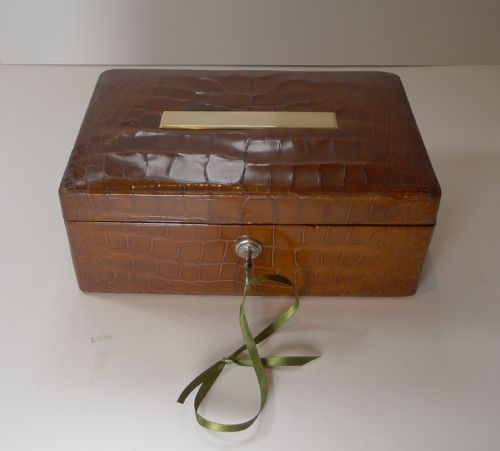


Victorian Document Case
A victorian document case is a sturdy receptacle designed to protect important papers, and these pieces offer both practical storage and period character.
Victorian Document Case
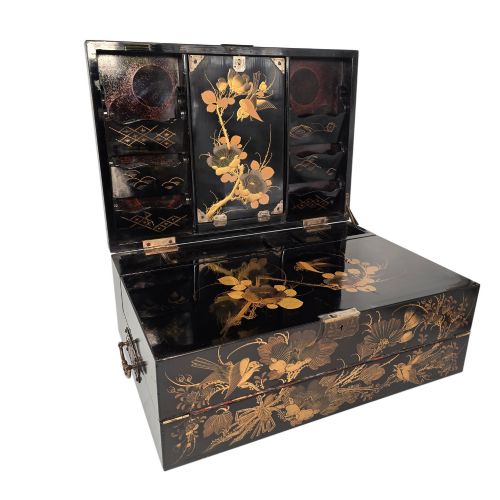
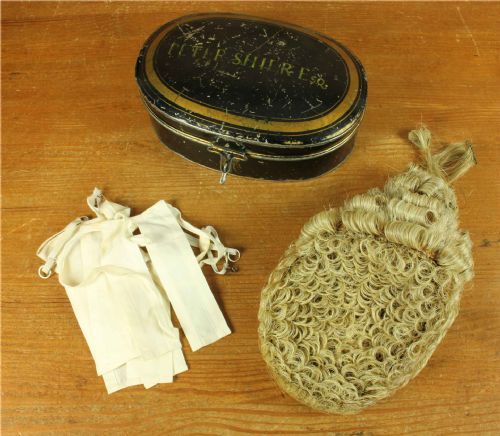
A victorian document case encompasses a variety of protective enclosures built for holding correspondence, legal papers, and travel documents during the nineteenth century. These objects span from straightforward leather-bound writing boxes and correspondence cases to specialised receptacles like tin wig containers, telegram folders, and clerk's suitcases.
Makers and origins vary across these listings, including English workshops, Scottish makers in Edinburgh, Anglo-Indian productions, and items linked to specific institutions like Lambeth Palace. Buyers will also find travel-focused campaign items alongside desk pieces designed to sit permanently within a study or library.
Materials and Construction
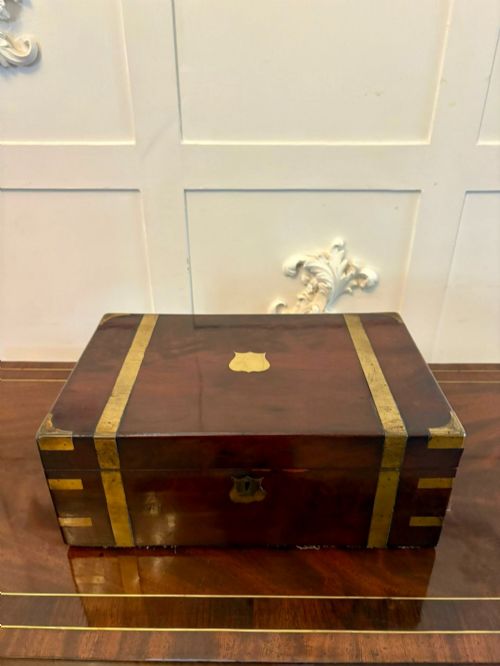
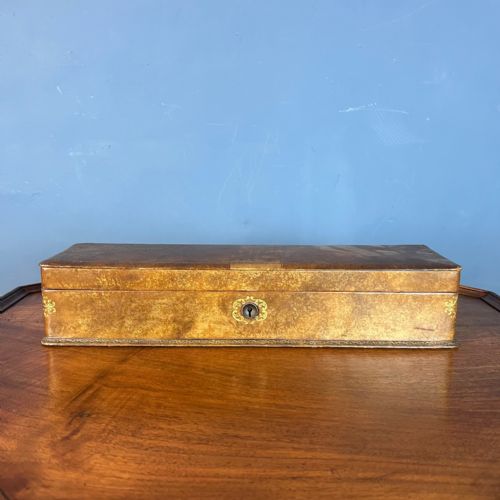
Construction relies heavily on robust woods and heavy-duty leather, often combined with brass hardware, locks, and hinges to secure the contents. Finer examples incorporate specialised finishes such as tooled leather, gold leaf ornamentation, and delicate Tunbridge Ware mosaic decoration.
Internal organisation involves fitted compartments lined with cotton or horsehair, alongside specialised mechanisms like swing-out trays and folding sections. Exterior surfaces utilise structural elements of tin, sterling silver fronts, ebony, burr walnut, and exotic skins including crocodile and alligator.
Victorian Document Case Retail Price Guide 2026
Typical asking prices for victorian document case among the pieces listed under this phrase on Sellingantiques today, from the lower quarter to the upper quarter. They describe what is for sale here now, not the wider market.
One remarkably large document box masquerades entirely as a faux book originating directly from Lambeth Palace.
Assessing Quality and Execution
Quality in a victorian document case reveals itself in the precision of the joinery, the selection of timber veneers such as burr walnut, and the crispness of tooling upon the leather. Superior pieces maintain original internal linings, functional brass locks, and intact hinges that operate smoothly.
The level of craftsmanship extends to specialised details like reeded decoration on ebony, intricate Tunbridge Ware marquetry, and maker signatures stamped into the leather or woodwork. Simpler utilitarian items rely on durable tin or plain leather construction built purely for function rather than decorative display.
Ravenscroft Law·W & J Milne·P&F Shafer
The Victorian Document Case Glossary
- Tunbridge Ware
- A type of woodwork featuring mosaic decoration made from tiny triangles of natural coloured wood to form geometric or pictorial patterns. It appears frequently on nineteenth-century boxes and small decorative objects.
- Campaign case
- Portable furniture and storage designed for travel by military officers or administrators during the nineteenth century. These pieces typically incorporate reinforced brass corners and flush carrying handles.
- Correspondence case
- A specialised folder or box designed to hold writing paper, envelopes, and incoming letters. They often feature internal pockets and partitions to keep stationery organised.
- Reeded decoration
- A pattern of parallel convex mouldings carved directly into the surface of wood. This technique adds texture and linear detail to nineteenth-century boxes.
- Burr walnut
- A wood harvested from the abnormal growth of a walnut tree, yielding a swirling, highly figured grain pattern. It was widely used for veneering luxury Victorian boxes and writing desks.
Victorian Document Case: Frequently Asked Questions
What fits inside a document case?
These receptacles were originally built to hold letters, legal briefs, telegrams, and official paperwork. Modern owners typically use them to store important documents, stationery, or letters.
Interior layouts vary depending on whether the box was intended for travel or desktop use. Many include dividers, pockets, or lift-out trays to separate different types of paper.
How do I care for leather cases?
Leather surfaces benefit from being kept away from direct sunlight and excessive moisture to prevent drying and cracking. Gentle dusting with a dry cloth maintains the finish.
Avoid applying modern cleaning products unless tested on a hidden area first. Preserving the original surface maintains the character of nineteenth-century leather.
Were these cases meant for travel?
Some examples were specifically constructed for transport, featuring robust leather exteriors, secure locks, and sturdy carrying handles. These travelling boxes protected papers during carriage by coach or train.
Other versions remained stationary on office desks or library tables. Desk accessories prioritized internal organisation and decorative presentation over heavy-duty travel reinforcement.
How do I date a piece?
Dating relies on material choices, construction methods, and stylistic indicators recorded in the listings. Victorian pieces often display period-specific hardware, locks, and decorative motifs.
Maker stamps, hallmarks on silver elements, or accompanying documentation help narrow down the decade of manufacture. Comparing the form to dated examples in historical records provides further context.