




Victorian Dining Room Dresser
A victorian dining room dresser anchors the room with substantial timber and fitted storage, built to serve family meals and display fine china.
Victorian Dining Room Dresser
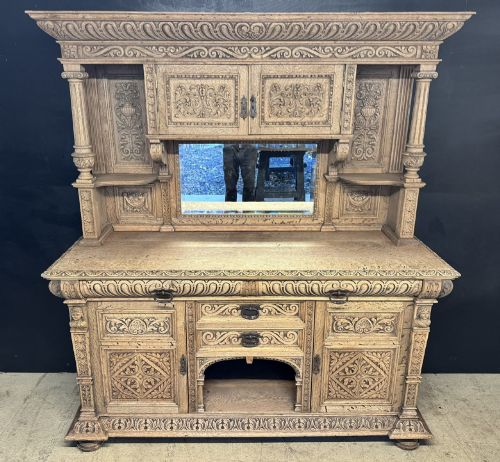
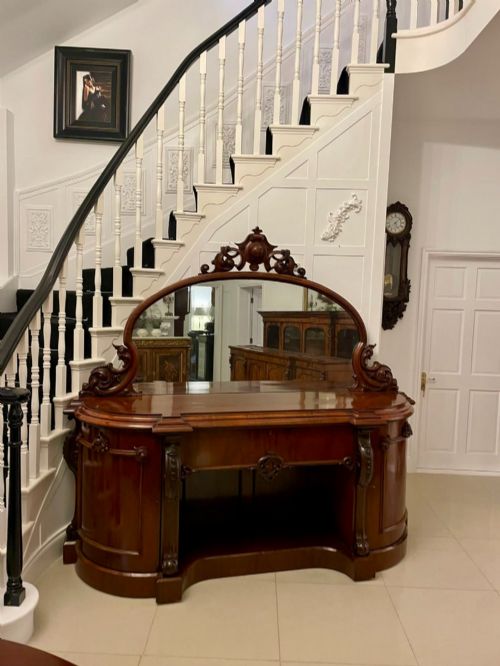
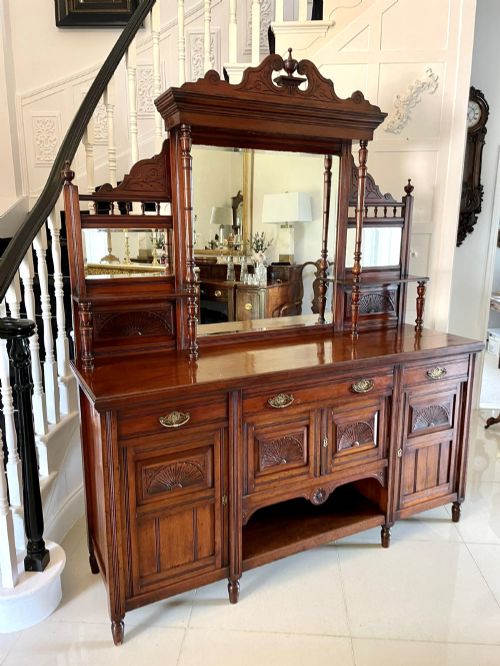
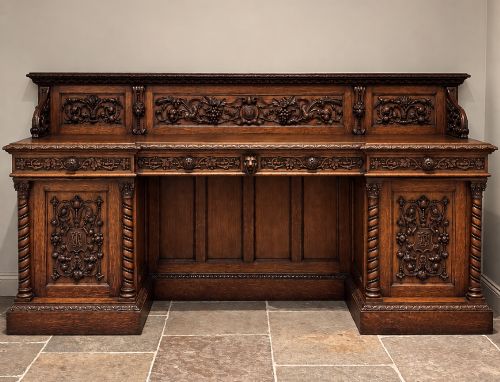
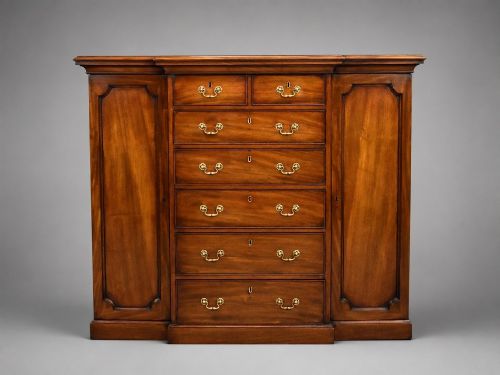
A victorian dining room dresser primarily manifests on this page as a large sideboard, buffet, or chiffonier designed for the dining room. These pieces originate across the nineteenth and early twentieth centuries, spanning the Victorian and Edwardian eras.
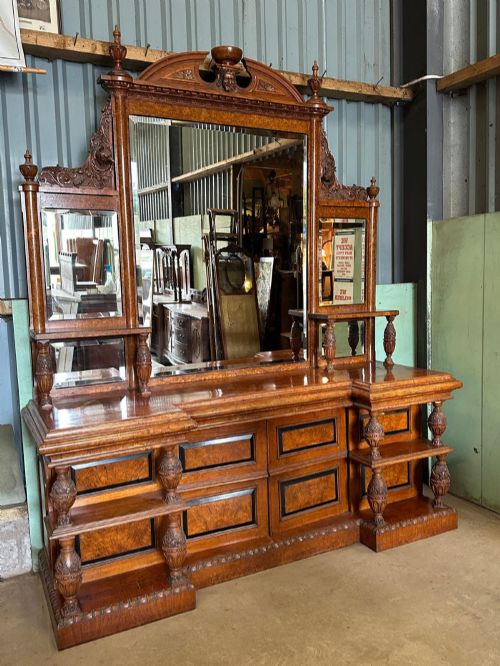
Forms vary from breakfront and pedestal sideboards to mirror-back cabinets and sideboards with display shelving. Oak, mahogany, and walnut appear frequently, alongside occasional rosewood and pollard oak examples.
Makers and designers employ styles ranging from standard Victorian carving and Renaissance Revival to Arts and Crafts influences.
How they were made
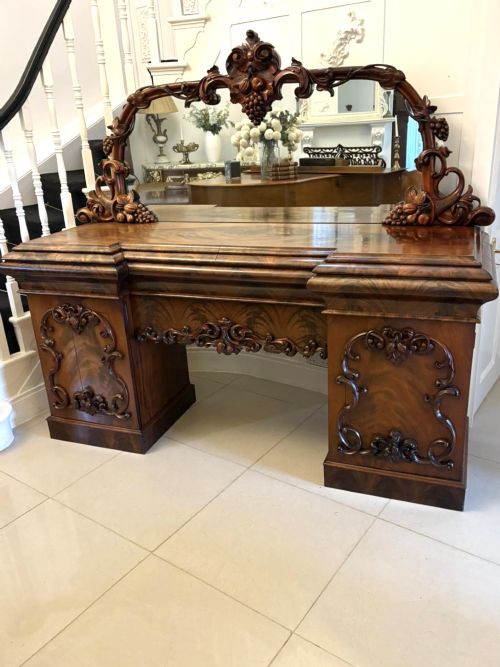
Cabinet makers construct these large dining pieces using solid timbers such as oak and mahogany, often applying figured mahogany veneer or flame mahogany veneer to prominent drawer and door surfaces. Boxwood inlay adds linear contrast to select rosewood or walnut structures.
Glass is integrated into mirror-back designs and display cabinet doors, while brass hardware functions as drawer pulls and cabinet hinges. Carving decorates the wooden panels, cornices, and mirror frames of the more ornate examples.
Victorian Dining Room Dresser Retail Price Guide 2026
Typical asking prices for victorian dining room dresser among the pieces listed under this phrase on Sellingantiques today, from the lower quarter to the upper quarter. They describe what is for sale here now, not the wider market.
The listings show a strong presence of oak and mahogany, alongside walnut, rosewood, and pollard oak across Victorian and Edwardian periods.
What varies in quality
The degree of hand carving and the selection of timber dictate the distinction between standard and exceptional pieces. Highly figured mahogany or pollard oak surfaces and heavy mirrored backboards elevate the visual impact of a sideboard.
Attribution to documented retail furnishers and cabinet makers such as Maple and Co, Howard and Sons, or T Simpson and Son separates workshop output from anonymous production.
T Simpson and Son·Howard and Sons·Maple and Co
The Victorian Dining Room Dresser Glossary
- Chiffonere
- A low sideboard or cabinet, smaller than a full buffet, often fitted with doors enclosing shelves and sometimes an upper superstructure.
- Mirror Back
- An upright wooden frame containing a large mirror plate attached to the rear of a sideboard. It reflects dining room light and displays carved woodwork.
- Breakfront
- A cabinet design where the central section projects forward from the flanking outer cabinets. This architectural arrangement creates depth and shadow across the front elevation.
- Pedestal Sideboard
- A heavy sideboard form featuring two substantial cupboards or pedestals supporting the main top board. It represents a classic nineteenth century dining room layout.
Victorian Dining Room Dresser: Frequently Asked Questions
How were these sideboards used?
Dining rooms utilised these heavy cabinets to store heavy ceramic dinner services, glassware, and silver cutlery used during large family meals.
The top surface served as a station for laying out dishes and serving food before it reached the main dining table.
How do I identify Arts and Crafts influences?
Arts and Crafts pieces on this page display simpler, more robust structural lines in oak, moving away from heavy Victorian ornamentation towards honest construction.
They date primarily towards the end of the nineteenth century and into the early twentieth century.
Where should I place a mirror back sideboard?
These large mirror-backed cabinets suit spacious dining rooms with sufficient wall space to support their heavy proportions and height.
Position them against a main wall where the mirror can reflect light and open up the room.