




Victorian Desk with Mirror
A victorian desk with mirror combines a practical writing surface with an integrated looking glass, designed for personal correspondence and grooming.
Victorian Desk with Mirror
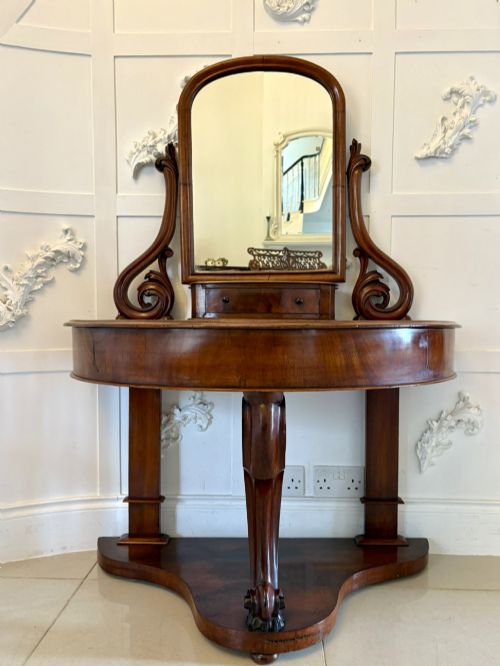
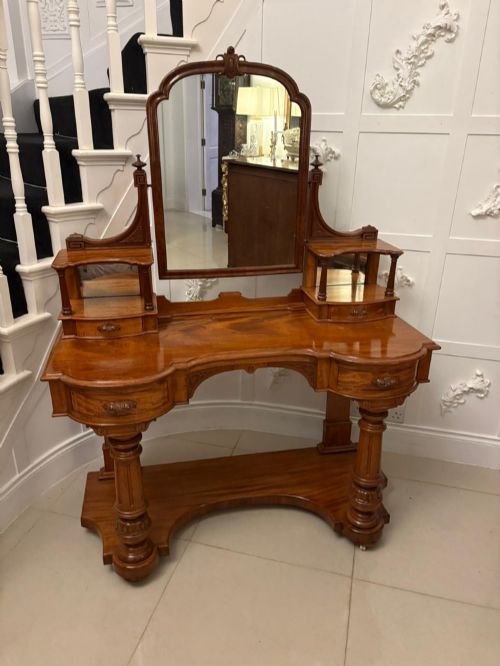
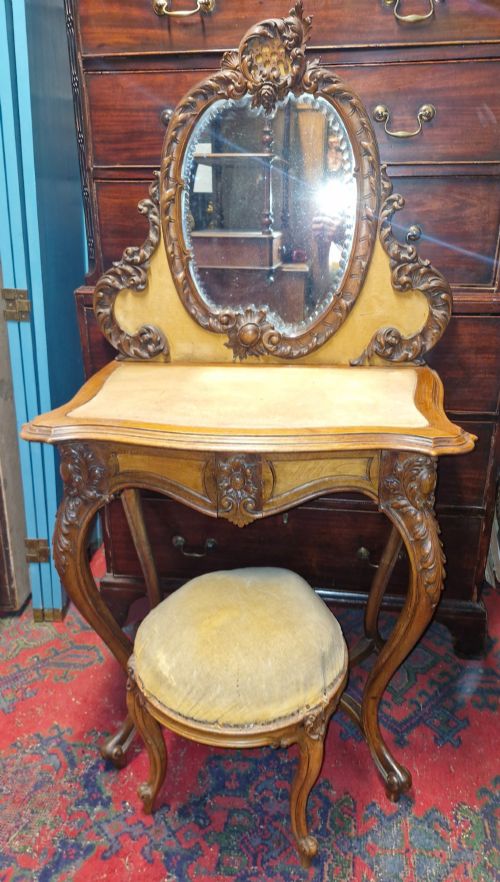
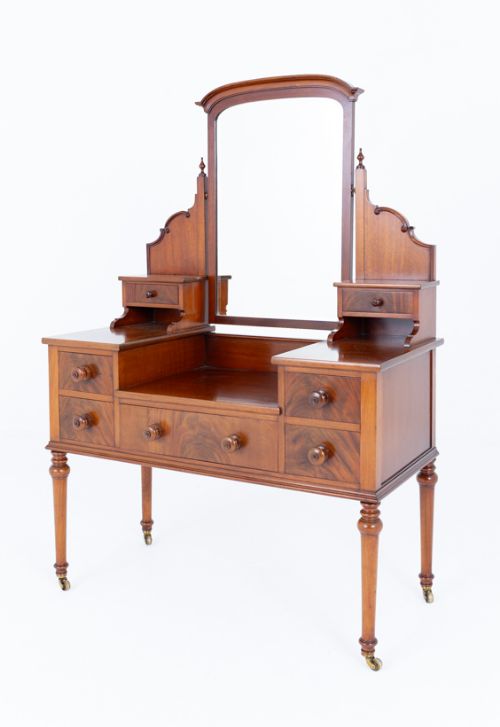
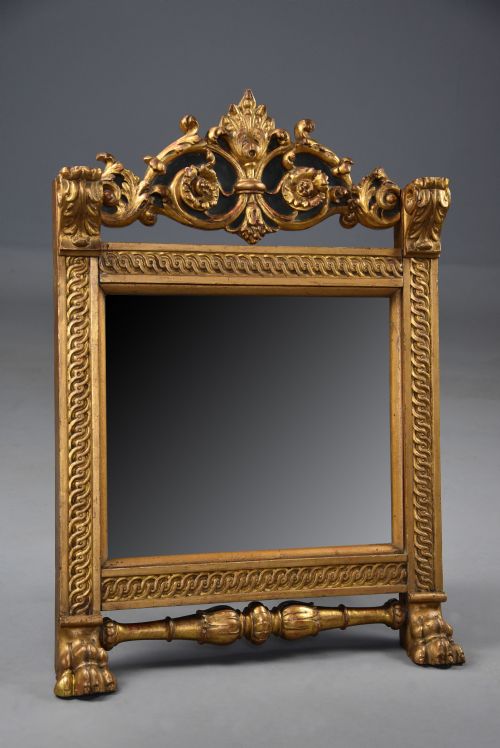
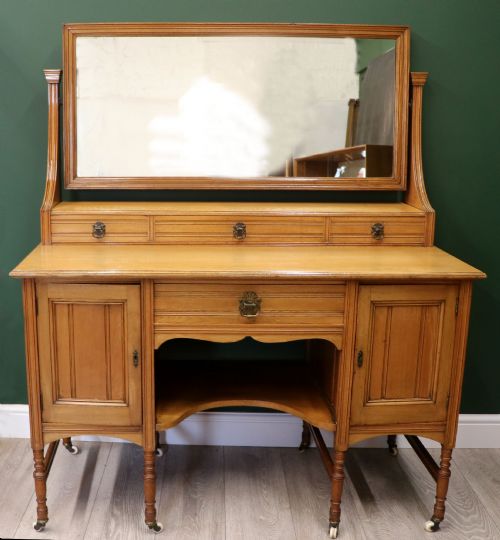
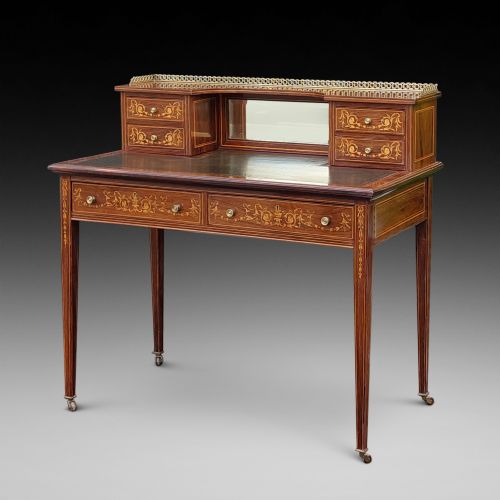
A victorian desk with mirror encompasses several distinct forms on this page, including duchess dressing tables, bureau fitments, and ladies writing desks. Most examples originate from the nineteenth century, spanning decades from eighteen fifty to nineteen hundred.
Makers adapted traditional writing furniture by mounting swing mirrors or bureau fitments onto pedestals and tables. Pieces frequently blend storage drawers with upright mirrors, merging the functions of a dressing table and a correspondence desk.
Stylistic influences range from French revival and rococo to aesthetic movement and arts and crafts designs. Walnut, mahogany, and rosewood form the structural foundation of these domestic furnishings.
Materials and Technique
Cabinetmakers utilised dense timbers such as mahogany and walnut, frequently applying burr veneers to larger surfaces to display complex grain patterns. Inlaid decoration in contrasting woods adds linear detail to rosewood and oak frameworks.
Glass panels are set into pivoting brass frames for the swing mirrors, allowing adjustable angles. Drawers employ traditional joinery techniques, while stencilled decoration and carved motifs ornament the exterior surfaces.
Secret compartments hidden behind miniature drawers provided Victorian letter writers a private space for confidential correspondence.
Assessing Quality
The refinement of the timber selection and the complexity of marquetry inlay distinguish higher tiers of production. Figured burr walnut and rosewood demand greater skill from the cabinetmaker than plain mahogany or oak.
The integration of the mirror structure relative to the writing surface reflects the original design ambition. Carved architectural elements and original brass hardware indicate superior workshop execution.
Wright & Hunter of Belfast
The Victorian Desk with Mirror Glossary
- Bonheur du jour
- A small light ladies writing desk usually fitted with a tiered superstructure of drawers, shelves, or a mirror. The term translates from French as daylight joy.
- Duchess dressing table
- A large nineteenth-century dressing table featuring a prominent central swing mirror supported by upright arms above a bank of small drawers. These grand pieces often incorporate demi-lune storage compartments.
- Bureau fitment
- A tabletop writing compartment featuring small drawers and pigeonholes designed to sit upon a flat surface. This addition transforms a standard table into a compact bureau.
- Aesthetic movement
- A late nineteenth-century design style emphasising visual beauty over narrative subject matter, often incorporating simplified forms and contrasting inlay. Pieces from this movement display clean geometric lines.
- Swing mirror
- A looking glass hung on pivots between two vertical uprights, allowing the glass to tilt. These mirrors are secured to dressing tables and bureau desks.
Victorian Desk with Mirror: Frequently Asked Questions
What is a bonheur du jour desk?
A bonheur du jour is a compact ladies writing desk featuring a raised superstructure of compartments, drawers, or a mirror. These pieces served as elegant writing surfaces for personal correspondence in the nineteenth century.
They combine a flat table top with upright storage, making them suitable for smaller private rooms. Walnut and rosewood examples often display fine marquetry inlay.
How do I date a Victorian mirror desk?
Dating relies on stylistic shifts visible across the nineteenth century, moving from heavy mahogany designs to lighter aesthetic movement and arts and crafts forms. Cabinetmakers incorporated varying veneer choices and decorative carving according to prevailing taste.
Examining secondary timbers and construction methods inside the drawers helps confirm the period. Stencilled decoration and brass hardware details also offer clues to the exact decade of manufacture.
Where were mirror desks placed?
These pieces stood in bedrooms, dressing rooms, and private sitting rooms where residents attended to morning correspondence and grooming. The integrated mirror provided necessary light and reflection for daily routines.
Their dual function as a writing surface and vanity made them versatile items of domestic furniture. Pedestal and kneehole configurations allowed comfortable seating at the centre of the room.
Are the mirror glasses original?
Many Victorian pieces retain their original glass plates, which may show light foxing or minor age spots from oxidation. Replacement mirrors sometimes occur due to accidental breakage over generations of domestic use.
Original glass often sits within hand-turned wooden frames or pivoting brass supports. Inspecting the silvering behind the glass reveals indicators of age.