



Victorian Desk Blotter
A victorian desk blotter is a writing accessory that brings tactile order to a study through heavy boards and absorbent paper.
Victorian Desk Blotter
A victorian desk blotter sits on writing tables to catch stray ink and protect wood surfaces during daily correspondence. These pieces survive in various forms, from standalone folding covers to multi-piece sets incorporating inkwells and stamp boxes.
The versions most commonly met on this page span the nineteenth century and the Edwardian era, incorporating materials like leather, wood, and brass. Makers often paired these blotters with matching desk accessories to create a unified look for the study.
Forms range from simple oak boards to elaborate French ormolu and marble mounts, reflecting the varied tastes of past writing rooms. Buyers choose these items to restore traditional function to a desk or to collect period brass and wood craftsmanship.
Materials and construction
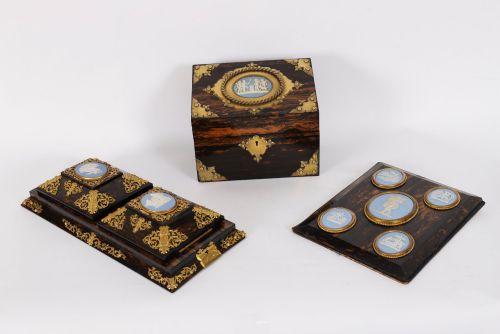
Construction relies heavily on durable timbers like oak and coromandel, often embellished with cast ormolu mounts and brass fittings. These materials provided the structural rigidity required for daily pressure against paper and nibs.
Surface decoration incorporates specialist techniques such as Tunbridge ware inlay, hand-painted porcelain panels, and applied jasperware medallions. These decorative elements were carefully inset into wooden or metal frames to withstand regular handling.
Victorian Desk Blotter Retail Price Guide 2026
Typical asking prices for victorian desk blotter among the pieces listed under this phrase on Sellingantiques today, from the lower quarter to the upper quarter. They describe what is for sale here now, not the wider market.
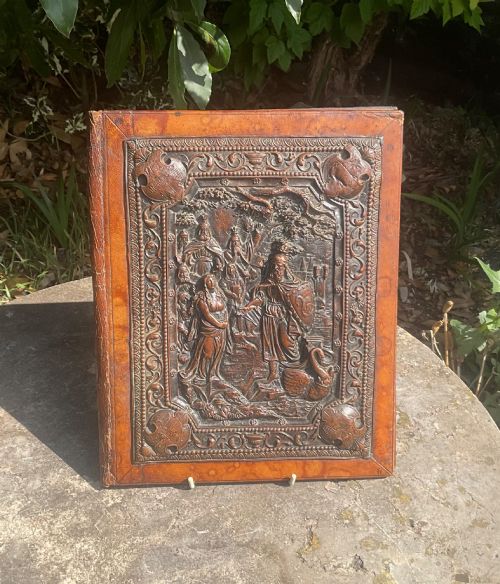
Wagner enthusiasts can rest their correspondence on a copper blotter dedicated to Lohengrin.
Factors of quality
Quality rests in the weight of the metals and the precision of the joinery rather than mere surface ornament. Heavier ormolu castings and dense, well-figured coromandel distinguish finer pieces from simpler oak or plain leather versions.
The integration of decorative details, such as finely painted porcelain insets or crisp Wedgwood jasperware, separates standard workshop production from ambitious maker output. Superior items maintain alignment across hinges and mountings after decades of opening and closing.
Edwards and Jones
The Victorian Desk Blotter Glossary
- Ormolu
- Gilded bronze or brass mounts applied to furniture and desk accessories. This technique adds metallic contrast and ornate detail to wooden or stone bodies.
- Jasperware
- A type of fine stoneware developed by Josiah Wedgwood, featuring contrasting raised white reliefs against a coloured matte background. It appears frequently on Victorian desk accessories.
- Tunbridge ware
- A form of mosaic woodwork created by gluing thousands of tiny coloured wood blocks together to form geometric or pictorial scenes. It decorates the surfaces of specific Victorian folders and boxes.
- Desk set
- A coordinated group of writing accessories, often including a blotter, inkwell, and stamp box, made in matching materials.
Victorian Desk Blotter: Frequently Asked Questions
What is a victorian desk blotter used for?
A victorian desk blotter held absorbent paper sheets designed to press down on freshly written ink and prevent smudging. They served as the central pad for writing letters and signing documents in the nineteenth-century study.
Beyond drying ink, hinged folding versions also stored loose stationery and unanswered correspondence. They formed part of the working furniture of a desk, keeping the writing surface tidy.
How do I care for leather and wood blotters?
Leather and wood benefit from stable room humidity and protection from direct sunlight to prevent drying and cracking. Occasional dusting with a soft, dry cloth preserves the finish of the timber and metal mounts.
Avoid using modern liquid cleaners on antique surfaces, particularly on gilded ormolu and inlaid wood. Gentle maintenance keeps the original patination intact.
How can I date a desk blotter?
Dating relies on identifying stylistic markers, such as the curved asymmetry of Art Nouveau copper work or the classical restraint of French Empire ormolu. Materials like coromandel and specific ceramic inserts also point towards mid-nineteenth-century manufacturing trends.
Maker marks, where present, help narrow down the period of production. Structural fasteners and hinge types further indicate whether a piece originates from the Victorian era or later Edwardian period.
Can I still use antique blotters today?
Antique blotters accommodate standard modern blotting paper cut to fit the inner straps or corners. They function just as well today for fountain pen users who prefer traditional writing methods.
Using them keeps historical objects active in daily life rather than confined to display. Replacement paper protects the antique materials while serving a practical purpose.