




Victorian Curved Sofa
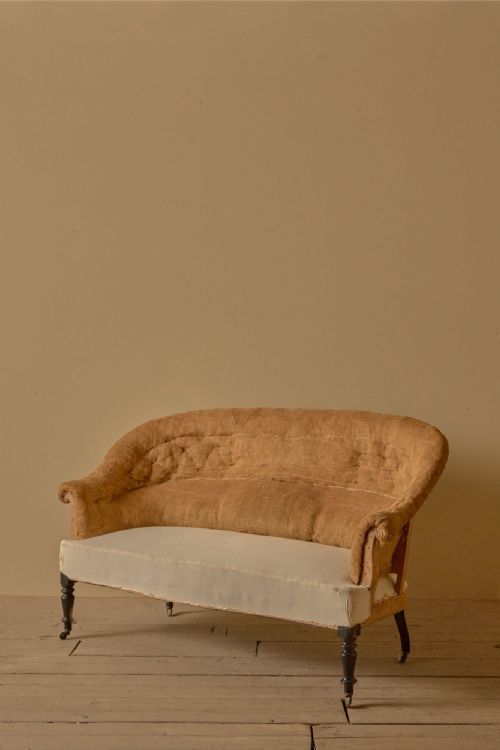
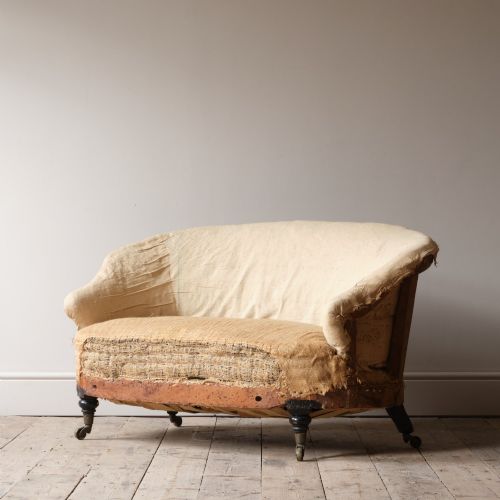
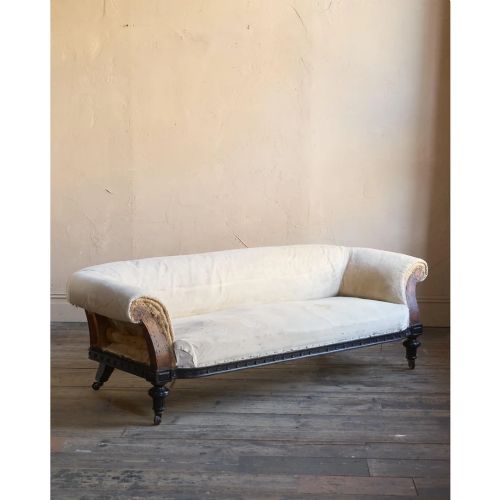
These nineteenth-century seats bring sweeping lines and deep buttoning to a room, offering the graceful curves of a victorian curved sofa.
Victorian Curved Sofa
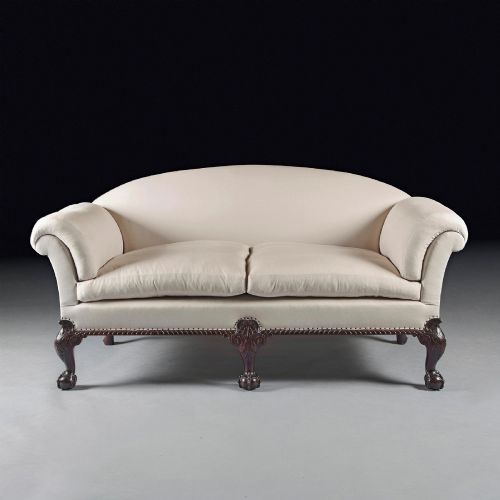
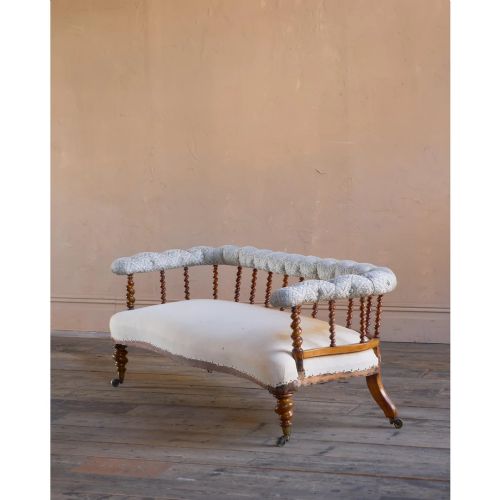
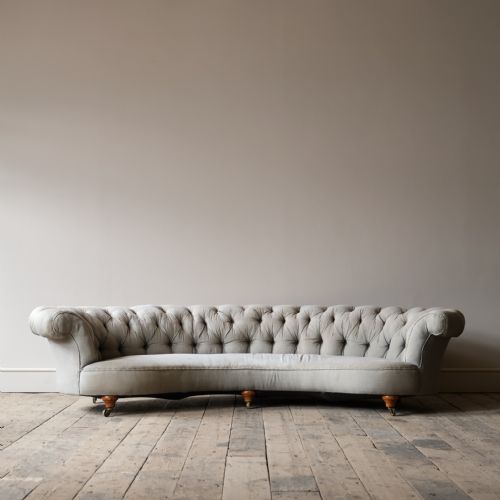
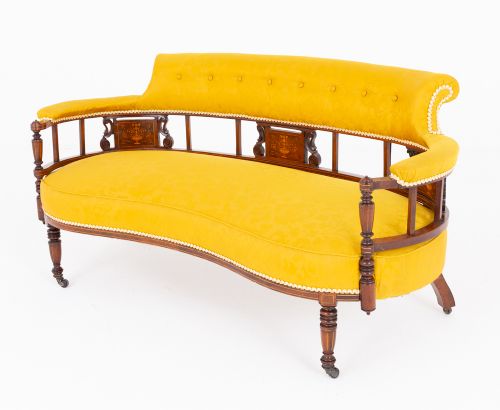
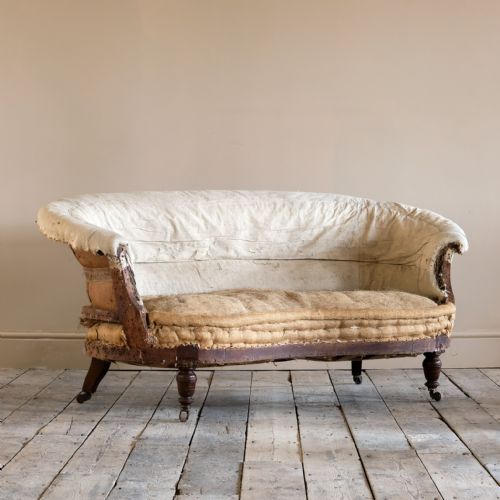
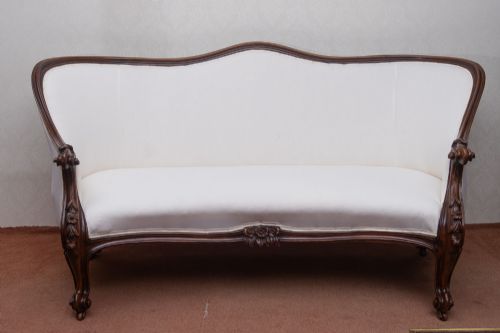
A victorian curved sofa typically presents as a crescent, round-backed, or kidney-shaped seat designed to break the rigidity of straight walls. Examples on this page span the mid to late nineteenth century, taking the form of library Chesterfields, salon settees, and deep-buttoned chaises longues.
Makers of the period worked within styles ranging from classic Victorian and Aesthetic Movement to French revival and occasional Chippendale influences. These seating pieces served as social focal points in country houses and drawing rooms, shaped to encourage conversation.
The profile might be a sweeping serpentine front with a curved back or a compact two-seat couch finished on ebonised or mahogany legs. Buyers find both intimate boudoir seating and large leather library Chesterfields designed for substantial spaces.
Materials and Construction
Frames rely on dense timbers such as mahogany, walnut, rosewood, and ebonised wood to support complex curved structures. Joinery had to accommodate sweeping lines, often incorporating exposed polished wood on legs and frames.
Upholstery defines the character of these pieces, utilising traditional stuffing and springs covered in velvet, leather, and various fabrics. Deep buttoning secured through the back requires meticulous hand tensioning to hold the characteristic folds.
Victorian Curved Sofa Retail Price Guide 2026
Typical asking prices for victorian curved sofa among the pieces listed under this phrase on Sellingantiques today, from the lower quarter to the upper quarter. They describe what is for sale here now, not the wider market.
Some nineteenth-century makers hid their workshop signatures inside the webbing, leaving a secret message for future restorers to discover.
Assessing Quality and Execution
The integrity of the wooden frame forms the foundation of value, particularly where curved rails are steam-bent or hand-carved from solid timber. Finer examples maintain rigid stability across their sweeping spans without structural sagging.
The nuance of the upholstery work separates standard pieces from exceptional ones, seen in the regularity of buttoning and the precision of fabric or leather tailoring. Maker attribution through stamps or signatures on legs and castors further elevates the standing of a piece.
Howard & Sons·C. Hindley & Sons·Hampton & Sons·Thonet
The Victorian Curved Sofa Glossary
- Chesterfield
- A deep-buttoned, upholstered sofa traditionally featuring arms and back of the same height. This form offers generous cushioning and upright support.
- Canapé
- A decorative French-style settee with an exposed wooden frame. These pieces often display refined carving along the top rail and legs.
- Bentwood
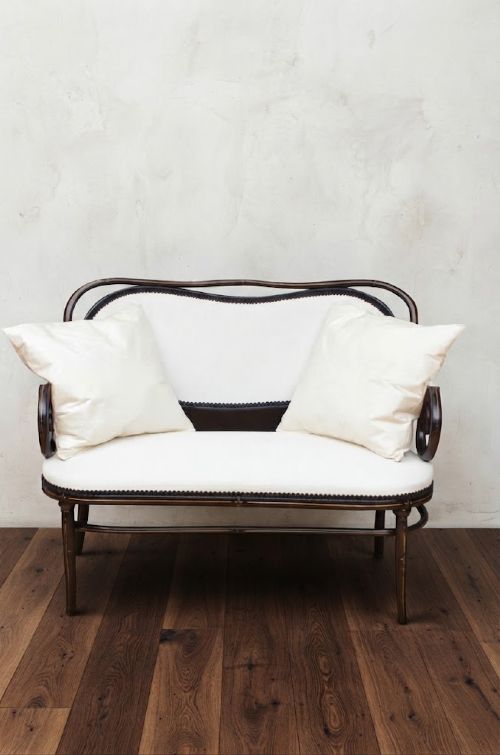
- Wood softened by steam and bent into curved shapes. Thonet utilised this technique to create light, resilient frames.
- Serpentine
- A furniture line that curves inward and outward in a continuous wave. This profile adds visual movement to the front rail of a settee.
Victorian Curved Sofa: Frequently Asked Questions
How do I place a curved sofa in a room?
These pieces work well floating away from walls to make the most of their rounded backs. They naturally define seating zones in larger drawing rooms or open spaces.
Position them to follow the architectural flow of a bay window or to soften the corners of a square room.
What is the difference between a settee and a sofa?
Historically, a settee often denotes a lighter, upholstered seat with an exposed wooden frame. A sofa typically implies a heavier, fully upholstered piece designed for lounging.
In nineteenth-century usage, the terms overlap considerably depending on the maker and the intended room.
How do I care for antique leather upholstery?
Leather requires maintenance to prevent it from drying out over decades of use. Regular dusting and occasional treatment with appropriate conditioners keep the hide supple.
Keep these pieces away from direct sunlight and heat sources to protect the original finish and colour.
How do I identify the period of a curved sofa?
Inspect the timber under the upholstery and the construction of the frame legs. Mid-nineteenth-century examples often feature heavy mahogany or walnut, while later pieces might show ebonised finishes or Aesthetic Movement details.
Castors, maker stamps, and the style of buttoning also offer clues to the exact decade of manufacture.