







Victorian Crystal Glassware
Victorian crystal glassware brings heavy lead weight and sharp wheel-cut brilliance to the dining table, offering a tangible link to nineteenth-century entertaining.
Victorian Crystal Glassware
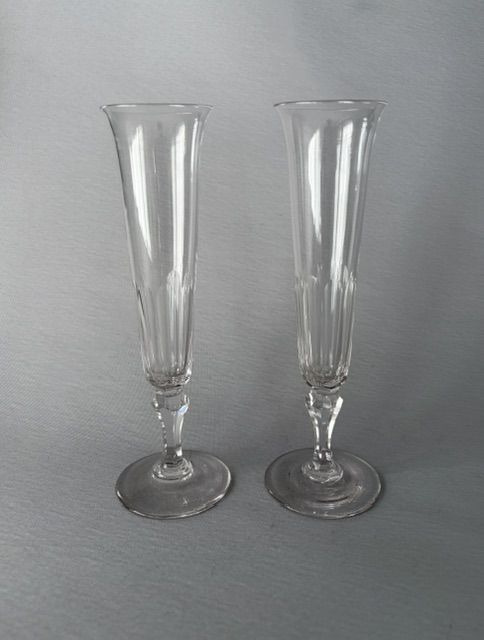
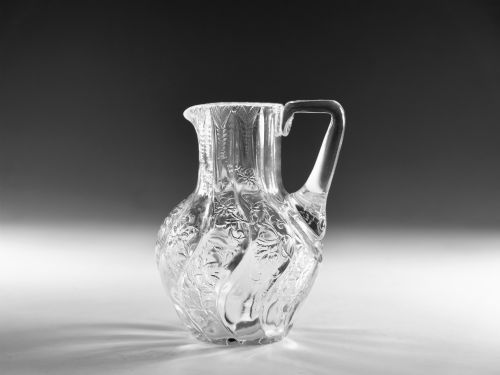
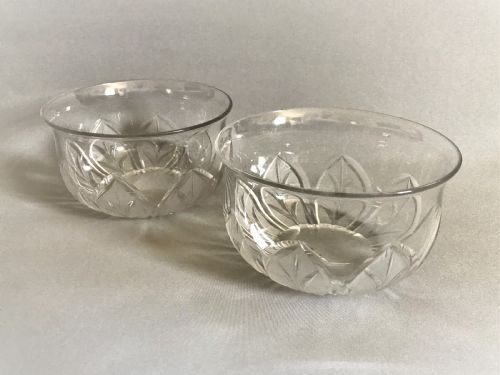
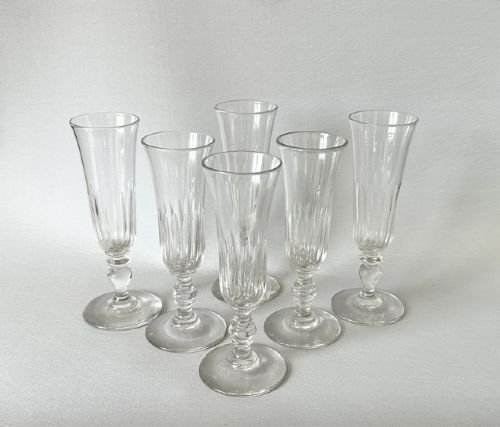
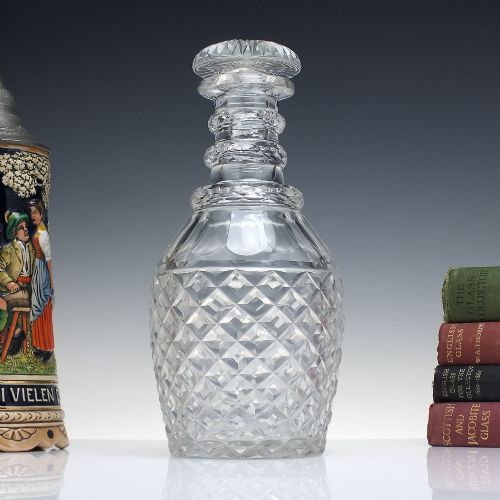
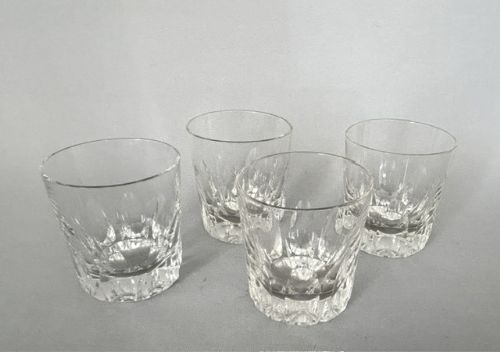
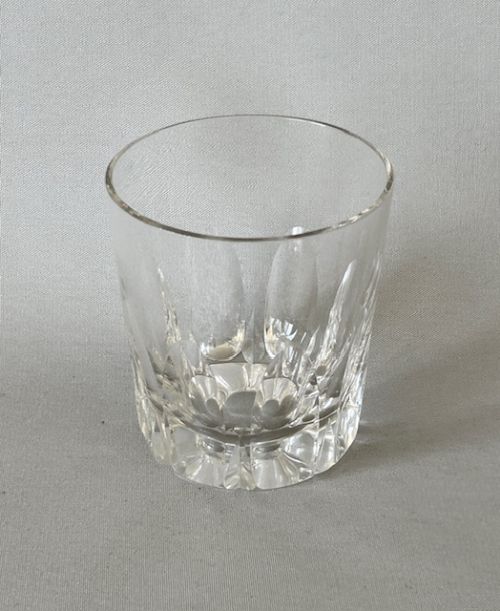
Victorian crystal glassware encompasses drinking vessels, decanters, jugs and table pieces produced across the nineteenth century and into the early twentieth. Champagne flutes, wine glasses, rummers and finger bowls dominate the items encountered on this page, alongside larger decorative vases and carafes.
The objects stem from English, Scottish and continental workshops, reflecting varied manufacturing traditions from the period. Buyers frequently meet matched pairs and sets of drinking glasses, as well as single statement decanters and larger vessels.
Forms range from simple hand-blown domestic glass to elaborate coloured overlay pieces designed for formal dining. Pieces span the decades from the eighteen-fifties through to nineteen hundred, showing shifts from early cutting styles to later etching and engraving.
How they were made
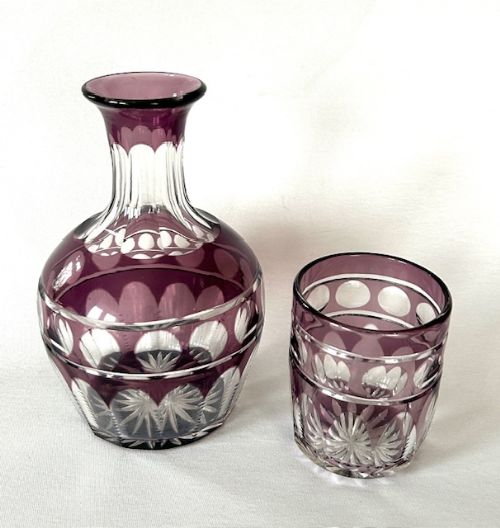
Makers utilised lead glass and crystal compositions, blowing the molten material by hand into free-form shapes or moulds before employing wheel-cutting techniques to carve geometric patterns deep into the surface. Clear glass was frequently layered over coloured glass, such as cranberry, ruby or emerald, allowing artisans to cut through the outer stratum to reveal the contrasting hue beneath.
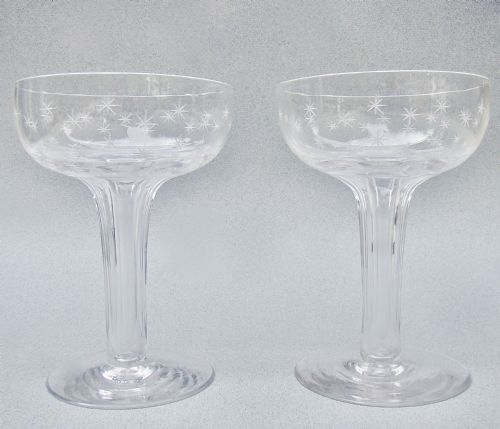
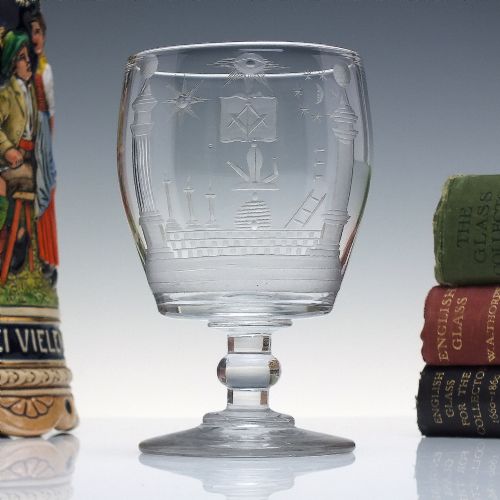
Decoration relied heavily on wheel engraving, acid etching and star-cutting to apply delicate botanical and geometric motifs across bowls and stems. Gilding and enamelling occasionally added extra detail to pieces originating from Bohemian and English workshops.
Listings feature items spanning the Victorian era, from eighteen-fifty through to nineteen hundred, in clear and coloured glass.
What varies in quality
Quality rests upon the depth and crispness of the wheel-cutting, where sharper facets catch the light more intensely than shallow marks. The weight of the lead glass and the clarity of the metal itself distinguish standard domestic utility items from finer display pieces.
Artisanal skill shows in the uniformity of sets, the precision of engraved botanical motifs and the successful execution of layered coloured overlays. Balance in the stem and hand-finished rims further separate superior pieces from simpler mass-produced output.
Stevens & Williams·Moser·Stuart for Liberty·Baccarat
The Victorian Crystal Glassware Glossary
- Rummer
- A large, sturdy drinking glass with a short stem, commonly used for wine or ale during the nineteenth century. These vessels typically feature heavy lead composition and deep cut decoration.
- Overlay glass
- A technique involving a layer of coloured glass fused over a clear crystal base. Artisans cut away portions of the outer colour to create striking contrast patterns.
- Römer
- A traditional continental goblet featuring a large bowl set upon a ribbed or studded hollow stem. These pieces frequently appear in green, amber or engraved crystal.
- Finger bowl
- A small, wide bowl used at the dining table for rinsing the fingers between courses. They often match the service with cut crystal or etched decoration.
- Intaglio engraving
- A technique where designs are carved into the surface of the glass rather than left raised. This method produces shallow, detailed pictorial scenes.
Victorian Crystal Glassware: Frequently Asked Questions
How do I clean antique crystal?
Wash pieces by hand in warm water using mild detergent, supporting the base and bowl carefully. Avoid sudden temperature changes to prevent cracking the old lead metal.
Dry the glass immediately with a lint-free cloth to maintain the brilliance of the cut facets.
Are these glasses safe to use?
Most nineteenth-century drinking vessels remain entirely suitable for occasional use with wine, water or champagne. Modern dishwashers and harsh detergents must be avoided to protect the historic glass surface.
Hand washing preserves both the clarity of the lead crystal and any delicate wheel-engraved details.
How do I tell Victorian glass apart?
Examine the weight, ring and colour of the material, alongside the manufacturing marks on the base. Heavy lead content gives the glass a distinct heft and a clear, resonant ring when tapped gently.
Cut patterns on nineteenth-century pieces often feel sharper and deeper than those found on later reproductions.
What is cranberry glass?
Cranberry glass is a pinkish-red decorative material coloured by the addition of gold chloride to the molten batch. It became particularly popular for Victorian jugs, vases and wine glasses.
Craftsmen often combined cranberry glass with clear crystal through overlay techniques or applied handles.