

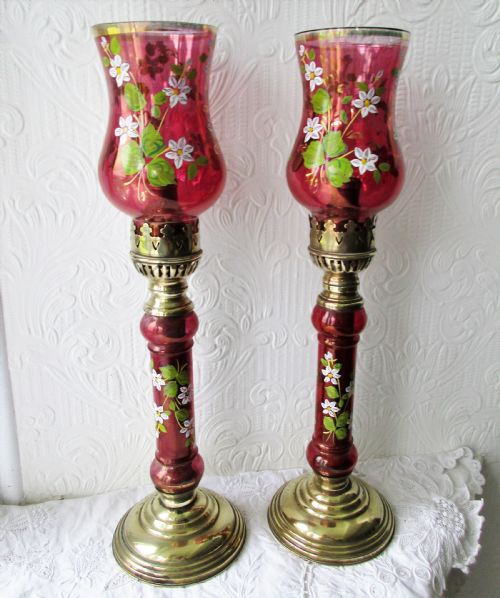


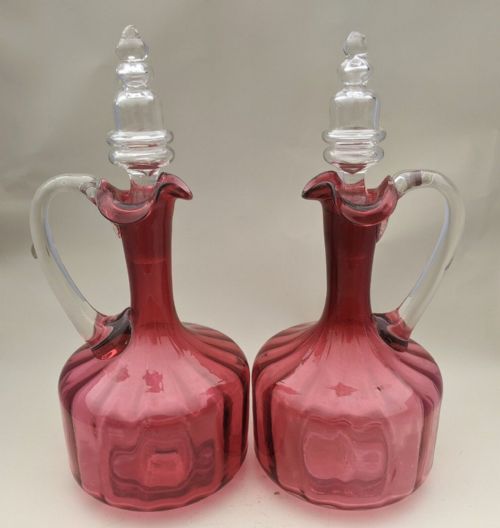


Victorian Cranberry Glass Pair
These Victorian cranberry glass pair items bring vibrant colour and matching symmetry to a table, uniting rich pink-red tones with period craftsmanship.
Victorian Cranberry Glass Pair
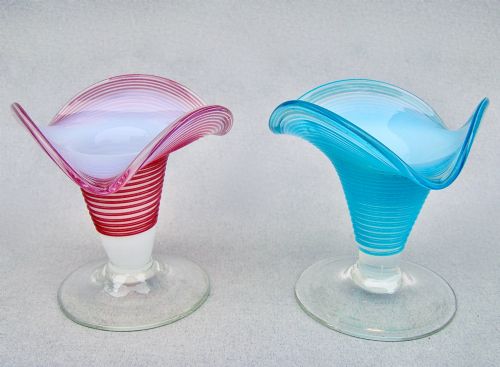
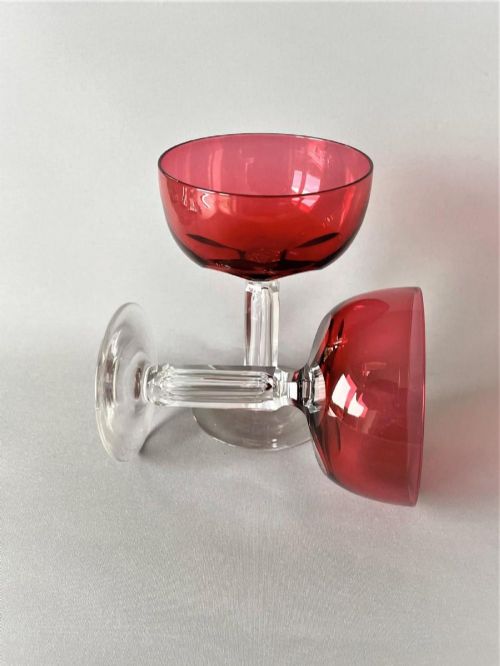
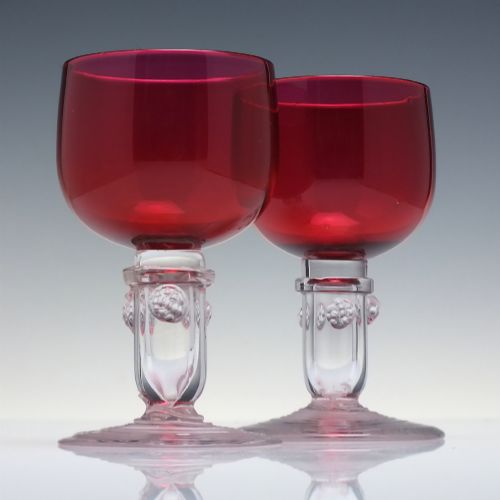
A Victorian cranberry glass pair consists of matching vessels created during the nineteenth century, most often taking the form of decanters, vases, salt cellars, champagne coupes, and table lamps. These matched duplicates were produced for formal dining and parlour decoration, designed to balance visual weight across a mantelpiece or sideboard.
The objects seen here span from the mid to the late nineteenth century, reflecting the Victorian penchant for matching table settings and decorative accessories. Alongside standard table glassware, buyers encounter functional lighting components such as candle lamps, oil peg lamps, and wall lights incorporating these striking red hues.
English and Bohemian workshops dominate the origins of these pieces, utilising distinct regional techniques for blowing and cutting. While some examples remain purely glass, others integrate brass mounts, silver plate, or solid silver components to elevate their utility and appearance.
How they were made
The signature pinkish-red colour of these pieces is achieved by adding gold chloride to the molten glass batch, creating hues that range from pale pink to deep ruby. Makers often utilised an overlay technique, fusing a layer of cranberry glass over clear crystal before cutting away portions to reveal the contrasting transparent metal beneath.
Decoration relied heavily on wheel engraving and etching, with motifs such as vines, birds, and flowers cut into the surface of decanters, coupes, and tumblers. Further embellishments included applied white glass handles and rims, enamel highlights, and metal fittings in brass and silver plate.
Victorian Cranberry Glass Pair Retail Price Guide 2026
Typical asking prices for victorian cranberry glass pair among the pieces listed under this phrase on Sellingantiques today, from the lower quarter to the upper quarter. They describe what is for sale here now, not the wider market.
Listings feature items from the mid-nineteenth century through to the Edwardian period, incorporating brass, silver plate, and clear crystal alongside cranberry glass.
What varies in quality
Quality in these matched pairs rests upon the depth and evenness of the glass colour, alongside the precision of the glassblower's form. Superior examples display crisp wheel engraving with clear detailing on motifs like vines and foliage, rather than superficial acid etching.
The integration of secondary materials also dictates standard, with finely cast brass mounts, substantial silver plate, or matched components indicating higher workshop origin. Consistency between the two items of the pair - in height, weight, and shade intensity - separates standard production pieces from finer cabinet examples.
Thomas Hart Stone
The Victorian Cranberry Glass Pair Glossary
- Cranberry glass
- A transparent glass coloured by the addition of gold chloride during manufacture. The resulting shade varies from light pink to a deep reddish tone.
- Overlay glass
- A technique where a layer of coloured glass is fused over a base of clear crystal. Subsequent cutting exposes the clear glass underneath to create patterned designs.
- Champagne coupe
- A shallow, broad-bowled stemmed glass used for sparkling wine during the nineteenth century. These often featured engraved bowls and matching feet.
- Jack in the pulpit vase
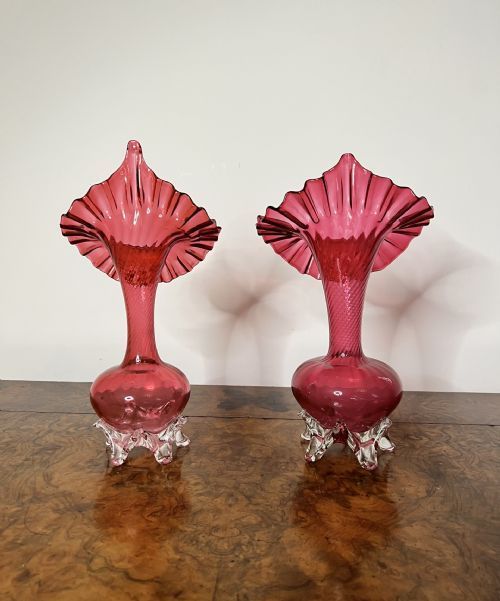
- A nineteenth-century glass vase featuring a ruffled, flared rim resembling a preacher's pulpit. They were frequently blown in cranberry and ruby glass.
- Wrythen
- A decorative spiral pattern twisted into the body of blown glassware during shaping. This texture catches the light and adds depth to the coloured metal.
Victorian Cranberry Glass Pair: Frequently Asked Questions
How were cranberry glass decanters used?
These decanters held wine and cordials for formal dining, serving as both functional vessels and decorative centrepieces on Victorian tables.
Their rich colour added warmth to the dining room, often accompanied by matching wine glasses or placed upon silver-plated trays.
Can I use these oil lamps today?
Most antique oil and candle lamps are acquired for decorative display rather than daily domestic lighting. Wiring or conversion should be assessed carefully if intended for functional use.
Careful handling ensures the delicate glass shades and brass fittings remain undamaged during placement.
How do I clean antique glass pairs?
Warm water and mild soap are best for cleaning nineteenth-century glassware, avoiding harsh abrasives that might scratch the surface. Metal mounts and silver plate require dedicated polish kept separate from the glass body.
Sudden temperature changes should be avoided to prevent cracking the historical metal.
What is the difference between cranberry and ruby glass?
Cranberry glass typically utilises gold in the melting process to achieve a translucent pink-red shade. Ruby glass can sometimes refer to deeper, highly saturated tones produced through alternative mineral recipes.
Both terms appear across nineteenth-century lighting and tablewares, often describing similar aesthetic traditions.