
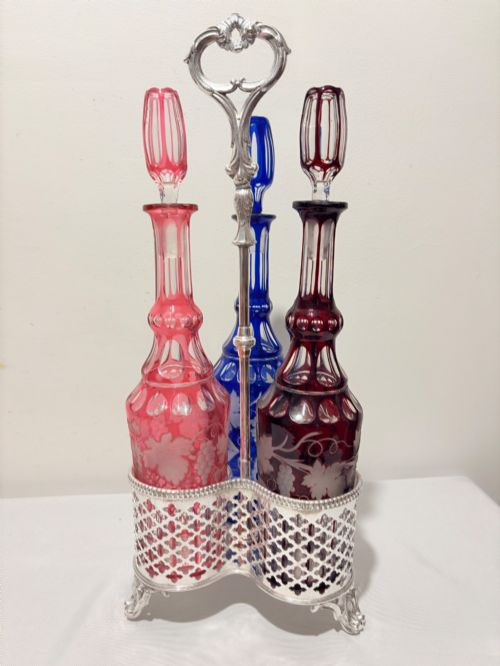
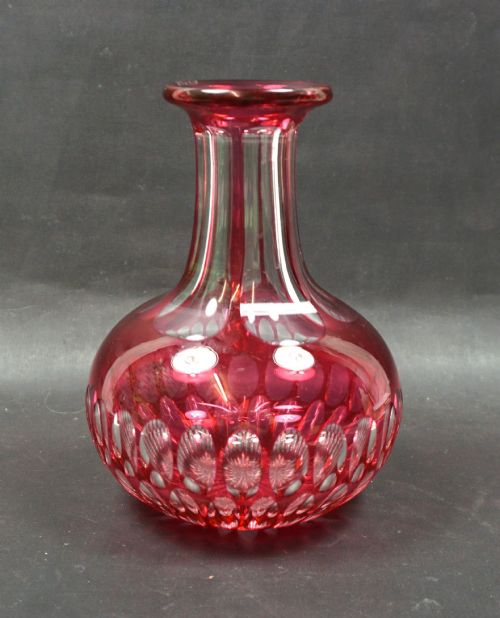
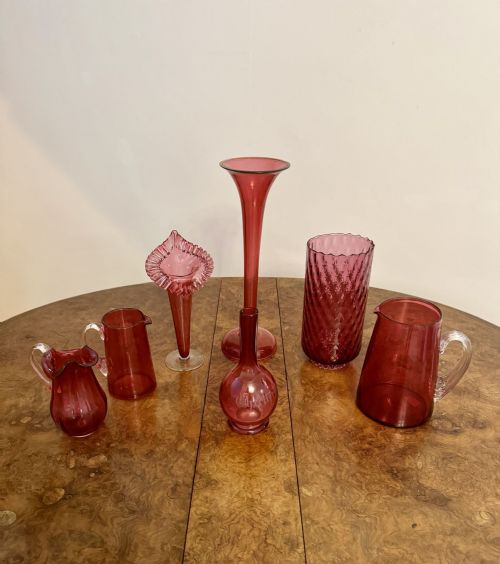
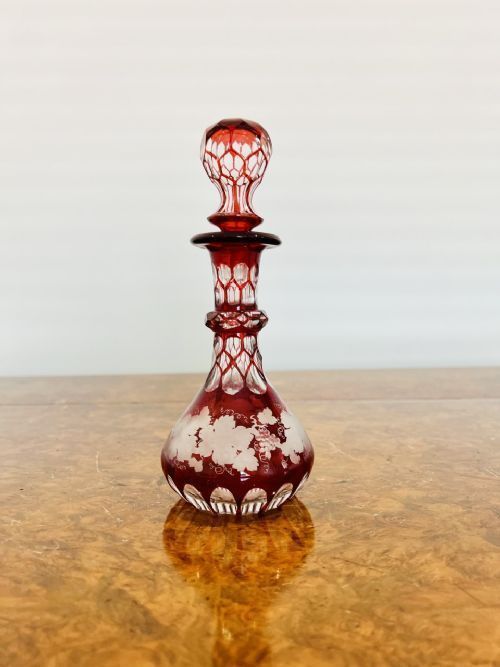




Victorian Cranberry Decanter
These vibrant pieces of victorian cranberry decanter bring rich colour and charm to a table.
Victorian Cranberry Decanter
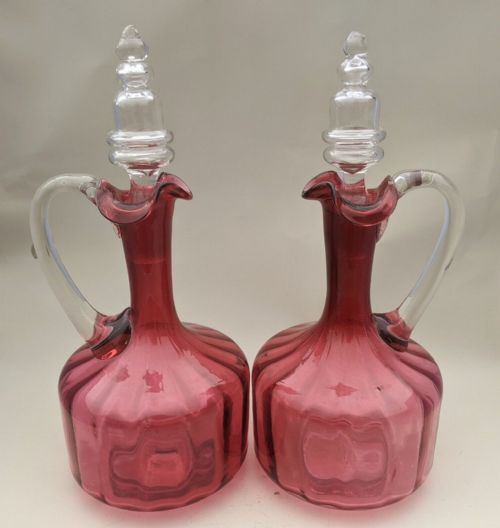
A victorian cranberry decanter is a striking table vessel designed for serving wine, spirits, or liqueurs, most often seen in deep pinkish-red glass. The pieces found here date from the nineteenth and early twentieth centuries, spanning periods from eighteen forty to nineteen ten.
Most examples take the form of standard decanters, serving bottles, or carafes, while others appear paired with silver plated stands or frames. Collectors also encounter related glassware such as perfume bottles, scent bottles, and claret jugs.
English and Bohemian workshops dominate the origins of these items. Buyers will find plain glass alongside overlaid, etched, and gilded designs showing birds and vines.
How they were made
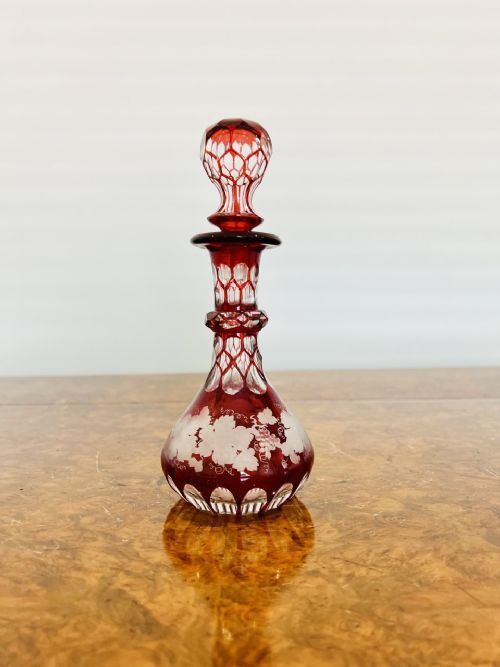
Makers achieved the distinct hue of a victorian cranberry decanter by adding gold chloride to the molten glass batch. Artisans frequently utilised an overlay technique, fusing a layer of coloured glass over clear crystal before cutting back the surface.
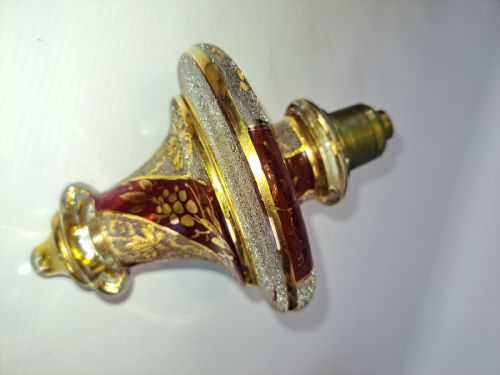
Craftsmen decorated many vessels by hand, applying wheel-engraving to depict motifs like fruiting vines and birds. Other pieces received surface enrichment through gilding or etching, complemented by clear glass stoppers and silver plated mounts.
Some nineteenth century makers tucked tiny birds among engraved vine leaves, ensuring the decanter watched over the claret.
What varies in quality
The depth and consistency of the glass colour set examples apart, ranging from pale pink tones to deep ruby shades. Overlay work shows greater skill when the cut windows reveal crisp, clean lines against the underlying crystal.
Surface decoration dictates distinction, with hand-engraved foliage and intact gilding lifting certain items above plain vessels. The presence of matching stoppers and original silver plated stands also influences the standing of a piece.
The Victorian Cranberry Decanter Glossary
- Cranberry Glass
- A type of transparent glass coloured with gold, ranging in tone from pale pink to deep red. It gained popularity during the Victorian era for tableware and decorative items.
- Overlay Glass
- A method where a vessel of clear or frosted crystal receives an outer jacket of coloured glass. Artisans cut through the outer layer to expose the contrasting base material beneath.
- Claret Jug
- A tall vessel intended for serving red wine at the table. These examples frequently incorporate silver plated mounts and handles.
- Decanter Stand
- A supportive frame, often in silver plate or brass, designed to hold one or more serving bottles securely. They assist with transport around the dining room.
- Finial
- The decorative upper knob or termination point fitted to the top of a stopper or lid. It provides a grip for lifting the closure.
Victorian Cranberry Decanter: Frequently Asked Questions
How do I clean a victorian cranberry decanter?
Wash the glass gently in warm, soapy water using a soft brush to protect the historic surface. Avoid soaking pieces with silver plated mounts or gilded decoration for extended periods.
Dry the vessel thoroughly with a lint-free cloth and store the stopper separately to prevent sticking.
Were these decanters used for wine?
Victorian households utilised these vessels for serving various alcoholic beverages including wine, spirits, and cordials. Taller carafes and hock decanters accommodated white wine at the dining table.
Smaller bottles and phials served liquor or held scent on dressing tables.
How can I tell if a piece is Bohemian or English?
Bohemian examples frequently display heavier cutting, elaborate etching, and extensive gilding on ruby or cranberry glass. English production often leans towards refined overlay work and botanical engravings of vines and birds.
Makers on both sides of the Channel produced high quality tableware during the nineteenth century.
Do original stoppers matter for value?
Matching stoppers that fit the neck correctly complete the profile of a serving bottle. Collectors prefer pieces retaining their original glass stoppers, particularly when cut or faceted to match the body.
Replacements can serve a functional purpose but alter the integrity of the antique.