

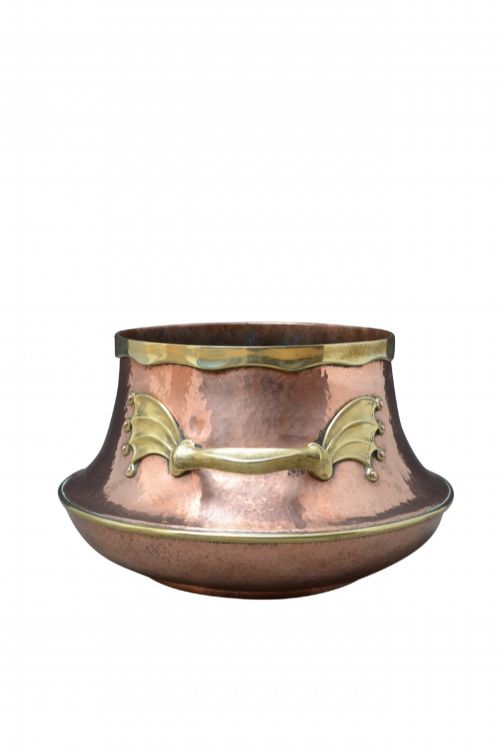


Victorian Copper Plant Pot
A victorian copper plant pot brings warmth and texture to a room, functioning as a sturdy vessel for greenery.
Victorian Copper Plant Pot
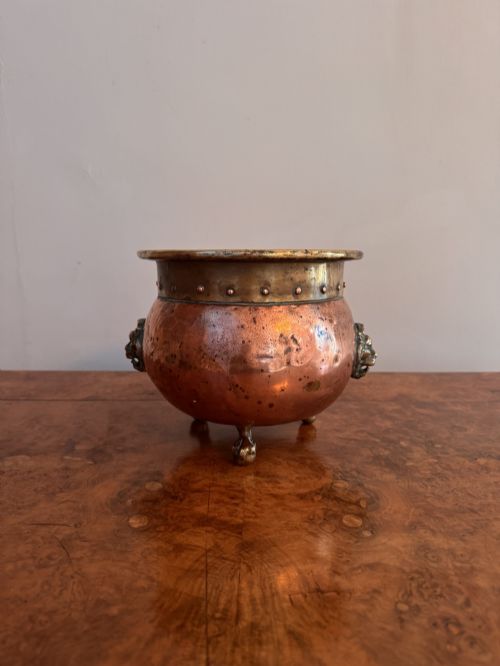
When you search for a victorian copper plant pot, you find robust metal vessels designed to hold indoor plants and foliage. These items serve as functional horticultural accessories that double as decorative centrepieces in domestic spaces.
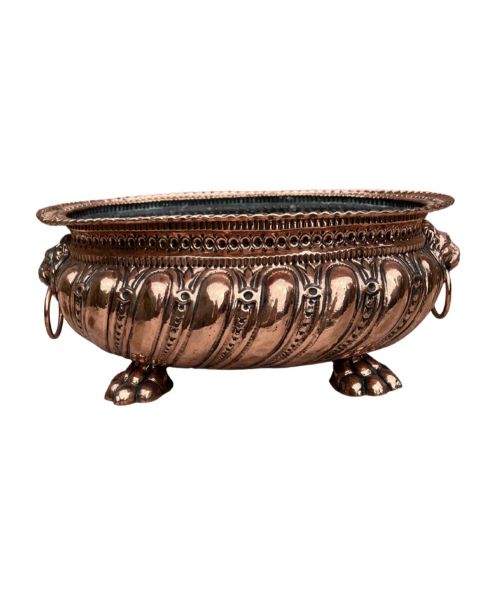
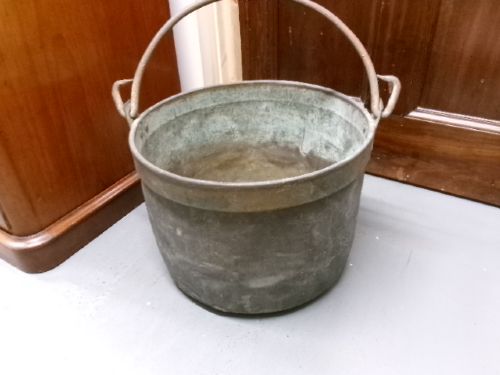
The versions most commonly met on this page include large jardinieres, planters, and swing-handled cauldrons. Makers of the period also produced oval planters, watering cans, and distinct forms reflecting later design movements.
Originating predominantly from the nineteenth century into the early twentieth century, these objects bridge practical utility and aesthetic charm. Pieces span Victorian, Edwardian, and subsequent transitional styles such as Arts and Crafts and Art Nouveau.
How they were made
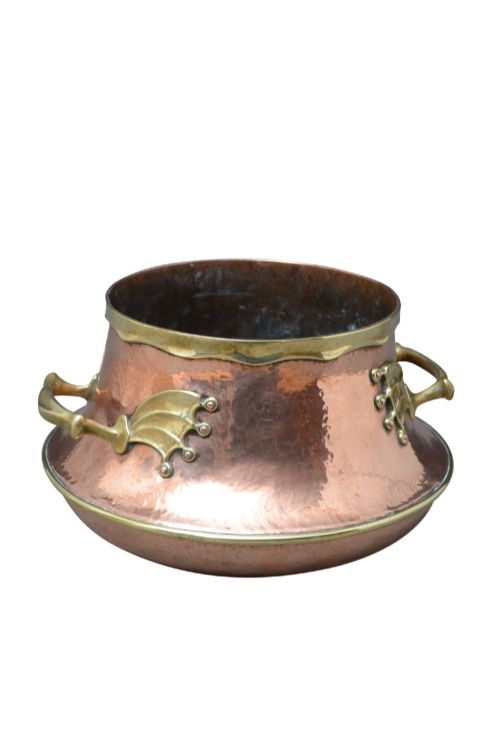
Solid copper forms the primary body of these vessels, shaped through techniques that include hand-hammering to achieve textured surfaces. Workshops frequently combined this copper with contrasting brass handles, rims, or fittings.
Certain designs incorporate wrought iron or iron supports, particularly in pieces aligned with the Arts and Crafts movement. Tin and other base metals occasionally appear in internal linings or structural components to ensure durability.
Victorian Copper Plant Pot Retail Price Guide 2026
Typical asking prices for victorian copper plant pot among the pieces listed under this phrase on Sellingantiques today, from the lower quarter to the upper quarter. They describe what is for sale here now, not the wider market.
Listings feature copper vessels spanning the Victorian period, Edwardian era, and the Arts and Crafts movement, incorporating brass and wrought iron.
What varies in quality
The distinction between standard domestic items and superior examples lies in the weight of the metal and the depth of the hand-hammering. Heavier gauge copper provides greater structural integrity and resists denting during everyday use.
Artisanal detail elevates certain vessels, particularly where brass mounts are securely riveted rather than superficially attached. The subtlety of form and the integration of mixed metals separate utilitarian containers from finer decorative works.
The Victorian Copper Plant Pot Glossary
- Jardiniere
- An ornamental pot or stand for holding plants or flowers, usually designed to sit on a floor or table surface.
- Cauldron
- A large metal pot with a swing handle, repurposed in gardening contexts to hold large foliage or trailing plants.
- Arts and Crafts
- A design movement spanning the late nineteenth and early twentieth centuries that emphasised handcrafting and honest materials over mass production.
- Art Nouveau
- A style characterised by flowing, organic lines and natural motifs that influenced metalwork design around the turn of the twentieth century.
- Wrought iron
- Tough, malleable iron that can be heated and forged into decorative brackets, stands, or handles by a blacksmith.
Victorian Copper Plant Pot: Frequently Asked Questions
What is a jardiniere?
A jardiniere is simply a large ornamental pot designed to hold plants and flowers indoors.
These vessels were traditionally placed on tables or plant stands to display greenery within a room.
How do I clean old copper?
Old copper is best maintained with a soft dry cloth to preserve its accumulated historical patina.
Aggressive polishing removes the aged surface that collectors value, though mild soapy water can remove active dirt.
Can I plant directly inside?
Planting directly into antique metal risks moisture retention and corrosion along the interior seams.
Using a separate inner plastic pot or saucer protects the historical copper from constant dampness and soil contact.
How do I date these pots?
Dating relies on observing manufacturing techniques, material combinations, and stylistic markers recorded across the pieces.
Heavy hand-hammering often points towards Arts and Crafts workshops, while simpler turned rims suggest standard nineteenth-century production.