



Victorian Choker Necklace
A victorian choker necklace sits close to the collarbone, offering a distinct nineteenth-century silhouette forged in silver and gold.
Victorian Choker Necklace
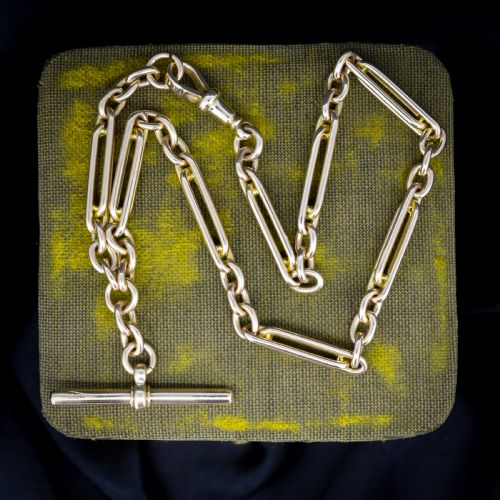
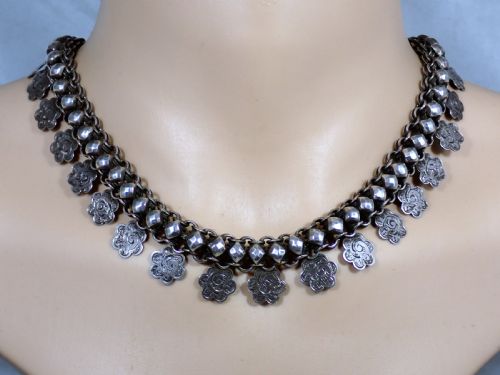
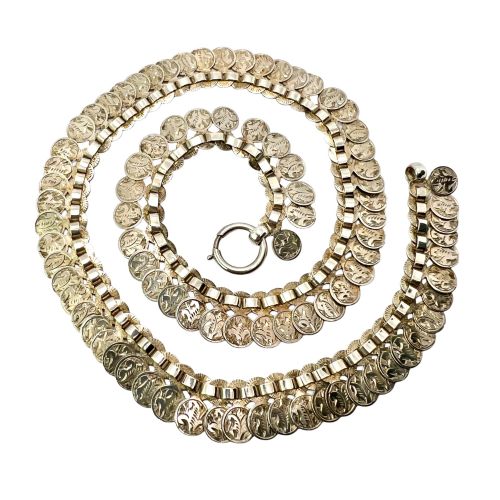
A victorian choker necklace encompasses close-fitting neck ornaments originating from the nineteenth century, alongside pieces carrying Georgian origins or Edwardian revivals. These shorter lengths include sterling silver chain collars, engraved coin designs, and two-tone curb chains.
Buyers frequently encounter seed pearl and coral strands, alongside substantial yellow gold links designed to sit high upon the neck. The forms span from simple metal collars to intricate drop fringe arrangements set with diamonds and amethyst.
Lengths vary from fourteen to twenty inches, capturing both true nineteenth-century production and subsequent twentieth-century echoes like 1920s gold lock fastenings.
Materials and Construction
Metals form the structural core of these pieces, utilising sterling silver, ten-carat yellow gold, nine-carat gold, and fifteen-carat yellow gold. Smiths linked these precious metals into trombone chains, oval links, and heavy curb patterns.
Natural stones and organic materials provide texture and contrast against the warm gold and cool silver backgrounds. Seed pearls, natural coral beads, Basra pearls, and diamonds are integrated into drops, strands, and central fringe mounts.
Victorian Choker Necklace Retail Price Guide 2026
Typical asking prices for victorian choker necklace among the pieces listed under this phrase on Sellingantiques today, from the lower quarter to the upper quarter. They describe what is for sale here now, not the wider market.
Several pieces double as multi-purpose items, converting neatly from a neck collar into a brooch when the mood strikes.
Evaluating Quality and Craftsmanship
Quality rests in the weight of the metal and the integrity of the links, distinguishing hollow mass-market production from solid curb and trombone chains. The security of clasps and locks, such as nine-carat gold box fastenings, indicates the original standard of assembly.
The grading of natural materials separates standard pieces from exceptional examples. Uniformity in natural coral beads, the lustre of Basra pearls, and the cut and setting of diamonds dictate the upper tier of these items.
The Victorian Choker Necklace Glossary
- Curb chain
- A type of jewellery chain consisting of uniform interlocking links that lie flat against the skin. This construction provides the weight and flexibility needed for shorter neckwear.
- Seed pearl
- A very small natural pearl, often drilled and threaded in multiples to create delicate strands or clustered floral motifs. They appear frequently in nineteenth-century decorative work.
- Fringe necklace
- A design where vertical drops or pendants suspend at intervals from a main chain collar. Amethyst and pearl drops often employ this layout.
- Trombone link
- An elongated rectangular metal link modelled after the shape of a musical instrument. It forms distinctive geometric patterns in period chains.
Victorian Choker Necklace: Frequently Asked Questions
How do I wear a short collar necklace?
These shorter lengths rest directly against the collarbone, making them suitable for open necklines and evening wear. They sit independently or pair cleanly with slightly longer chains.
Ensure the length matches your preferred collar height, as nineteenth-century pieces frequently measure under sixteen inches.
What metals are used in these pieces?
Makers relied on sterling silver and various grades of yellow gold, including nine-carat, ten-carat, and fifteen-carat compositions. Silver pieces often display crisp hand engraving.
Gold items utilise traditional alloys that yield warmer, deeper hues than modern equivalents.
Are the pearls and coral natural?
Period examples frequently incorporate natural coral beads and saltwater pearls, including Basra pearls. These organic materials display subtle irregularities in shape and tone.
Examining the drill holes and surface lustre helps confirm their organic origin.
How do I date a piece accurately?
Dating relies on stylistic markers, lock mechanisms, and material combinations associated with the Victorian, Georgian, and Edwardian eras. Hallmarks and unassigned metal purity stamps provide further chronological clues.
Shorter chain configurations often point toward late nineteenth-century fashion trends.