
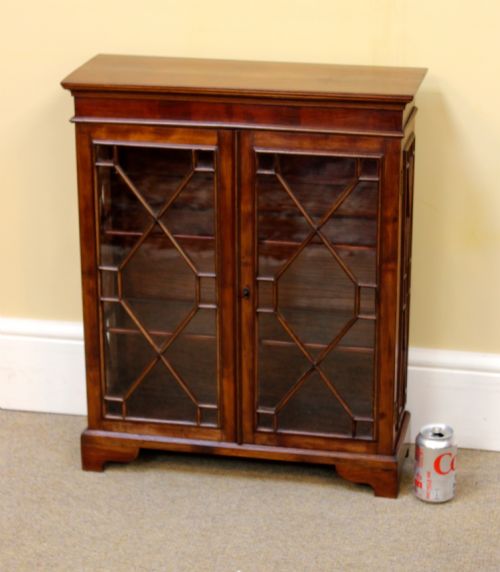
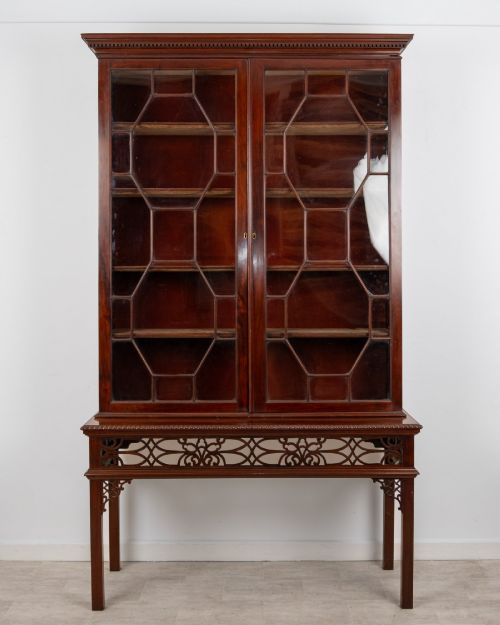
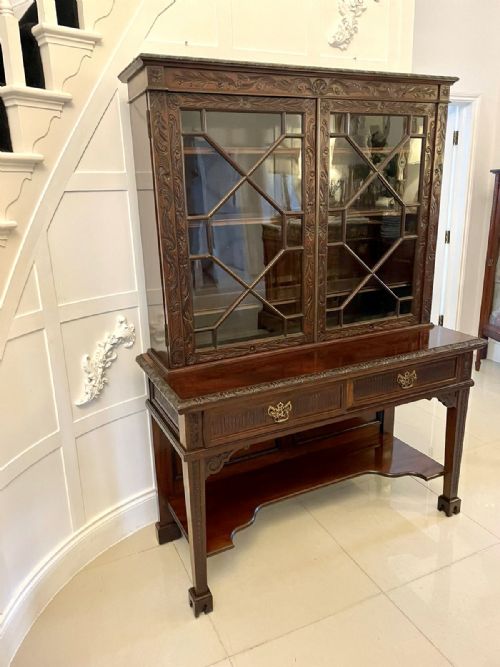


Victorian Chippendale Cabinet
A victorian chippendale cabinet brings together 19th-century cabinet-making and 18th-century revival forms to display silver, books, and collections.
Victorian Chippendale Cabinet
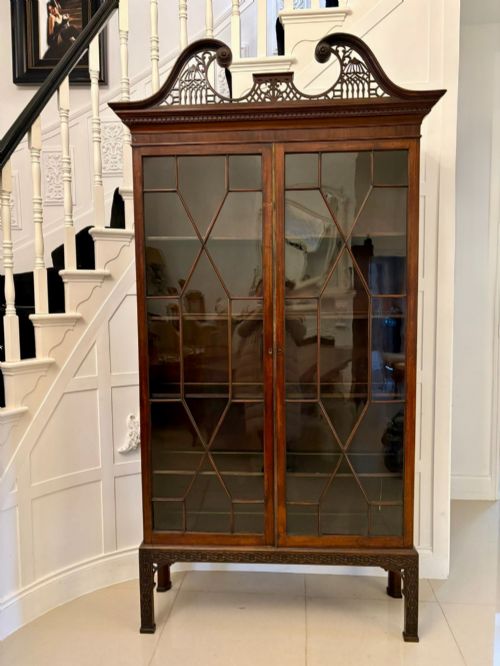
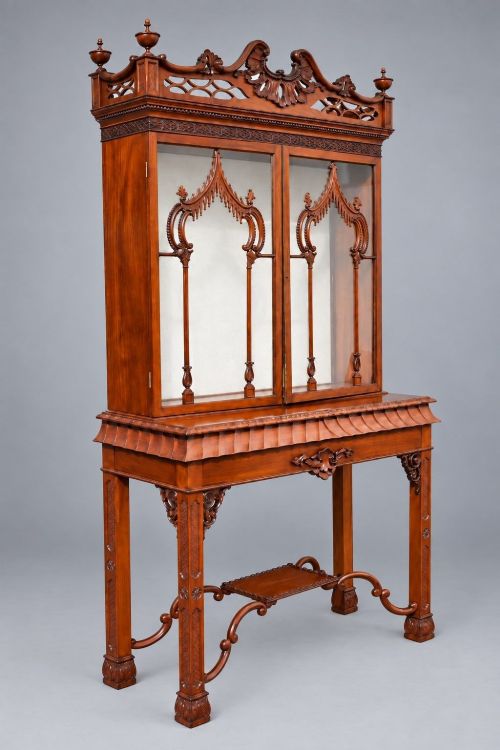
A victorian chippendale cabinet appears in various guises across the nineteenth century, including display cabinets, bookcases, corner cupboards, and bedside cabinets. These pieces channel the eighteenth-century taste through revival styles, including Chinese Chippendale revival and Chinoiserie variations.
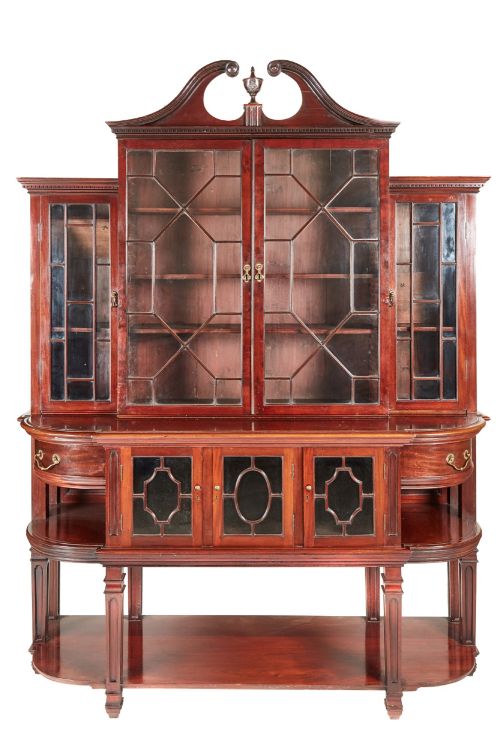
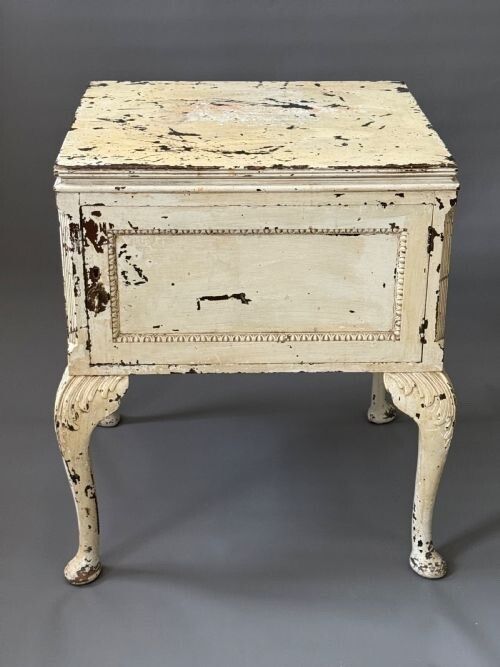
Makers of this era utilised mahogany, flame mahogany veneer, and paint, often incorporating glass panes, mirror backs, and velvet linings. Forms range from large breakfront bookcases and sideboards down to miniature display cabinets and cabinets on stand.
Pieces frequently date from the 1860s through to 1900, reflecting a Victorian appetite for historicism. The construction serves both practical storage needs and the decorative display of valued household objects.
Evaluating the Range
Quality rests upon the crispness of the timber carving and the selection of flame mahogany veneer. Superior examples display balanced proportions, refined astragal glazing bars, and well-executed revival details.
The integration of secondary elements such as original brass fittings, mirror glass, and interior fabric linings influences the character of each piece. Maker attribution also separates standard production from workshop-marked items.
Listings feature mahogany, flame mahogany veneer, brass, glass, fabric, velvet, paint, and mirror across multiple revival styles.
James Winter and Sons·Edwards and Roberts
The Victorian Chippendale Cabinet Glossary
- Astragal
- A moulding profile used to divide glass panes in cabinet doors. These intersecting wooden bars create geometric patterns across the frontage.
- Breakfront
- A cabinet design where the central section projects forward from the flanking wings. This architectural arrangement adds depth and presence to large bookcases and sideboards.
- Bijouterie cabinet
- A specialised glass-topped display case designed for holding small valuables and curiosities. They often feature velvet or fabric lined interiors.
- Chinoiserie
- European decorative style employing imitation Chinese motifs and techniques. It appears on painted and carved cabinet surfaces during the revival periods.
- Demi-lune
- A half-moon shape in furniture design. Cabinets with this profile fit flat against a wall while presenting a curved front.
Victorian Chippendale Cabinet: Frequently Asked Questions
What is a Victorian Chippendale cabinet?
A Victorian Chippendale cabinet is a 19th-century piece of furniture that revives the 18th-century designs associated with Thomas Chippendale. These items encompass display cabinets, bookcases, and sideboards.
They utilise mahogany, glass, and brass, often featuring carved details and astragal glazed doors for showing collections.
How do I identify Chinese Chippendale revival style?
This style incorporates distinct decorative motifs inspired by Chinese design, translated through 19th-century British cabinet-making. You will see carved lattice work and pagoda-like architectural hints.
Such cabinets often pair mahogany frames with painted finishes or glazed display sections tailored for porcelain.
Where were these cabinets placed in a home?
Original homes used these cabinets in principal reception rooms, libraries, and drawing rooms. Bookcases and breakfronts anchored larger rooms, while corner cupboards utilised neglected angles.
Miniature cabinets and bedside versions served intimate spaces for personal items and small collections.
How do I care for mahogany and glass?
Maintain mahogany surfaces using traditional wax polishes applied sparingly and buffed with a soft cloth. Avoid placing timber pieces in direct sunlight or near heat sources.
Clean glass panels with standard glass cleaner applied to a cloth rather than sprayed directly, protecting surrounding wood and fabric linings.