





Victorian Child Print
These Victorian child print pieces capture nineteenth-century sentiment through framed paper art and advertising subjects.
Victorian Child Print
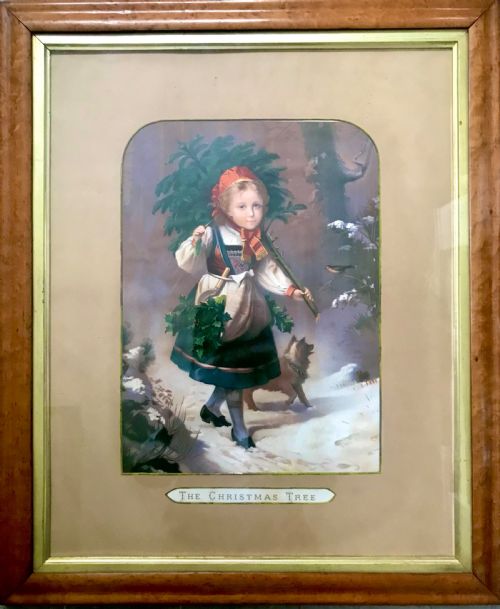
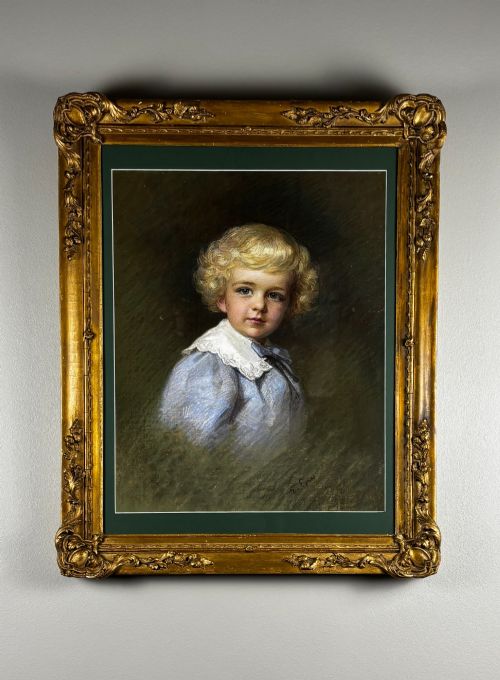
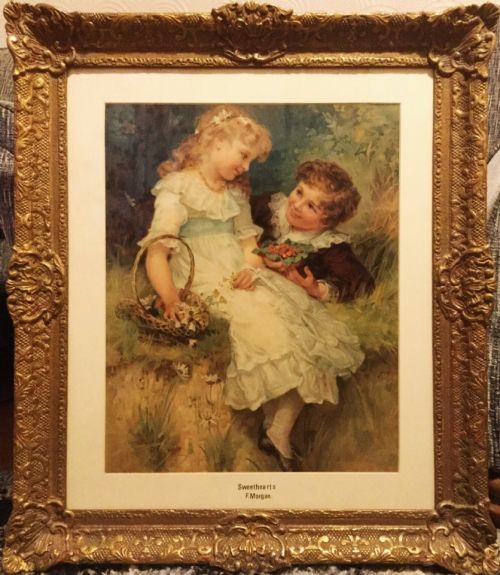
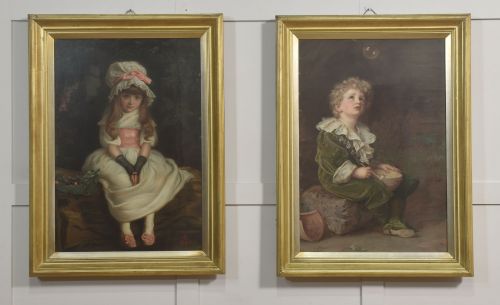
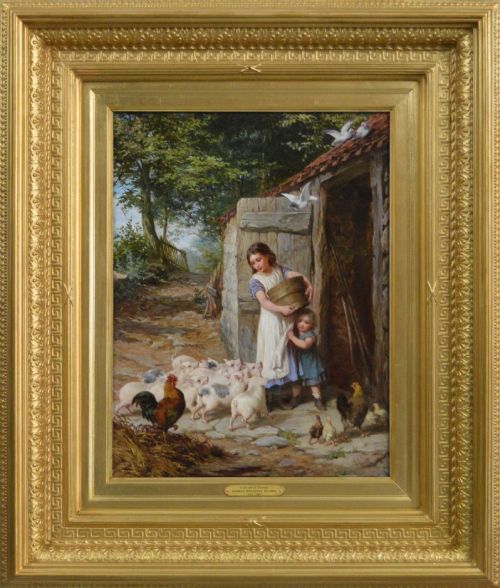
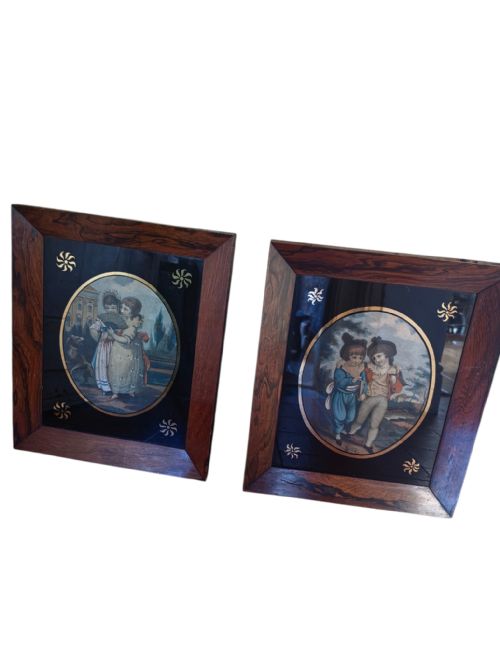
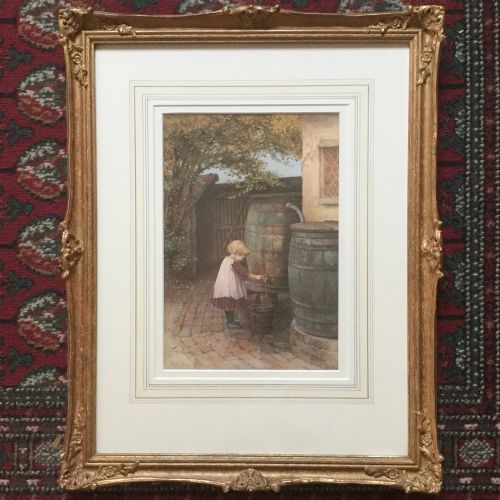
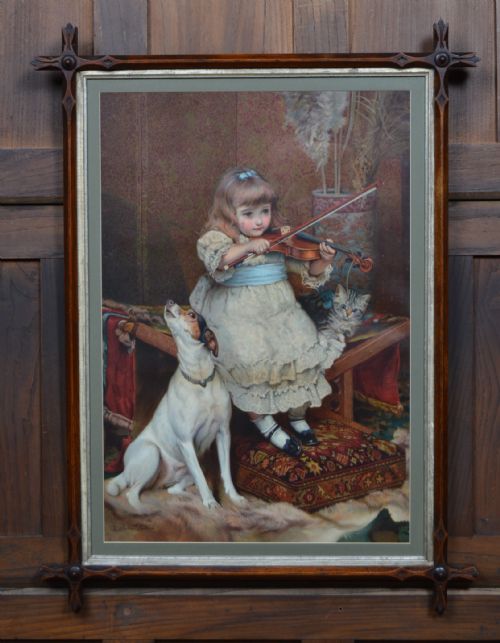
A victorian child print represents the era's fascination with youth, family life, and sentimentality, often seen in framed paper formats. These artworks range from chromolithographs and advertising prints to oval portraits and genre depictions.
Most examples found here span the nineteenth century and the early twentieth century, reflecting popular tastes of the period. The assortment includes decorative wall art housed in period timber frames, alongside occasional related nursery objects.
Materials and production
Works rely primarily on paper sheets carrying lithographic or printed imagery, mounted behind protective glass. Many incorporate wood or gesso framing, frequently finished with gilt or gold leaf layers.
Techniques span standard printing methods, chromolithography, and specialised applications like crystoleoms. These production processes allowed popular sentimental images to reach domestic interiors on a wide scale.
Victorian Child Print Retail Price Guide 2026
Typical asking prices for victorian child print among the pieces listed under this phrase on Sellingantiques today, from the lower quarter to the upper quarter. They describe what is for sale here now, not the wider market.
A solitary ceramic mug for a pug dog sneaks into the print selection, proving Victorians loved their pets in clay too.
Judging quality and condition
Quality rests on the crispness of the printed image and the fidelity of the colours against the original composition. Stronger examples retain their visual depth without excessive fading across the paper surface.
The housing contributes significantly to the overall merit, with original rosewood or giltwood frames holding greater appeal. Pieces retaining their period mountings offer a more complete historical context than later replacements.
Emily Eyres·Frederick Morgans·George Augustus Holmes·Charles Edward Wilson·Charles Burton Barber·Emile Vernon
The Victorian Child Print Glossary
- Chromolithography
- A planographic printing technique that uses multiple stone plates to build up a coloured image. This method produced the rich, vibrant advertising and fine art prints popular in the nineteenth century.
- Crystoleom
- A delicate Victorian art form where a paper print is made transparent, applied to glass, hand-coloured from behind, and sealed. This process creates a luminous, three-dimensional depth.
- Oleograph
- A type of chromolithograph printed on canvas or textured paper to imitate an oil painting. Manufacturers applied varnish to mimic the brushstrokes and sheen of genuine art.
- Giltwood
- Timber that has been coated with a thin layer of gold leaf or metallic powder. It provides the ornate, reflective borders common on nineteenth-century picture frames.
Victorian Child Print: Frequently Asked Questions
What subjects do these prints show?
The subjects focus primarily on portraits of young girls and boys, alongside sentimental genre scenes of children with animals. Well-known advertising campaigns also feature heavily in this category.
Many compositions derive from popular paintings of the era, reproduced to decorate middle-class domestic spaces and nurseries.
How should I care for paper art?
Paper and printed pigments are sensitive to direct sunlight, which causes fading and discolouration over time. Displaying them away from bright windows helps preserve the original tones.
Maintaining stable room humidity prevents the paper from warping and protects wooden or gilt frames from cracking.
How do I identify a chromolithograph?
A chromolithograph reveals a distinct dot pattern or overlapping colour layers under magnification, rather than the continuous tones of a painting. These prints use separate plates for each ink colour.
Close inspection under a glass often shows the fine registration marks used to align the multi-plate printing process.