



Victorian Chess Top Table
These Victorian chess top table pieces combine functional parlour games with fine domestic furniture, offering a clever surface for play and display.
Victorian Chess Top Table
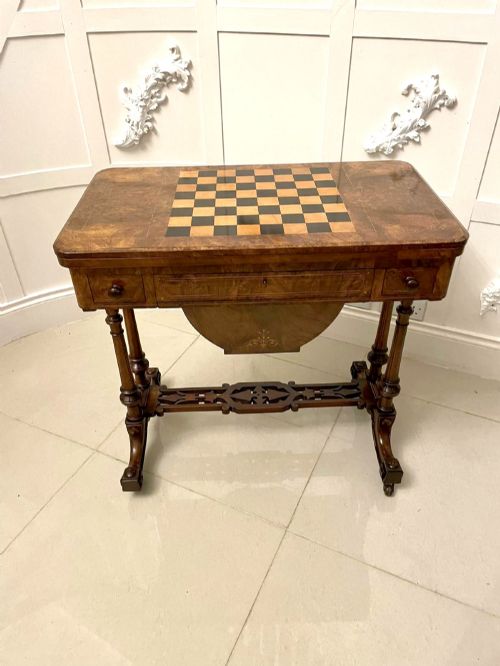
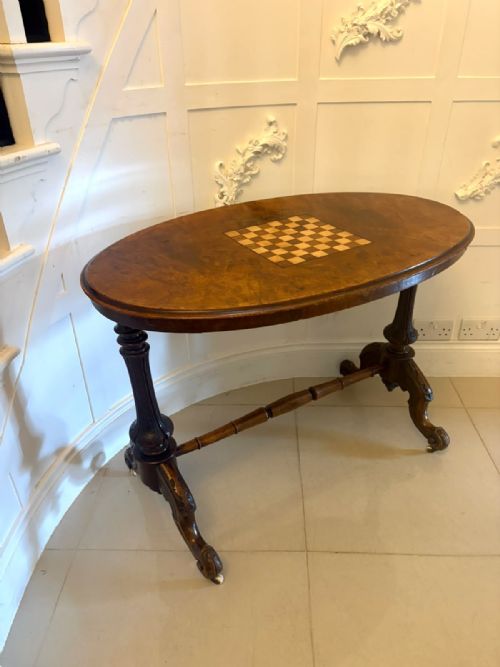
A Victorian chess top table is a versatile piece of nineteenth-century furniture designed for leisure and display. The listings here show forms that double as sewing tables, centre tables, and lamp tables, featuring integrated playing surfaces.
You are most likely to encounter walnut and burr walnut examples dating from the mid-nineteenth century, particularly around eighteen-fifty and eighteen-sixty. These pieces frequently incorporate marquetry and wood inlay to delineate the chequerboard squares.
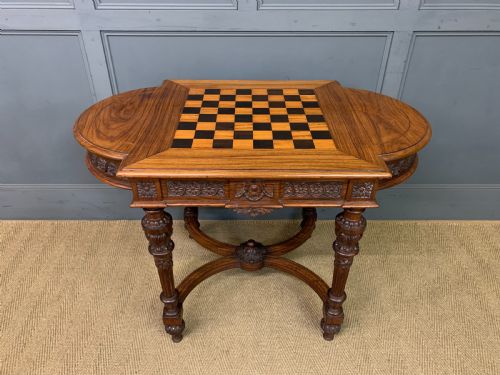
Origins stretch beyond standard Victorian workshop production to include Anglo-Indian rosewood items and nineteenth-century Italian Sorrento marquetry work. Certain pieces employ a tilt-top mechanism or include a single drawer alongside the inlaid board.
Materials and Construction
Cabinet makers utilised dense hardwoods such as walnut, burr walnut, rosewood, and mahogany as the primary structural and decorative timbers. Contrasting light and dark woods, specifically boxwood and ebony, form the precise squares of the chess boards.
Surface decoration relies heavily on wood inlay, floral marquetry, and specimen wood arrangements. Skilled artisans combined contrasting veneers to create elaborate geometric borders and pictorial scenes on the table tops.
Carved elements appear on pedestals and supports, while structural hardware occasionally includes brass components. Tilt-top mechanisms and fitted interior compartments for sewing add mechanical complexity to the joinery.
Victorian Chess Top Table Retail Price Guide 2026
Typical asking prices for victorian chess top table among the pieces listed under this phrase on Sellingantiques today, from the lower quarter to the upper quarter. They describe what is for sale here now, not the wider market.
Some tables double as sewing stations, proving that even a Victorian strategist needed a place to stash loose yarn.
Judging Quality
The sophistication of the timber selection and veneer work dictates the standing of a piece. Burr walnut and intricate multi-wood specimen panels represent a higher grade of craftsmanship than plain or uniformly grained surfaces.
The precision of the inlaid chequerboard squares and the intricacy of the surrounding floral marquetry reveal the skill of the maker. Tighter joints, sharper contrast in the boxwood and ebony, and fluid carving on the base separate superior examples from standard production.
The Victorian Chess Top Table Glossary
- Marquetry
- Decorative veneer work arranged in pictorial or patterned designs across a surface. Artisans cut different coloured woods to fit together precisely like a puzzle.
- Burr walnut
- Timber taken from the abnormal growth of a walnut tree, yielding swirling, highly figured grain patterns. Cabinet makers prized this wood for high-status table tops.
- Chequerboard
- A pattern of alternating light and dark squares used for games such as chess and draughts. On these tables, it is typically inlaid directly into the wood surface.
- Tilt-top
- A hinged table top mechanism that allows the surface to pivot to a vertical position when not in use. This clever design saved floor space in Victorian parlours.
- Specimen wood
- Furniture constructed from a multitude of different regional or exotic timber samples. Each piece showcases distinct natural colours and grain structures.
Victorian Chess Top Table: Frequently Asked Questions
What is a Victorian chess top table?
A Victorian chess top table is a multipurpose piece of nineteenth-century furniture featuring a built-in playing surface for board games. These tables allowed Victorian households to combine social recreation with elegant interior decoration.
Most examples function as occasional tables, centre tables, or sewing tables when not in use for games. The integration of the chequerboard into the main surface meant no separate board was required for play.
How were these tables used?
These pieces served as functional furniture for the parlour, drawing room, or sitting room. Families and guests gathered around them to play chess or draughts during evening leisure hours.
Beyond gaming, the tables supported lamps, sewing supplies, or decorative objects. Tilt-top variants allowed the playing surface to be stored vertically against a wall to conserve space.
How do I identify the wood types?
Walnut and burr walnut display rich brown tones with distinctive swirling grain patterns, while rosewood offers a heavier feel with darker grain streaks. Mahogany provides a reddish-brown appearance that deepens with age.
For the chess boards specifically, bright creamy boxwood contrasts sharply against dark brown or black ebony. Specimen wood tables incorporate numerous distinct timber varieties from different geographical regions.