





Victorian Carved Table Set
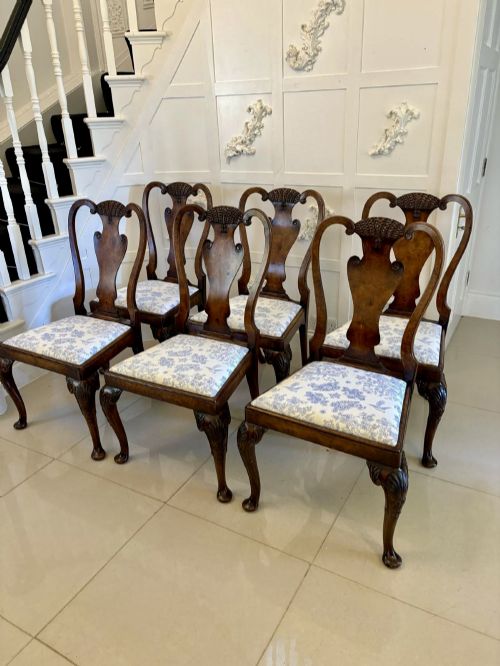
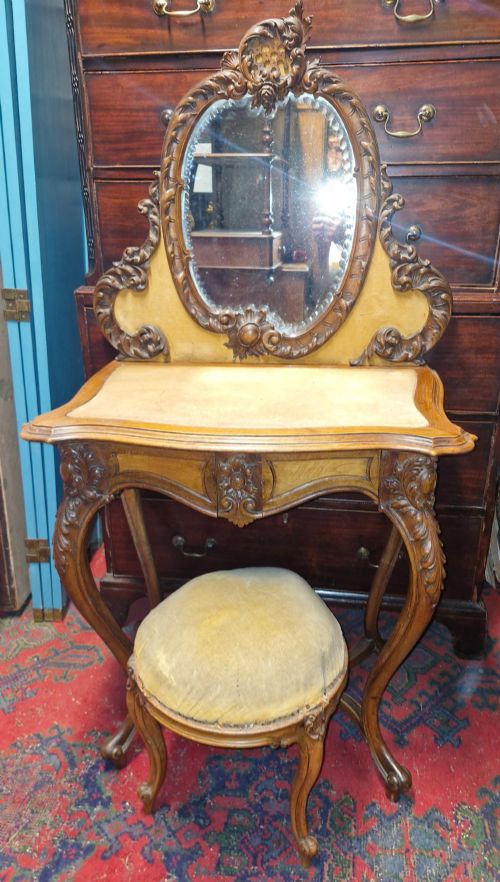
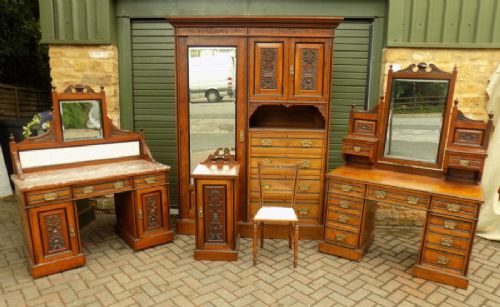
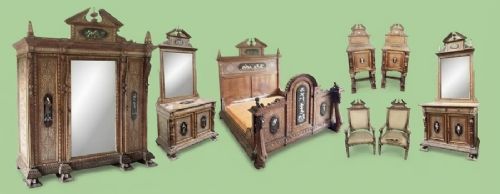
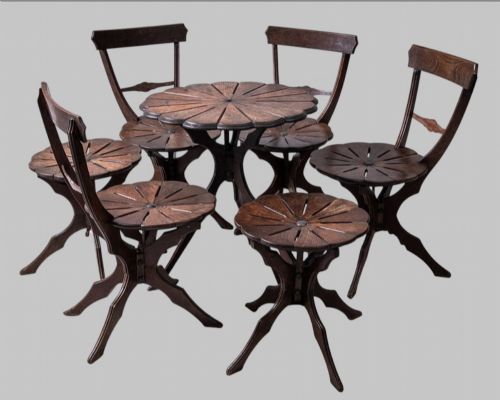
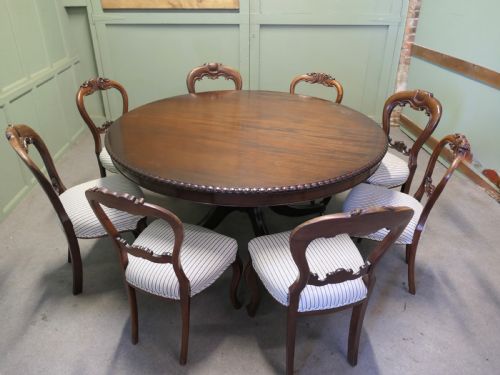
These walnut, oak, and mahogany victorian carved table set examples bring substantive presence and historic utility into a room.
Victorian Carved Table Set
A victorian carved table set gathers matched dining furniture, bedroom suites, and nests of tables produced during the nineteenth century and associated revivals. The most common manifestations on this page include substantial dining tables paired with multiple chairs, alongside walnut bedroom suites and occasional console tables.
Pieces span various stylistic interpretations such as Rococo Revival, French Empire Revival, and Black Forest, reflecting the period's taste for elaborate ornamentation. Cabinets, tables, and seating dominate the forms, often incorporating rich timber grains and detailed manual joinery.
Origins stretch across British, French, and Alpine workshops, bringing distinct regional carving traditions to the domestic interior. Buyers encounter everything from compact nesting tables to monumental dining arrangements suited to large halls.
Materials and construction methods
Construction relies heavily on dense hardwoods like walnut, burr walnut, mahogany, and oak, selected for durability and pronounced grain patterns. Secondary supports and decorative accents occasionally utilise ash, rosewood, or teak, shaped with hand tools and traditional joinery.
Carving is executed directly into the solid timber or applied gilder's gesso, creating high-relief foliage, scrollwork, and figurative motifs. Surface finishes range from French polish to wax, enhancing the natural warmth and depth of the wood.
Victorian Carved Table Set Retail Price Guide 2026
Typical asking prices for victorian carved table set among the pieces listed under this phrase on Sellingantiques today, from the lower quarter to the upper quarter. They describe what is for sale here now, not the wider market.
Several dining tables come with battalions of sixteen matching chairs, ready for very crowded dinner parties.
Distinctions in craftsmanship
Quality rests upon the crispness of the hand-carved detail and the selection of figured veneers, such as burr walnut or flame mahogany. Superior examples maintain structural integrity across large expanses like dining table tops and heavy console frames without warping.
Maker attribution and matching uniformity elevate certain suites, particularly those retaining original upholstery fabric, brass mounts, or stamped cabinetmaker marks. Lesser pieces show simplified ornamentation and mismatched components assembled from disparate sources.
Waring & Gillows·James Shoolbred
The Victorian Carved Table Set Glossary
- Burr walnut
- A wood harvested from walnut tree growths that produces intricate, swirling grain patterns. It is frequently sliced into veneers for prominent furniture surfaces.
- Console table
- A table designed to stand against a wall, often supported by ornate brackets or carved legs. These pieces frequently accompany matching wall mirrors.
- Quartetto nest
- A graduated set of four small tables that slide beneath one another. They were popular in the nineteenth century for serving tea or holding small objects.
- Giltwood
- Timber coated with a thin layer of gold leaf or gesso paint. This finish creates a luminous metallic appearance typical of revival console tables and mirrors.
- Parlour suite
- A coordinated group of seating furniture for a formal reception room. Such sets usually comprise a small sofa and several matching chairs.
Victorian Carved Table Set: Frequently Asked Questions
What is a victorian carved table set?
It is a coordinated group of nineteenth-century furniture featuring wooden carved ornamentation, encompassing dining sets, parlour suites, and nests of tables.
These collections reflect historical revival styles and provide functional grouping for period interiors.
How were these sets used originally?
Dining sets accommodated large household meals, while parlour suites furnished formal reception rooms for guests. Smaller table sets served for tea, games, or displaying decorative objects.
Their modular nature allowed households to rearrange rooms depending on the social occasion.
How do I care for carved wooden furniture?
Keep wooden surfaces away from direct heat sources and strong sunlight to prevent the timber from drying or cracking. Dust regularly with a dry cloth and apply occasional specialist wax polish to maintain the finish.
Avoid using modern chemical sprays that can strip historic French polish.
How do I distinguish Victorian from Edwardian pieces?
Victorian furniture generally employs heavier timbers, darker finishes, and dense, high-relief carving influenced by Rococo and Gothic revivals. Edwardian pieces often display lighter woods, simpler silhouettes, and more restrained decorative motifs.
Examining construction techniques and secondary woods helps confirm the manufacturing era.