



Victorian Carved Oval Back
A victorian carved oval back brings classical proportion and rich timber into a room, offering immediate elegance and practical seating.
Victorian Carved Oval Back
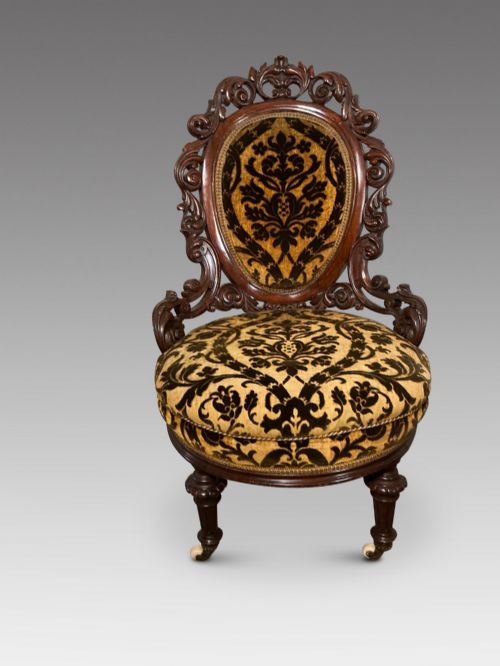
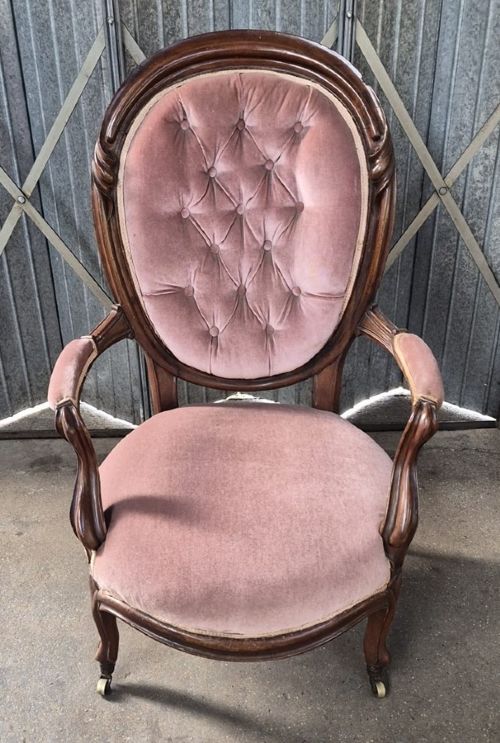
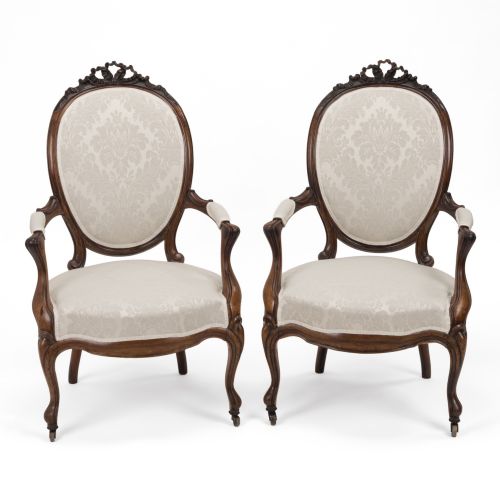
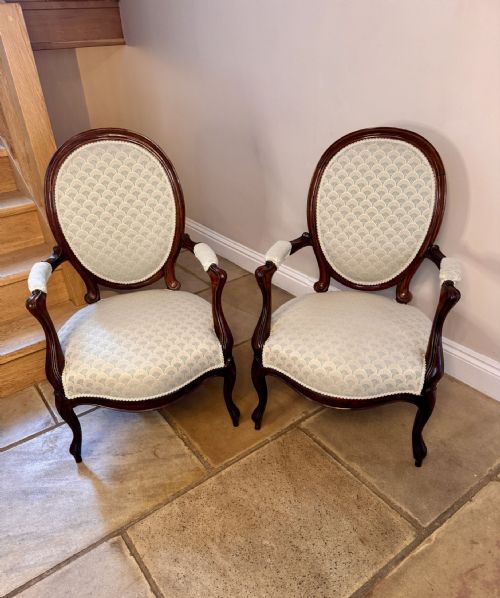
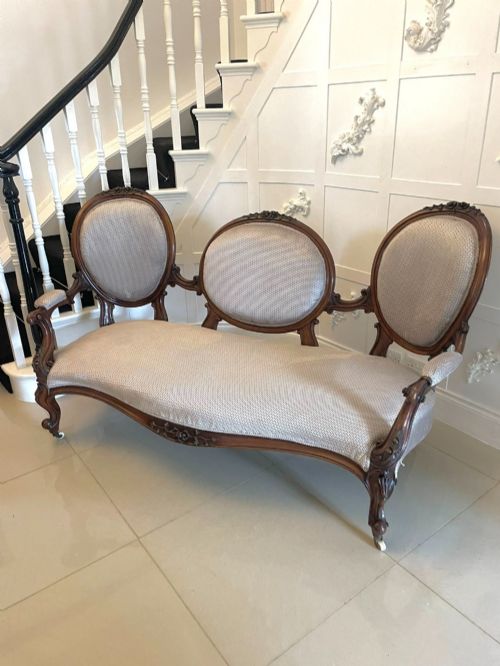
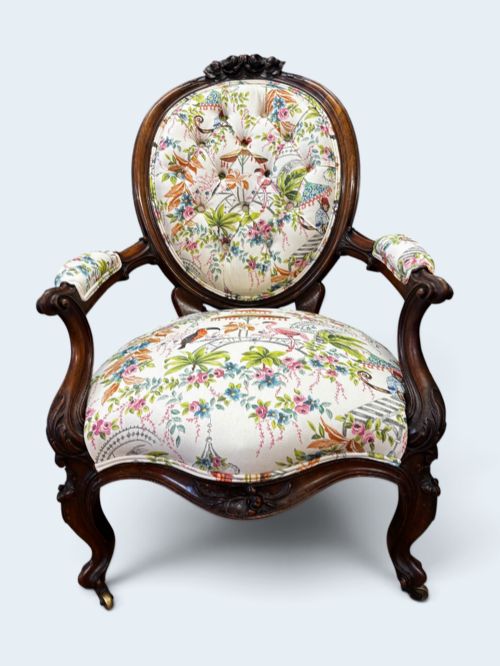
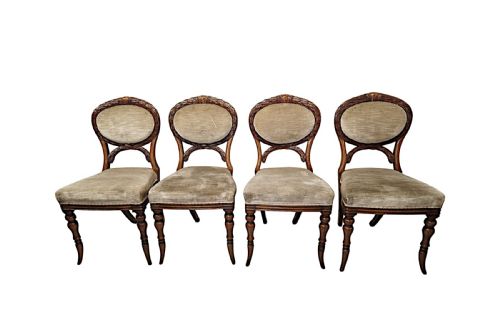
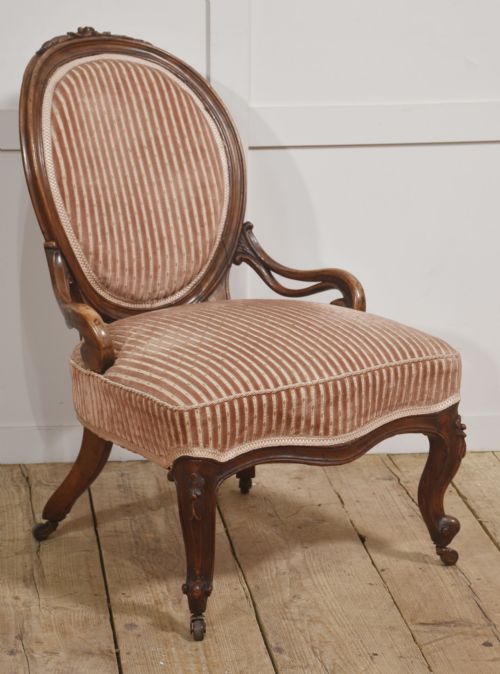
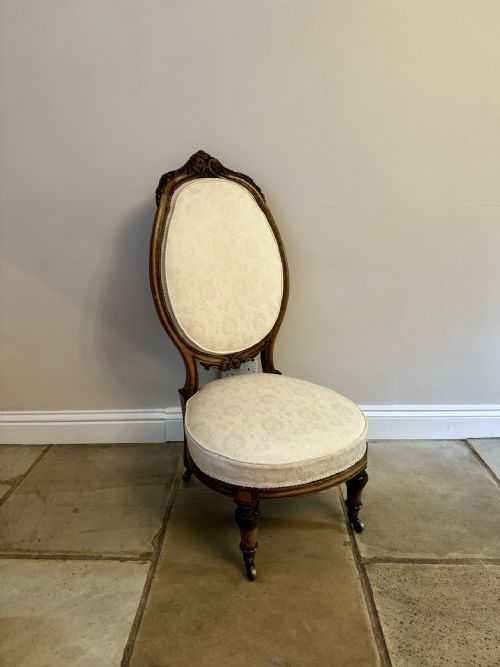
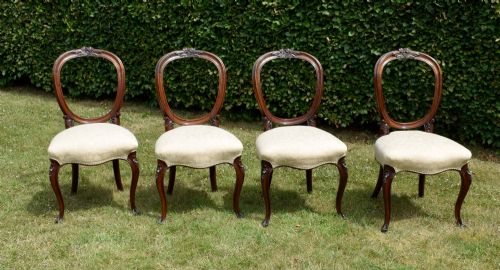
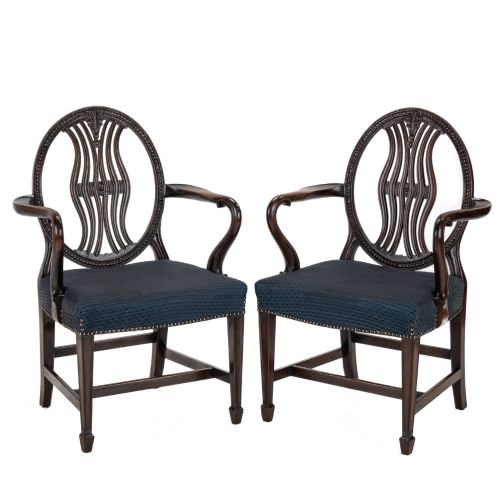
A victorian carved oval back typically takes the form of nursing chairs, side chairs, and open armchairs designed for nineteenth-century reception spaces. These pieces emerge predominantly in walnut and mahogany, carrying the stylistic hallmarks of the Victorian period alongside revivals of earlier centuries.
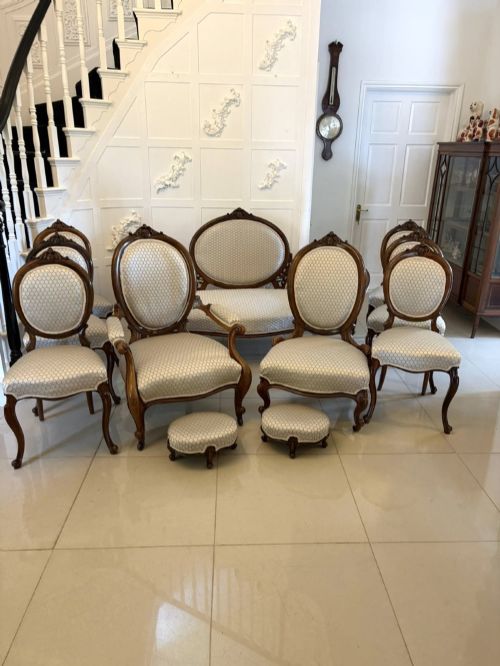
The oval or cameo back shape defines the silhouette, often supported by show frames that expose polished timber around upholstered panels. Buyers encounter single salon chairs, pairs, and occasionally larger suites intended for formal drawing rooms.
Makers of the period employed disciplined joinery and rhythmic carving to frame the upholstered pads. Surviving examples reflect both the restrained elegance of mid-century walnut work and the bolder interpretations of late Victorian design.
Materials and Construction
Timbers such as solid walnut and mahogany form the structural backbone of these chairs, selected for their grain and strength under curved tension. Craftsmen shaped the distinct oval frames by hand, integrating mortise and tenon joints to withstand daily use.
Upholstery relies on traditional stuffing techniques secured over fabric, velvet, or silk, while giltwood variants apply gold leaf to carved wooden surfaces. Brass accents and cane work occasionally appear on specific seating types, adding textural contrast to the timber frames.
Victorian Carved Oval Back Retail Price Guide 2026
Typical asking prices for victorian carved oval back among the pieces listed under this phrase on Sellingantiques today, from the lower quarter to the upper quarter. They describe what is for sale here now, not the wider market.
A solitary child's bergere chair sits among the full-scale salon suites, offering miniature caned comfort.
Markers of Quality
Depth and crispness of the timber carving distinguish superior examples from simpler production pieces, revealing the hand of a skilled artisan. The choice of primary wood, particularly well-figured walnut or dense mahogany, dictates the baseline refinement of the frame.
Proportion and structural integrity separate fine salon seating from utilitarian furniture, ensuring the curved back flows harmoniously into the legs. The integration of the show frame with the upholstered elements demonstrates the maker's precision.
Strahan
The Victorian Carved Oval Back Glossary
- Show frame
- A wooden structural frame left visible around the upholstered elements of a chair or sofa. This design choice highlights the polished timber and carved details.
- Cameo back
- An oval chair back resembling a carved gemstone portrait profile. It serves as a defining aesthetic feature of Victorian salon seating.
- Nursing chair
- A low-seated Victorian chair designed originally for comfort in private chambers or nurseries. They often feature prominent carved oval or open backs.
- Giltwood
- Timber treated with a thin layer of gold leaf or gilt finish. This material creates a reflective, ornate surface on period frames.
Victorian Carved Oval Back: Frequently Asked Questions
What is a Victorian oval back chair?
A Victorian oval back chair is a nineteenth-century seating form defined by its rounded, cameo-shaped backrest. These pieces frequently utilise walnut or mahogany and often feature exposed wooden show frames.
Craftsmen built these chairs for formal reception rooms, combining decorative carving with upholstered comfort. They survive today as versatile accent pieces or functional seating.
How do I identify a Victorian oval back?
Identification rests on the characteristic curved backrest, timber selection, and nineteenth-century construction methods. Look for hand-carved wooden frames surrounding upholstered panels in walnut, mahogany, or giltwood.
Stylistic details often point toward mid to late nineteenth-century manufacture, sometimes incorporating revival motifs. Examining the joinery beneath the seat provides further clues to its period origin.
Where were these chairs used historically?
Historically, these chairs populated nineteenth-century drawing rooms, parlours, and private chambers. Lighter forms, such as nursing chairs and side chairs, allowed for easy movement around a formal interior.
Larger armchairs and salon suites accommodated guests during social gatherings. Their decorative frames were intended to display taste and status within the home.
How do I care for antique wood and upholstery?
Preserving antique wood requires maintaining stable indoor humidity and avoiding direct sunlight to protect the polish. Regular dusting with a soft, dry cloth prevents particulate accumulation on carved surfaces.
Upholstery benefits from gentle professional cleaning suited to the specific fabric type. Minimising heavy physical strain helps protect the original nineteenth-century joinery.