

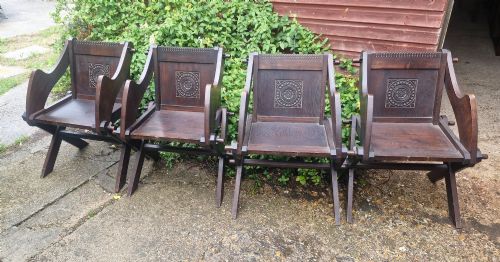


Victorian Carved Oak Hall Set
These Victorian carved oak hall set pieces combine sturdy English timber with deep period relief, offering a bold first impression for any entrance.
Victorian Carved Oak Hall Set
When you search for a victorian carved oak hall set, you encounter substantial seating groups and stands designed to furnish period hallways and reception spaces. The listings focus heavily on sets of chairs, often numbering four or six, alongside occasional hall stands executed in robust timber.
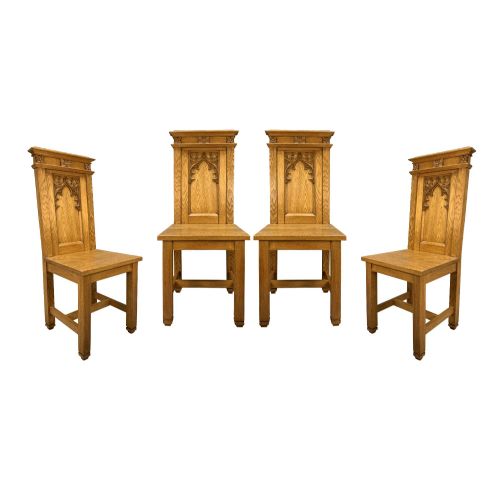
Most examples date across the nineteenth century, utilising styles that range from Gothic Revival to Spanish Revival influences. These configurations reflect the Victorian preference for dark, heavily figured wood and imposing architectural forms in domestic interiors.
Materials and construction
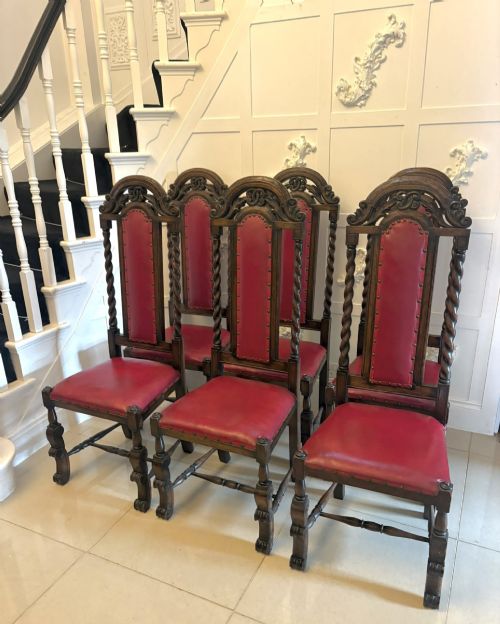
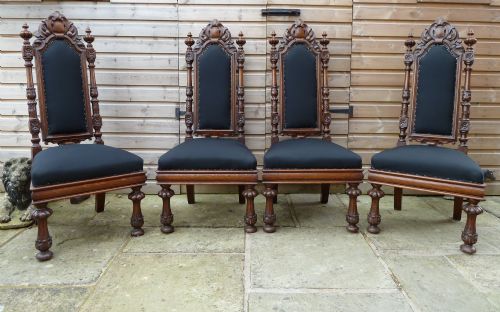
Makers relied on solid oak and English oak, shaping the dense timber through deep hand carving and turned elements such as barley twist legs. Structural joints were pegged or mortised to withstand daily use in busy entranceways.
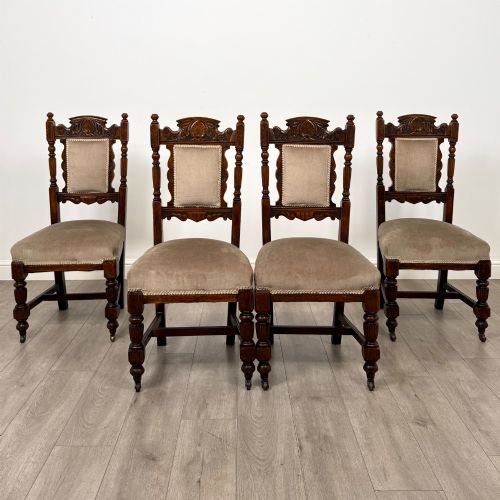
Upholstery materials like leather and padded fabric appear across the seating, secured with brass tacks or metal fixings to provide contrast against the dark timber frames.
Victorian Carved Oak Hall Set Retail Price Guide 2026
Typical asking prices for victorian carved oak hall set among the pieces listed under this phrase on Sellingantiques today, from the lower quarter to the upper quarter. They describe what is for sale here now, not the wider market.
Some nineteenth-century hall chairs were deliberately built with hard, upright wooden seats so guests would not linger too long in the drafty entrance.
Assessing craftsmanship
Quality rests in the depth and crispness of the carved ornamentation, distinguishing spirited relief work from softer, mechanical mouldings. The weight of the timber and the integration of turned structural elements dictate the overall firmness and presence of the furniture.
The integrity of the original joints and the quality of secondary materials, such as brass hardware or specialist leather upholstery, separate standard utilitarian furniture from more ambitious architectural commissions.
George Morant
The Victorian Carved Oak Hall Set Glossary
- Gothic Revival
- A nineteenth-century design movement drawing inspiration from medieval architecture, featuring pointed arches, tracery, and heavy proportions. This style dominates many church and hall furnishings of the era.
- Barley Twist
- A turned furniture leg or upright resembling a spiralling rope or barley sugar stick. Craftsmen produced this decorative form using a lathe or specialised hand chiselling during the Victorian period.
- Hall Chair
- A tall, upright wooden seat designed for an entrance hall or vestibule rather than prolonged dining. These pieces frequently display heraldic carvings or high panelled backs.
- English Oak
- Quercus robur timber native to Britain, prized for its strength, durability, and distinctive medullary rays. It forms the primary structural material for domestic furniture across multiple centuries.
Victorian Carved Oak Hall Set: Frequently Asked Questions
What defines a hall set?
A hall set typically comprises a matched group of chairs or a combination of seating and a hall stand intended for an entranceway.
These pieces were constructed to create a formal, imposing impression for visitors arriving at a nineteenth-century home.
Where were these oak sets used?
Original placement was strictly confined to grand entrance halls, vestibules, and occasionally formal dining rooms.
The heavy timber and upright posture suited spaces meant for waiting rather than lounging.
How do I care for antique oak?
Maintain the timber by applying natural beeswax sparingly and avoiding direct sunlight or excessive heat sources.
Keeping humidity stable prevents the oak planks and carved joints from splitting over time.
How do I spot Gothic Revival influence?
Look for architectural motifs such as pointed arches, quatrefoils, and stiff-leaf carving integrated into the chair backs.
These design elements mimic medieval stone church architecture translated into domestic woodwork.