





Victorian Carved Magazine Holder
These walnut and rosewood canterburys and magazine racks bring nineteenth-century refinement to the modern sitting room.
Victorian Carved Magazine Holder
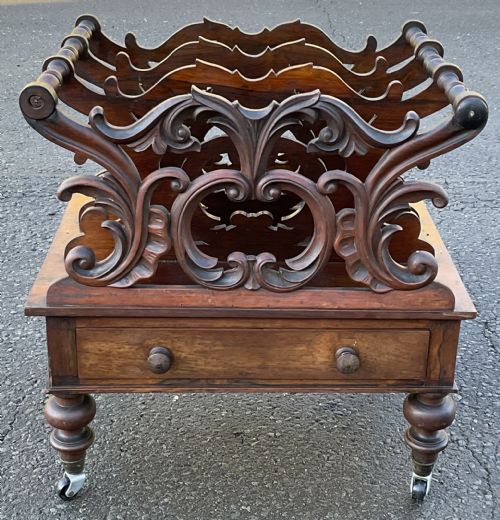
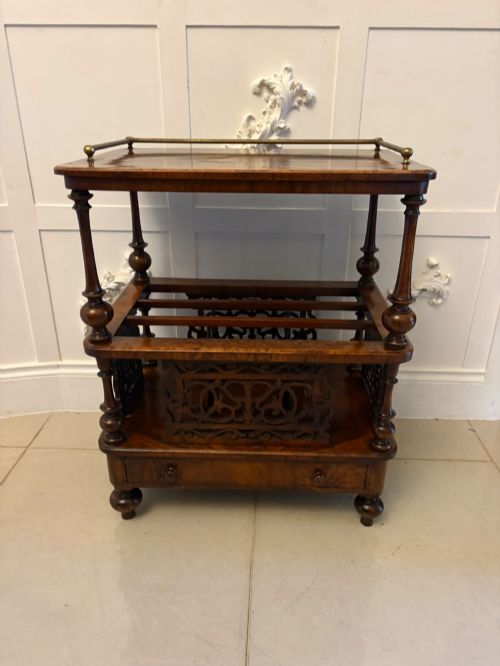
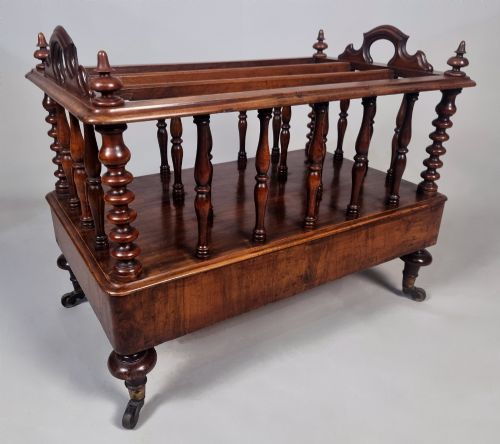
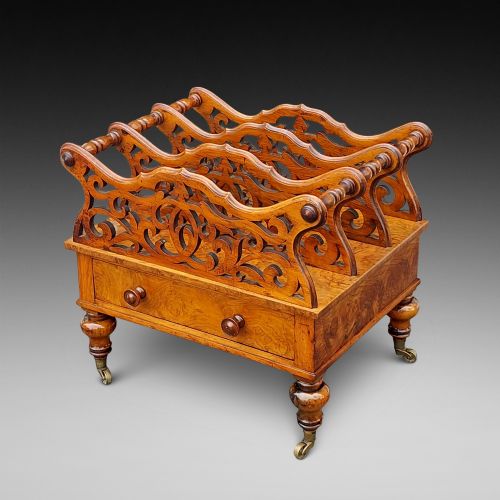
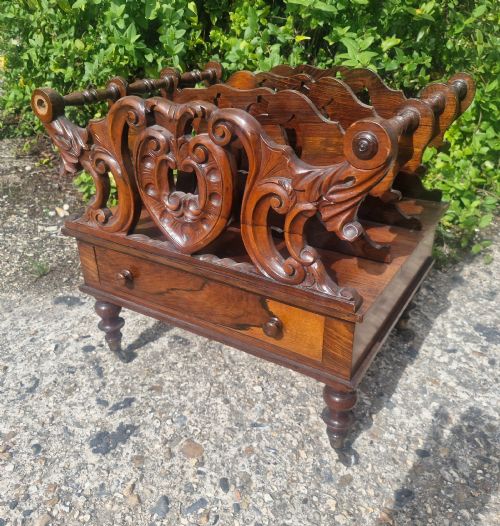
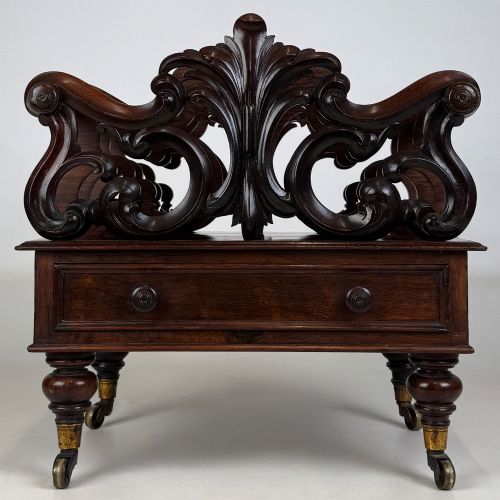
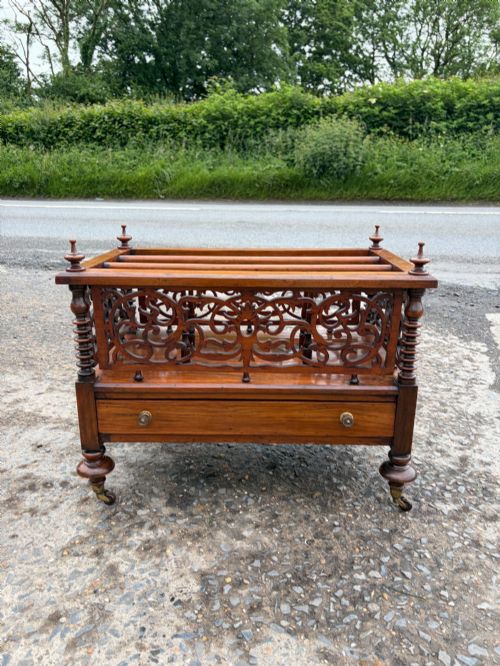
A victorian carved magazine holder typically takes the form of a freestanding canterbury or music stand designed to keep periodicals and folios orderly. The most common versions on this page are nineteenth-century walnut, burr walnut, and rosewood pieces featuring compartmentalised racks above a low drawer or castor feet.
Originating primarily from the Victorian period alongside occasional Regency and William IV examples, these items served dual purposes in the parlour or drawing room. Makers constructed them to hold sheet music, newspapers, and contemporary journals close to seating areas.
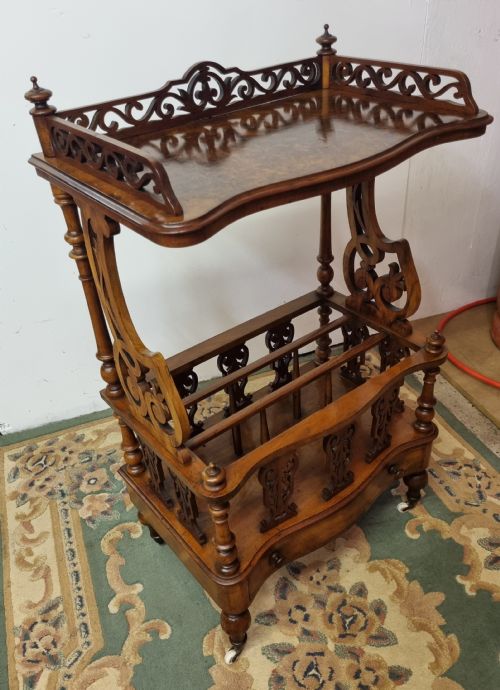
The assortment includes serpentine shapes, inlaid woodwork, and carved Black Forest portfolio stands alongside simpler mahogany racks. Buyers encounter both multi-tier music canterburys with pierced scroll divisions and dedicated occasional table hybrids.
How They Were Made
Cabinet makers utilised choice timbers such as figured walnut, burr walnut, rosewood, and mahogany, often selecting veneers to create rich grain patterns across the flat surfaces and tops. These primary woods combined with secondary timbers for internal partitions and drawer linings.
Construction techniques relied on fine joinery, including pierced fretwork for the vertical divisions and turned columns supporting the upper tiers. Metal hardware such as brass castors and small drawer pulls completed the assembly of these functional stands.
Victorian Carved Magazine Holder Retail Price Guide 2026
Typical asking prices for victorian carved magazine holder among the pieces listed under this phrase on Sellingantiques today, from the lower quarter to the upper quarter. They describe what is for sale here now, not the wider market.
Periods represented stretch from the eighteenth century through the Regency and Victorian eras.
What Varies in Quality
The distinction between standard examples and finer pieces rests upon the selection of timber veneers, such as heavily figured burr walnut or richly grained rosewood. Superior items exhibit crisp carving on the foliage and scrollwork rather than soft, moulded contours.
The Victorian Carved Magazine Holder Glossary
- Canterbury
- A low stand with divisions for holding sheet music, newspapers, or magazines, often fitted with a drawer below. This form dates back to the late eighteenth century and remained popular throughout the Victorian era.
- Burr Walnut
- A timber derived from the irregular growths of walnut trees, prized by cabinet makers for its intricate, swirling grain patterns. It frequently appeared on the top panels and main bodies of high-end nineteenth-century furniture.
- Rosewood
- A heavy, dense tropical timber with a dark, reddish-brown colour and pronounced grain, used extensively for nineteenth-century decorative furniture. It takes a high polish and formed the primary material for many formal canterburys.
- Serpentine
- A curved shape featuring a convex centre flanked by concave ends, used in the outline of table tops and bases. This flowing line adds visual movement to Victorian cabinet work.
- Black Forest
- A style of wood carving originating from the mountainous region of central Europe, characterised by realistic depictions of animals and foliage. Pieces in this manner include portfolio and music stands.
Victorian Carved Magazine Holder: Frequently Asked Questions
What is a canterbury used for?
A canterbury functions as a compartmentalised rack designed to store newspapers, periodicals, and sheet music within reach of a seating area.
Many examples incorporate a small drawer beneath the vertical divisions for holding smaller writing or sewing accessories.
How do I date a Victorian magazine rack?
Dating relies on examining the timber choices, such as rosewood in earlier Victorian pieces versus burr walnut in later decades, alongside stylistic cues like serpentine shapes.
Reference to specific periods like Regency or William IV in the construction details also indicates the design lineage of the piece.
What is the difference between a music stand and a magazine rack?
Music stands and canterburys often overlap in form, featuring similar vertical divisions originally sized for bound scores or folios.
Later Victorian interpretations adapted these same compartment structures specifically for contemporary magazines and newspapers.