



Victorian Carved Inkwell
These Victorian carved inkwells combine domestic utility with spirited animal sculpture, offering desk storage shaped by nineteenth-century craft traditions.
Victorian Carved Inkwell
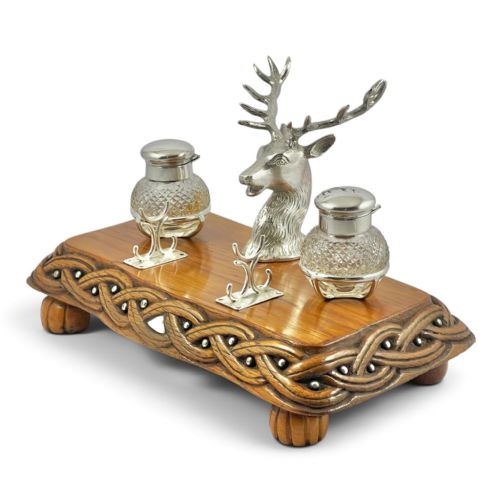
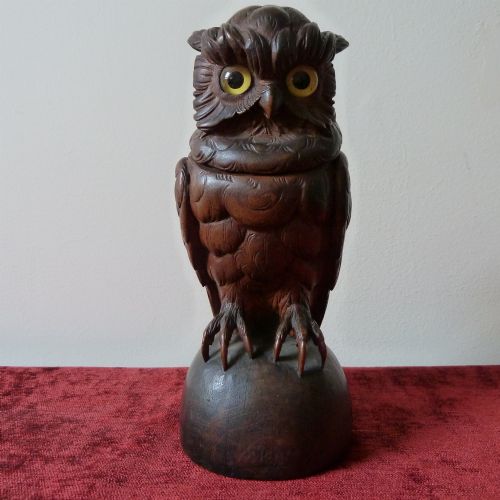
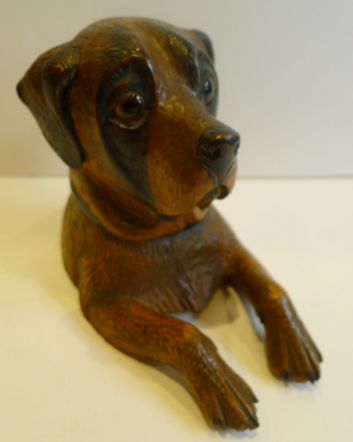
When you search for a Victorian carved inkwell, you encounter desk accessories that range from simple lidded wooden blocks to elaborate figural animal carvings. The majority of pieces appearing here originate from the Black Forest region of Europe, taking the form of bears, dogs, cats, owls, and eagles.
Beyond continental animal carvings, the selection includes British and Irish regional works utilising native oak, horn, and silver mounts. Desk sets and larger inkstands occasionally incorporate drawers or twin glass wells alongside the carved wooden or marble housings.
Materials and construction methods
Carvers shaped these pieces primarily from linden wood, oak, and ebony, employing hand-gouges to build textured fur and feather details. Secondary elements frequently include fitted glass inserts for the ink reservoirs, alongside brass hinges and silver mounts.
Some examples utilise alternative mineral materials such as Prato Verde marble paired with carved lava cameos, or cast bronze alongside the carved wooden bodies.
Victorian Carved Inkwell Retail Price Guide 2026
Typical asking prices for victorian carved inkwell among the pieces listed under this phrase on Sellingantiques today, from the lower quarter to the upper quarter. They describe what is for sale here now, not the wider market.
Object forms recorded across the archive include single inkwells, twin inkstands, desk tidies, and complete sets with drawers.
Craftsmanship and sculptural execution
Quality separates through the naturalism and depth of the carving, particularly in the rendering of animal expressions and anatomical proportions. Finer pieces display crisp undercutting in the fur and plumage rather than simplified, flat texturing.
The integrity of the internal fittings, such as original matched glass liners and functional brass or silver hinges, elevates the standing of a piece.
A. Marionnet·Maison F. Mack
The Victorian Carved Inkwell Glossary
- Black Forest
- A style of wood carving originating from the mountain region of central Europe, famous for realistic depictions of forest animals. Pieces often served as novelty desk accessories and domestic ornaments.
- Grand Tour
- A nineteenth-century tradition where travellers collected souvenirs such as carved marble desk stands and lava cameos across Europe. These objects reflect classical and regional Italian motifs.
- Desk Tidy
- A multipurpose desk accessory featuring compartments for pens, stamps, and an inkwell. They kept writing equipment organised on nineteenth-century tables.
- Intaglio
- A design carved into the surface of a stone or material so that an impression rises in relief. In desk items, these frequently appear as portrait cameos set into marble stands.
Victorian Carved Inkwell: Frequently Asked Questions
How do I identify a Black Forest inkwell?
Look for naturalistic wood carving depicting animals such as bears, dogs, or owls, executed in Linden wood or walnut. These pieces frequently incorporate hinged elements or hollowed logs designed to hold ink reservoirs.
They often reflect the nineteenth-century European souvenir trade from forested mountain regions.
What were these inkwells used for?
They held liquid ink for dip pens in homes and offices before the widespread adoption of fountain pens. The vessels contained glass inserts to prevent corrosive ink from damaging the surrounding wood or stone.
Many designs also included grooves to rest pens across the top or front of the stand.
How do I care for a carved wooden inkwell?
Keep the wood away from direct heat sources and strong sunlight to prevent the timber from drying out and splitting. Clean the surface gently with a dry, soft cloth rather than liquid polishes that might damage aged patinas.
Check the glass insert carefully if you intend to use the inkwell, ensuring no cracks risk the surrounding carved housing.
How are different regional styles told apart?
Scottish and Irish examples typically utilise native timbers like oak alongside silver mounts and horn, sometimes featuring Celtic revival motifs. Continental Black Forest pieces focus on heavy animal figuration in softer woods like linden.
Grand Tour pieces diverge entirely into materials like marble and lava cameos rather than carved timber.