



Victorian Carved Cellarette
These Victorian carved cellarette examples are substantial wooden wine coolers designed to keep bottles close at hand during formal dining.
Victorian Carved Cellarette
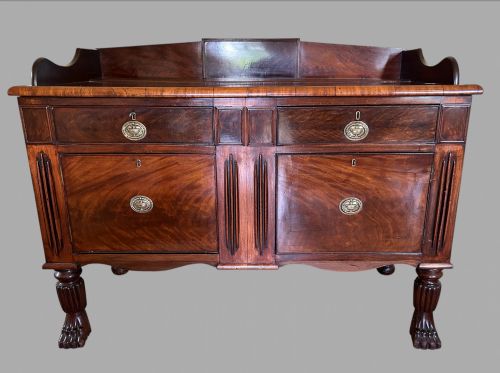
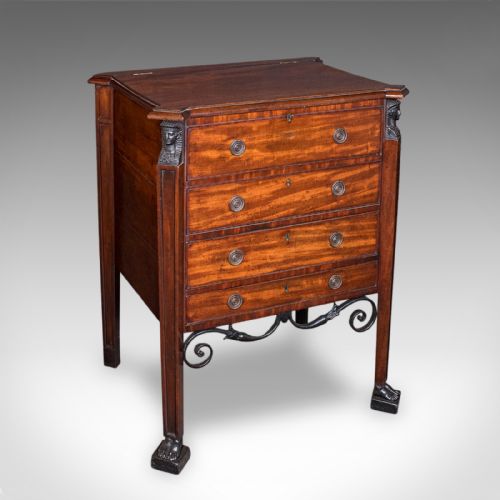
A victorian carved cellarette is a dedicated storage piece designed for holding wine and spirits in the dining room during the nineteenth century. These items take several architectural forms, most commonly appearing as sarcophagus shapes, oval vessels, and occasional sideboards or cabinets.
Most pieces encountered on this page date from the Victorian era, spanning specific years from the mid nineteenth century up to nineteen ten. They function as both practical bottle holders and decorative furniture pieces that anchor a dining space.
Makers and workshops across Britain and Ireland produced these coolers in varied regional interpretations, ranging from plain domestic forms to heavily carved exhibition pieces. The selection includes specific stylistic revivals such as Egyptian taste, Gothic revival, and Anglo Indian designs.
Materials and construction
Makers relied heavily on dense hardwoods, constructing bodies primarily from mahogany, flame mahogany, oak, and walnut, frequently enhanced by wood veneer. These primary timbers provided the structural strength and stable grain required for deep carving and box construction.
Metal components played a structural and decorative role, incorporating brass handles, bands, and iron fittings to secure heavy timber joints and assist with portability. Interior spaces often utilised metal linings to hold ice and contain melting water around the stored bottles.
Victorian Carved Cellarette Retail Price Guide 2026
Typical asking prices for victorian carved cellarette among the pieces listed under this phrase on Sellingantiques today, from the lower quarter to the upper quarter. They describe what is for sale here now, not the wider market.
Listings feature nineteen tenth-century pieces alongside mid-Victorian examples, constructed primarily in mahogany, oak, and walnut with brass and iron hardware.
Quality differences
The standard of timber selection and the depth of carving separate standard utility pieces from exhibition quality work. Finer examples display carefully matched flame mahogany veneers or intricate hand carved details such as Egyptian motifs and Gothic tracery.
Original interior hardware and sound structural integrity dictate the grade of a piece. Items retaining their original brass mountings, internal linings, and branded maker attribution command greater respect among collectors.
Freemans of Norwich·Maples & Co·Robert Strahan & Co of Dublin
The Victorian Carved Cellarette Glossary
- Cellarette
- A lockable container or cabinet specifically built to hold wine bottles and decanters near the dining table. These vessels often stood on short legs or directly on the floor.
- Sarcophagus form
- A heavy box shape with a sloping lid resembling a traditional stone coffin popular in classical architecture. This form offered generous internal volume for ice and bottles.
- Flame mahogany
- A decorative timber cut from the branch junction of the mahogany tree to create a distinctive flickering wave pattern. Cabinet makers reserved this veneer for prominent exterior surfaces.
- Brass bound
- The practice of reinforcing wooden container edges and seams with heavy brass bands and corner brackets. This technique added durability for moving heavy, liquid filled containers.
- Egyptian Revival
- A nineteenth century design movement incorporating motifs from ancient Egyptian art such as sphinxes, lotus capitals, and winged sun disks. Furniture makers applied these themes to grand cabinet pieces.
Victorian Carved Cellarette: Frequently Asked Questions
What is a Victorian carved cellarette used for?
These pieces served as portable or stationary wine cellars within the dining room during the nineteenth century. They kept bottles cool using ice compartments and stored decanters safely away from household dust.
Today they function as striking decorative furniture, drinks cabinets, or practical storage chests in modern dining spaces and living rooms.
How do I identify a cellarette period?
Dating relies on examining the timber species, construction methods, and stylistic decoration applied to the exterior. Mid nineteenth century pieces often feature classical sarcophagus shapes and dense mahogany, while later items show Gothic or Anglo Indian influences.
Maker stamps, brass lock signatures, and historical exhibition labels offer the most precise chronological markers for individual pieces.
Where should I place a cellarette?
These substantial wooden pieces suit dining rooms, grand hallways, or living areas where they can stand independently against a wall. Their deep proportions require adequate floor space to allow lids and doors to open fully.
Keep them away from direct heat sources and strong sunlight to protect the polished wood veneer and internal linings from drying out.
Are all cellarettes lined with metal?
Many wine coolers feature metal interiors designed to hold ice and meltwater without rotting the surrounding timber frame. Some domestic boxes dispense with linings if they were intended strictly for dry bottle storage rather than active cooling.
Inspecting the interior reveals whether the piece held ice or served purely as a locked cabinet for spirits.