


Victorian Canteen of Cutlery
A victorian canteen of cutlery gathers silver, steel, and mother of pearl service within fitted wooden boxes for formal dining.
Victorian Canteen of Cutlery
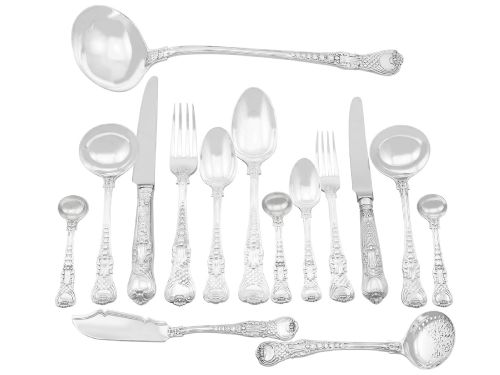
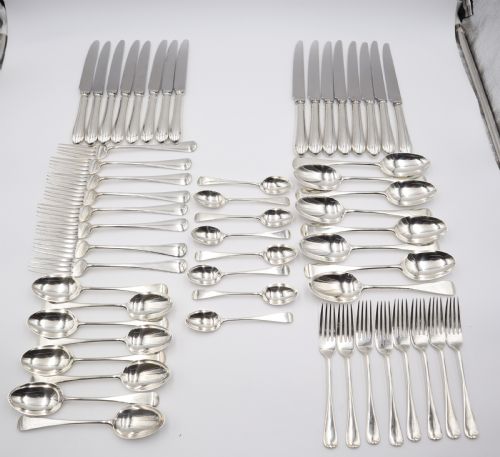
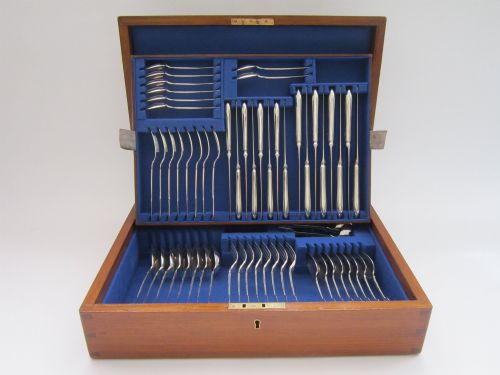
A victorian canteen of cutlery provides a complete matched or harmonised service for dining tables, housed within purpose-built wooden containers. These sets include variants for specific courses, such as dessert sets or fish cutlery, alongside larger services designed for eight or twelve persons.
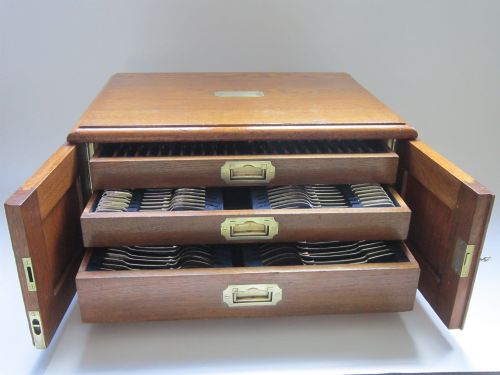
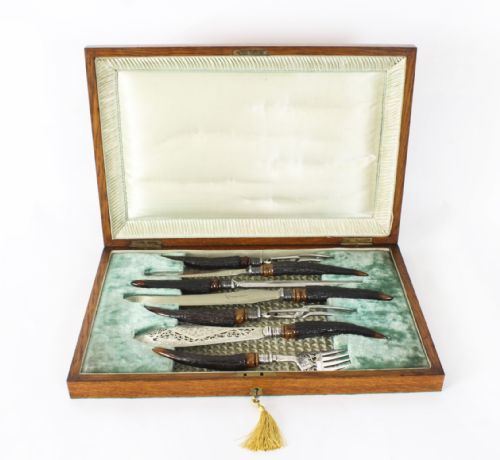
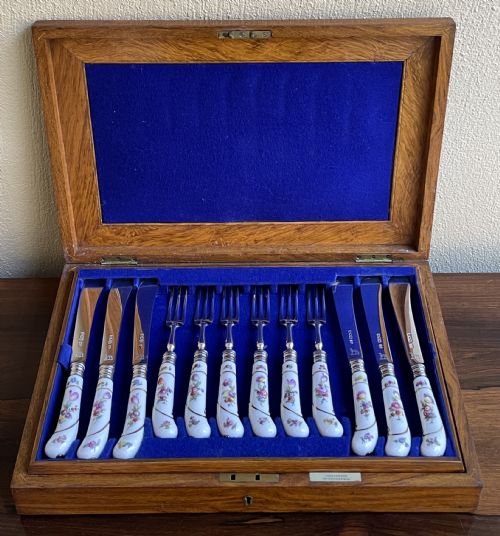
The versions most commonly met combine sterling silver or silver plate with handles of mother of pearl, antler horn, or porcelain. Oak, mahogany, and coromandel boxes line the interior with velvet to protect each individual piece of steel and silver.
Pieces frequently display traditional handles such as Fiddle pattern, Kings pattern, Fiddle and Thread, or rat tail designs. These forms reflect the prevailing taste of the nineteenth century, ranging from simple nineteenth century sets to elaborate Edwardian arrangements.
How they were made
Cutlery makers formed spoons and forks from sterling silver or silver plate, applying techniques like stamping and hand-shaping to create patterns such as Fiddle or Kings. Blades for knives utilised steel, fixed securely into handles made from mother of pearl, porcelain, or antler horn.
The accompanying boxes relied on dense timbers including oak, mahogany, and coromandel, constructed with fitted internal partitions. Makers lined these compartments with velvet to hold each fork, spoon, and knife firmly in place during storage.
Some canteens include dedicated fruit knives with pearl handles, ready for Victorian diners to tackle a peach without offending polite company.
What varies in quality
The standard of a canteen rests upon the integrity of the silver metalwork and the completeness of the service. Sets comprising full complements for twelve persons in matching patterns command greater attention than assembled or partial groups.
Material selection for both handles and casing dictates the grade of the piece. Fine coromandel or mahogany boxes housing intact mother of pearl or sterling silver implements represent the upper tiers of nineteenth century craftsmanship.
Carrington
The Victorian Canteen of Cutlery Glossary
- Sterling silver
- A silver alloy containing 92.5 percent pure silver by mass, widely utilised for nineteenth century cutlery sets. This material forms the durable foundation of many high-grade dining services.
- Silver plate
- A layer of silver applied over a base metal foundation. This technique offered a practical alternative to solid silver for larger canteens.
- Mother of pearl
- An iridescent internal layer of shells used for knife and fork handles. It provides a decorative tactile surface favoured in dessert and fruit sets.
- Fiddle pattern
- A nineteenth century flatware handle shape widening gracefully toward the terminal. The design remains a common sight in period table services.
- Coromandel
- A dense, heavily grained exotic wood utilised for luxury cutlery boxes. Its rich colouring marks the finest storage containers.
Victorian Canteen of Cutlery: Frequently Asked Questions
What is a Victorian canteen of cutlery?
A Victorian canteen of cutlery is an organised set of dining implements housed in a dedicated wooden box, usually lined with velvet.
These collections range from basic services to elaborate twelve-person settings complete with specialised serving pieces.
How were these canteens used?
Families utilised these sets for formal daily dining and grand household entertaining across multiple courses.
Specialised boxes kept every fork, spoon, and knife protected and ready for immediate deployment at the dining table.
How do I care for silver cutlery?
Silver and silver plate require gentle cleaning with appropriate polishes to maintain their finish without wearing away the metal.
Storing the implements inside their original velvet-lined wooden boxes prevents tarnishing and protects the handles from damage.