





Victorian Brass Tongs
Victorian brass tongs are sturdy hearth implements designed to manage coal and logs, bringing period utility and polished warmth to a fireplace.
Victorian Brass Tongs
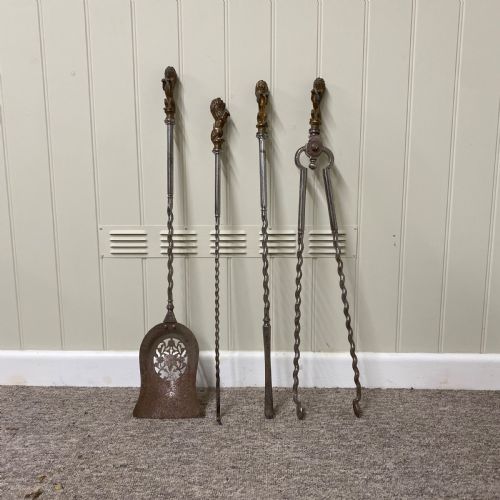
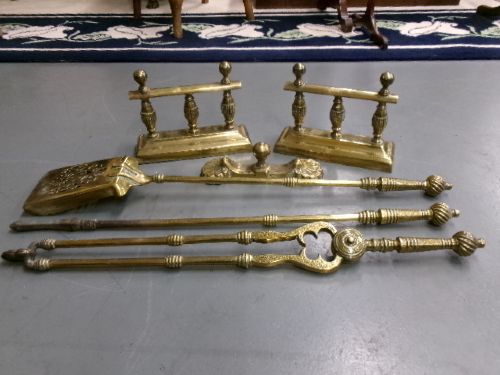
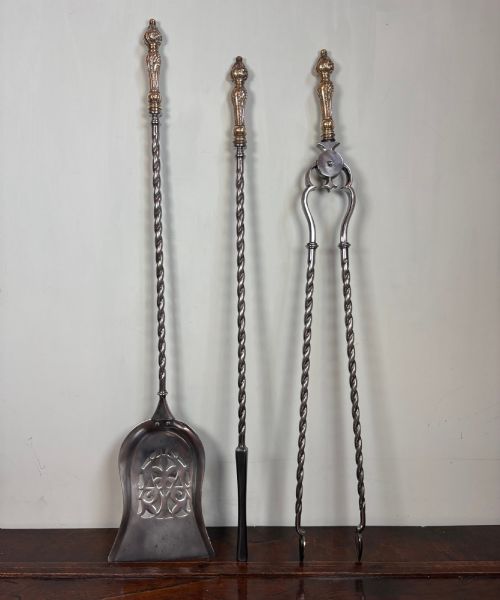
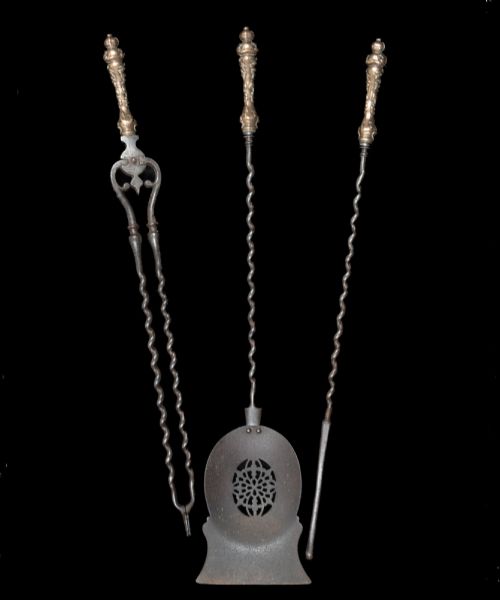
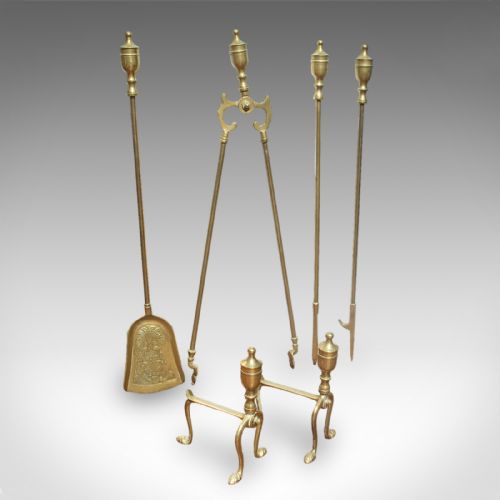
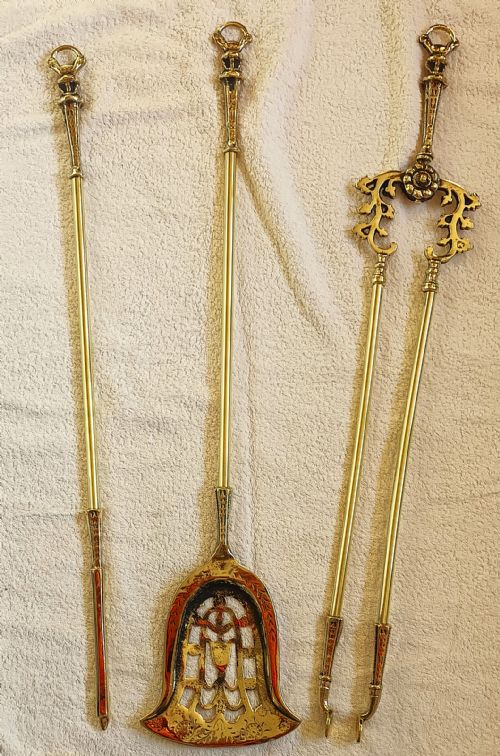
Victorian brass tongs form part of wider fireplace sets, often appearing alongside pokers and shovels as part of a matched suite. When searching for victorian brass tongs, buyers encounter complete companion sets or individual pieces designed for nineteenth-century hearths.
The objects span periods from the Regency era through to the Edwardian period, with the majority sitting firmly within the Victorian timeframe. These tools served practical functions in coal-burning grates before transitioning into decorative accessories for period rooms.
Makers produced these tools in configurations that included fire dogs, fenders, and iron rests to complete the fireplace arrangement. The forms range from simple utilitarian instruments to elaborate sets featuring decorative rope twist handles and starburst motifs.
Materials and construction
Makers combined brass with steel, iron, and wrought iron to ensure durability where strength was needed most. Brass provided the visible polished surface and decorative handles, while steel and iron formed the functional shafts and tips that endured direct heat.
Construction techniques involved casting and forging, often pairing cast brass elements with forged steel components. Certain examples incorporated gunmetal, copper, and gilt metal to add textural contrast and visual variety to the hearth furniture.
Victorian Brass Tongs Retail Price Guide 2026
Typical asking prices for victorian brass tongs among the pieces listed under this phrase on Sellingantiques today, from the lower quarter to the upper quarter. They describe what is for sale here now, not the wider market.
Some Victorian householders insisted on matching their fire tongs to the pattern of the coal scuttle.
Evaluating quality and execution
Quality reveals itself in the weight of the metal and the crispness of decorative details like rope twist handles or starburst patterns. Superior examples maintain balanced proportions and sturdy joints between the brass ornamentation and the iron shafts.
The distinction between standard utility items and finer parlour pieces rests on the finish of the metal and the integrity of the companion pieces. Complete sets showing uniform design across shovels, pokers, and tongs demonstrate higher original manufacture.
The Victorian Brass Tongs Glossary
- Companion set
- A matched collection of fireplace tools, usually including tongs, a poker, and a shovel, often displayed together on a stand or with fire dogs.
- Fire irons
- The collective term for the working implements used to tend a domestic fire, comprising pokers, tongs, and shovels.
- Fire dogs
- Support irons placed in a hearth to hold logs, frequently found alongside companion sets and fire irons in Victorian fireplace arrangements.
- Rope twist
- A decorative spiral carved or cast into the handle of a fire tool to resemble twisted cord.
- Starburst
- A geometric rayed pattern stamped or cast onto the terminal or grip of Victorian brass implements.
Victorian Brass Tongs: Frequently Asked Questions
Are these tongs safe to use on a real fire?
Most pieces feature iron or steel components designed to withstand heat, making them suitable for managing logs or coal in an open hearth.
Buyers intending to use them regularly should check that the pivot and grip remain firm and capable of bearing weight.
How do I clean Victorian brass?
Traditional maintenance involves gentle polishing with a mild brass cleaner to preserve the underlying metal without removing age-appropriate patination.
Avoid harsh abrasives that can wear down cast details like rope twists and starburst motifs.
What comes in a companion set?
A standard set includes tongs for moving fuel, a poker for adjusting logs, and a shovel for clearing ash from the grate.
Many listings also pair these implements with matching fire dogs, fenders, or an iron rest.
How can I tell a Victorian set from a later reproduction?
Nineteenth-century examples display construction methods like hand-forged iron shafts, pegged joints, and natural wear patterns accumulated over decades of use.
Examine the weight and the depth of the casting to assess the period authenticity of the metalwork.