

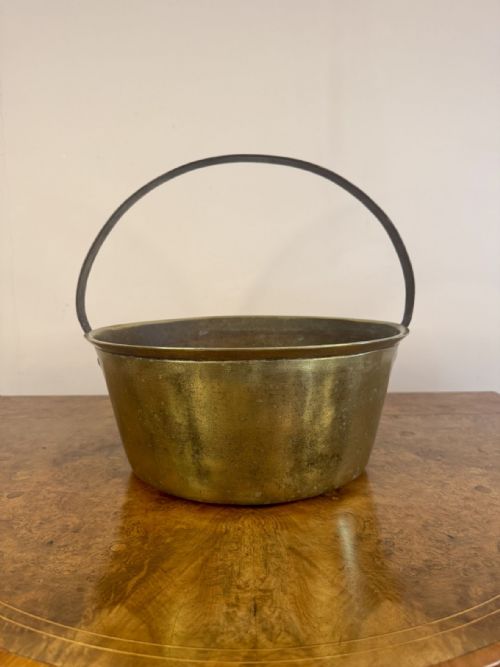
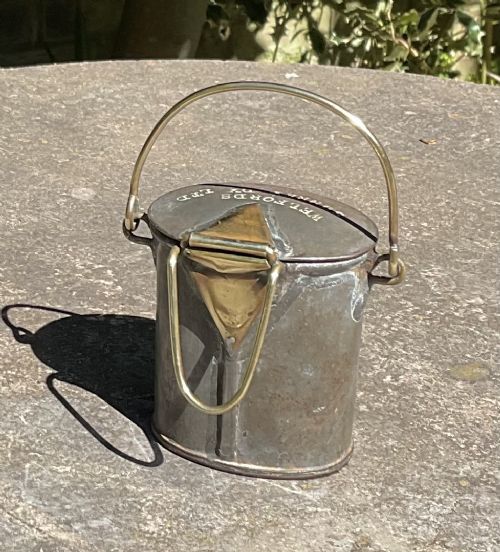


Victorian Brass Pail
These heavy Victorian brass pail examples bring warmth and utility to a hearth.
Victorian Brass Pail
A victorian brass pail sits by the fireplace or in the kitchen, serving utilitarian needs with robust metal construction. These vessels hold fuel for fires or water and milk for daily household tasks, shaped to endure heavy daily use.
The most common examples on this page are jam pails, coal scuttles, and log buckets from the nineteenth century. These forms reflect the practical demands of Victorian domestic life, combining heavy metal sheets with sturdy handles for carrying.
How they were made
The primary materials recorded here are brass, copper, and iron, often paired with wooden elements or tinplate linings. Metalsmiths hammered and joined these sheets using rivets and seams to create watertight and durable vessels that could withstand heat and weight.
Makers utilised polished brass and wrought iron to form rigid structures, finishing surfaces to catch the flickering light of a coal fire. Handles and rims received extra reinforcement to bear the heavy loads of coal, logs, or cream.
Victorian Brass Pail Retail Price Guide 2026
Typical asking prices for victorian brass pail among the pieces listed under this phrase on Sellingantiques today, from the lower quarter to the upper quarter. They describe what is for sale here now, not the wider market.
Listings feature items spanning the nineteenth century, utilising brass, copper, iron, and wood across fireside accessories and kitchenware.
What varies in quality
Weight and thickness set the better items apart from lighter domestic ware, as heavier brass and copper walls resist denting and warping over decades of service. Superior vessels display clean lines in their helmet or cylindrical forms without clumsy repairs.
The quality of construction shows in the smoothness of the seams and the secure attachment of swinging handles. Finer examples maintain an even polish across the brass surface, while lesser pieces rely on thin metal that bends easily under a heavy load of logs.
The Victorian Brass Pail Glossary
- Brass pail
- A cylindrical metal vessel made primarily from an alloy of copper and zinc, used for carrying liquids or fuel.
- Coal scuttle
- A domestic container designed for holding and transporting coal to a fireplace, often featuring a shovel and a sloped mouth for pouring.
- Jam pail
- A heavy brass pot traditionally used for boiling fruit and sugar, prized by modern collectors for its thick walls and bright metal finish.
- Cream can
- A cylindrical container utilised in dairies for the storage and transport of milk or cream, sometimes bearing maker stamps or location names.
Victorian Brass Pail: Frequently Asked Questions
What were brass pails used for originally?
These vessels served practical functions around the Victorian home, from carrying fuel like coal and logs to the hearth to boiling jams in the kitchen. Their robust construction allowed them to hold heavy materials safely.
Over time, households also used them for general cleaning tasks and carrying water, relying on the durable metal to withstand daily wear.
How do I clean a Victorian brass pail?
Maintenance depends on whether you prefer a bright polished finish or a dark aged patina accumulated over the decades. Gentle washing with warm soapy water removes dust and soot without harming the historic metal.
Avoid harsh chemical abrasives that strip away the surface character of the brass. A soft cloth helps preserve the subtle marks left by original manufacturing tools.
Where should I place a log bucket at home?
A brass or copper bucket looks natural beside a working fireplace or wood-burning stove, where it keeps fuel close at hand. The metallic surface reflects firelight nicely into the room.
Outside of the hearth, these containers work well as umbrella stands in an entryway or as planters for large indoor houseplants.
How can I tell the age of a brass pail?
Nineteenth-century examples show specific manufacturing traits like hand-beaten seams, iron swing handles, and heavy-gauge brass plates rather than thin modern sheet metal. Tool marks and construction methods indicate the period of production.
Comparing the form and weight to documented items from the eighteen-fifties and sixties helps confirm the era in which the piece was made.