

Victorian Brass Desk
A victorian brass desk brings together solid timber and polished metal fittings to create a sturdy writing surface.
Victorian Brass Desk
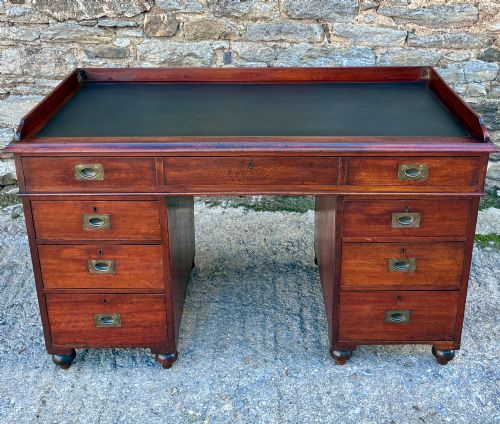
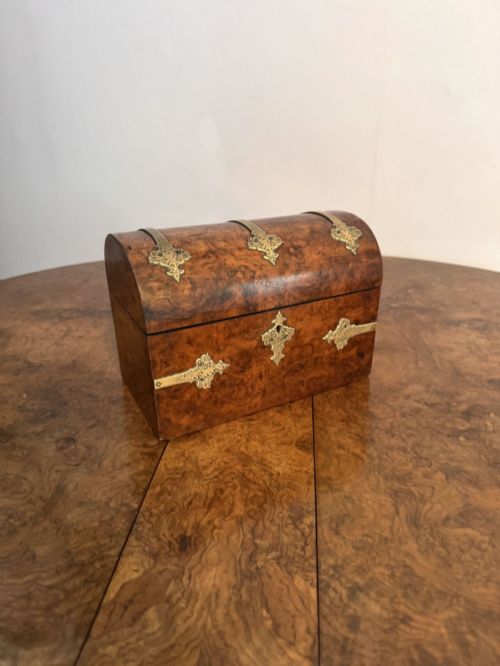
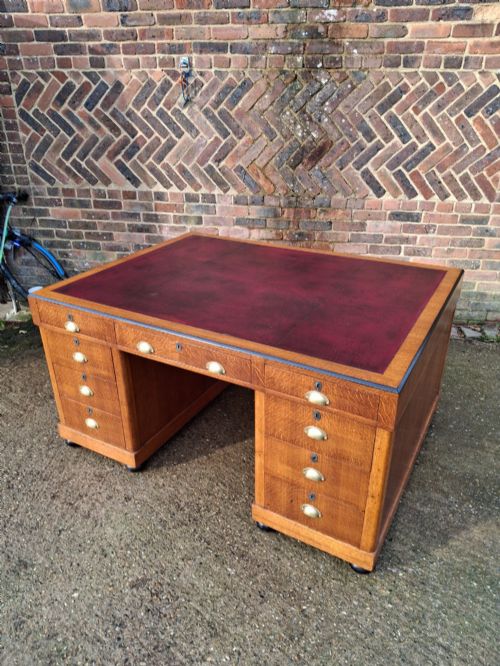
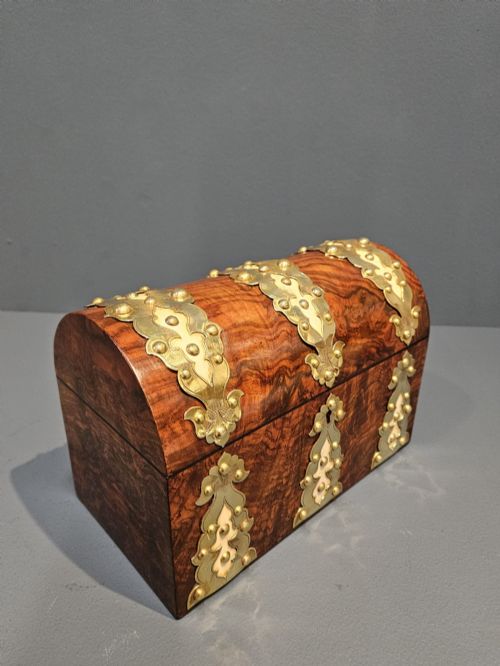
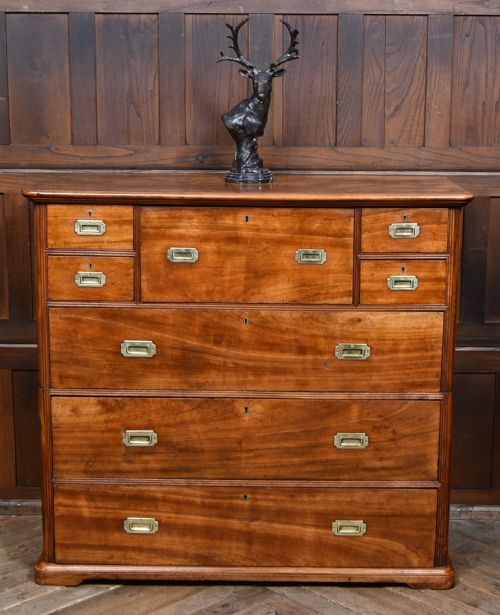
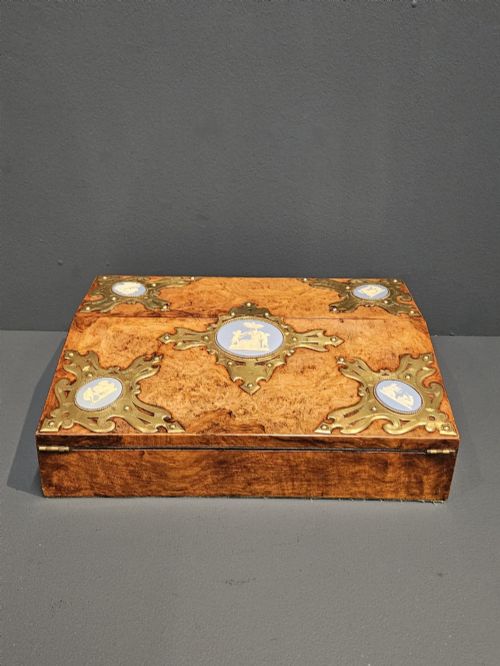
A victorian brass desk encompasses writing furniture and accessories ornamented with metal fittings from the nineteenth century. Buyers examine pieces ranging from compact writing slopes and lap desks to large freestanding pedestal kneehole desks.
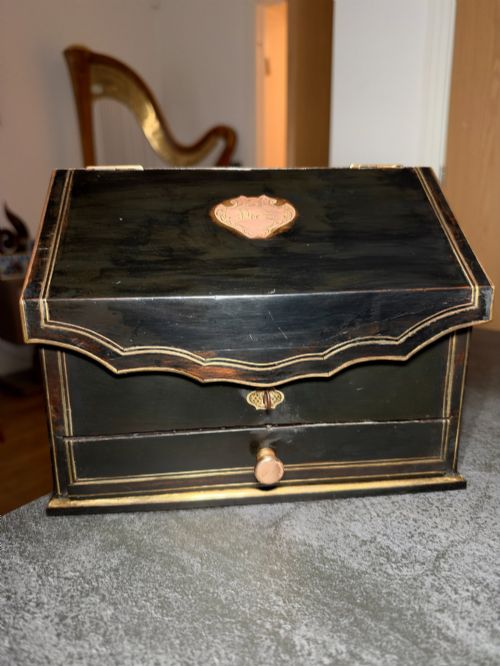
Mahogany, walnut, and ebonised wood form the primary timber bodies, while brass appears in corner mounts, handles, hinges, and column details. Many examples integrate leather writing surfaces alongside fitted stationery drawers and secret compartments.
Gothic Revival influences and classical styles appear frequently alongside standard Victorian forms. Dating spans from eighteen fifty through to the early twentieth century, incorporating Edwardian touches.
Materials and construction
Cabinet makers utilised dense hardwoods such as mahogany, walnut, burr walnut, and rosewood for the structural carcasses, often applying crossbanding and brass binding to reinforce edges and corners.
Cast and patinated brass components were secured with precision screws, whilst leather inlays were tooled and glued into dedicated writing areas. Glass fonts, ceramic inserts, and enamel details supplemented the metalwork on related lighting and desk sets.
Victorian Brass Desk Retail Price Guide 2026
Typical asking prices for victorian brass desk among the pieces listed under this phrase on Sellingantiques today, from the lower quarter to the upper quarter. They describe what is for sale here now, not the wider market.
Materials recorded across the listings include mahogany, walnut, brass, glass, leather, enamel, ebonised wood, fabric, and marble.
Evaluating standard and design
Superior examples exhibit crisp casting in the brass mounts and precise dovetail joints within the drawers. The selection of figured timber veneers, such as curl grain mahogany or burr walnut, elevates the visual depth of the woodwork.
The integration of functional mechanisms, including secret drawers, working locks with original keys, and adjustable desk slides, distinguishes exceptional pieces from standard utility furniture.
Edwards and Jones·Howard and Sons·Maple and Co·Trollope and sons
The Victorian Brass Desk Glossary
- Writing slope
- A portable box with a sloping lid that opens to reveal a velvet or leather-lined writing surface and compartments for ink and pens.
- Campaign slope
- A folding writing box reinforced with brass corners and flush handles designed for easy transport during military travel.
- Davenport
- A compact pedestal desk featuring a sloped writing surface atop a bank of side drawers.
- Crossbanding
- A decorative border of veneer laid perpendicular to the grain of the main surface to frame panels of timber.
- Ormolu
- Gilded bronze or brass mounts applied to furniture and clocks for decorative effect.
Victorian Brass Desk: Frequently Asked Questions
What is a brass bound writing slope?
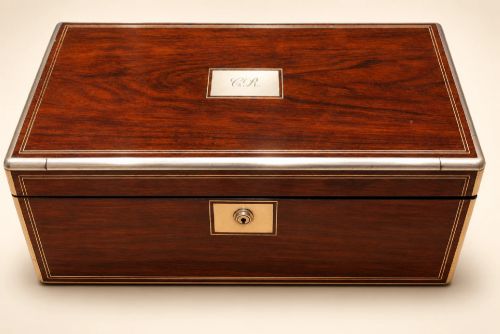
A brass bound writing slope is a portable wooden box strengthened with metal corner strips and straps to withstand travel. It opens to provide a firm writing angle and internal storage for correspondence.
Such boxes often conceal secret drawers behind false partitions, housing private papers and valuables.
How do I identify a pedestal kneehole desk?
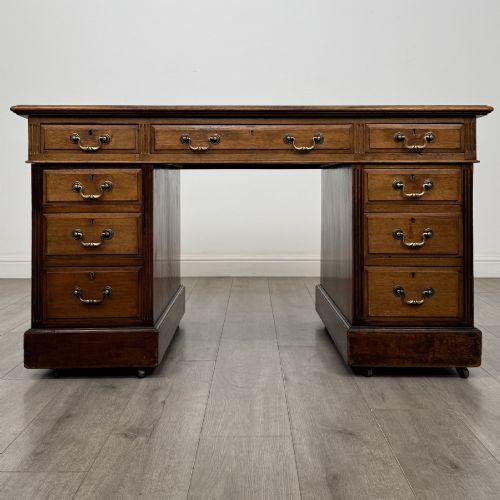
A pedestal kneehole desk consists of a central writing surface supported by two vertical stacks of drawers with an open space for the chair. Freestanding versions feature finished backs suited for placement in the centre of a room.
These models frequently incorporate pull-out slides above the pedestals for additional workspace.
What materials define these items?
The pieces combine solid and veneered hardwoods like mahogany, walnut, rosewood, and oak with brass fittings. Leather inserts appear on writing surfaces, whilst glass and enamel feature in associated desk accessories and lamps.
Ebonised wood and marble also occur within the wider selection of nineteenth-century furnishings.
How do Gothic Revival pieces differ?
Gothic Revival items incorporate architectural motifs inspired by medieval design, such as pointed arches, heavy cast brass Corinthian columns, and structural metalwork. Walnut and oak serve as common woods for these heavier forms.
Such details appear on extending book slides, table lamps, and desks from the mid-nineteenth century onwards.