

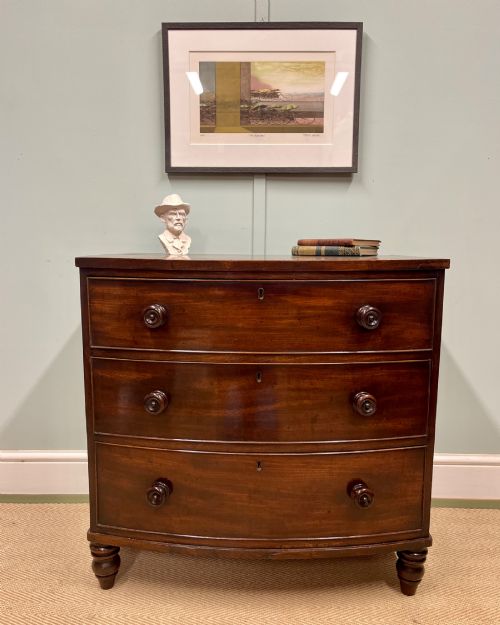
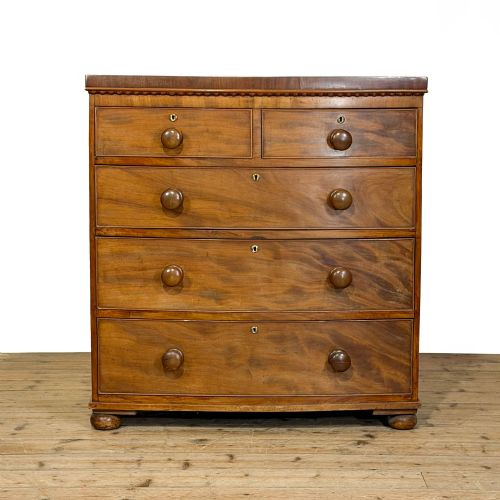
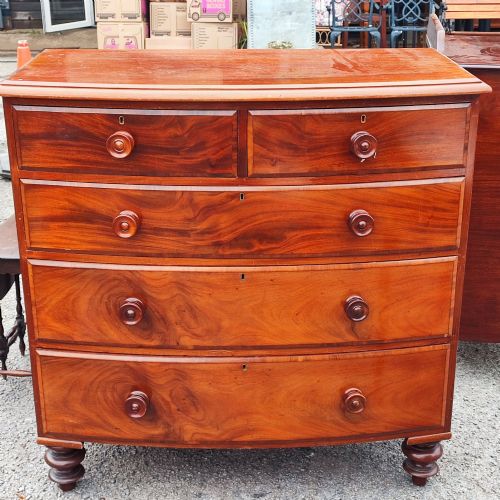
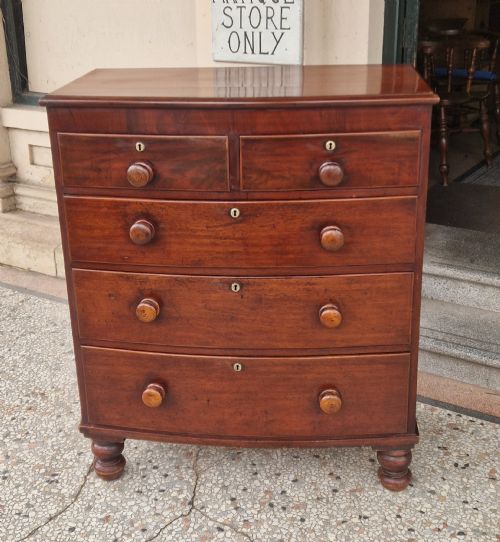


Victorian Bowfronted Chest
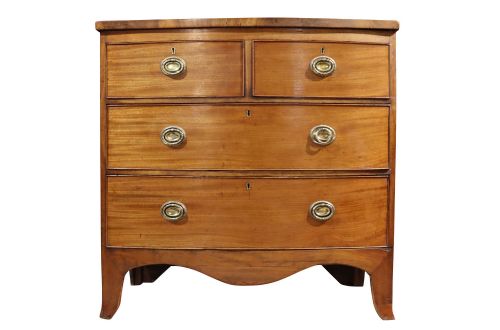
A victorian bowfronted chest is a curving masterclass in nineteenth century timber storage that brings undeniable presence to any bedroom.
Victorian Bowfronted Chest
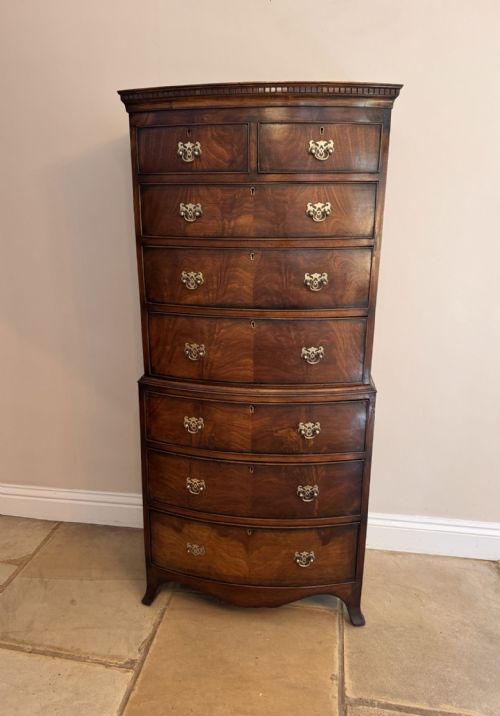
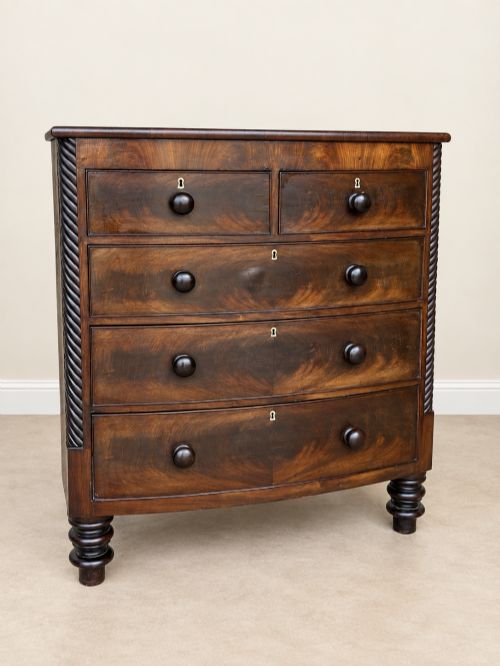
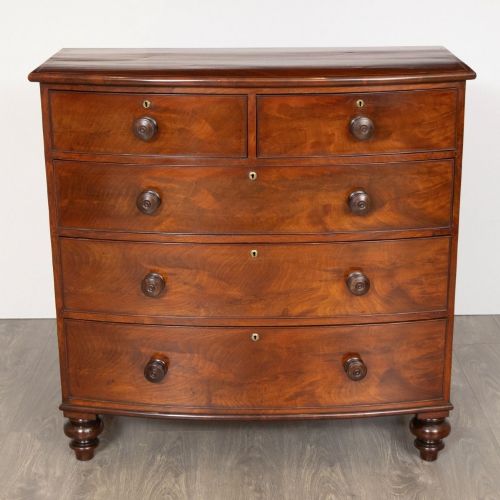
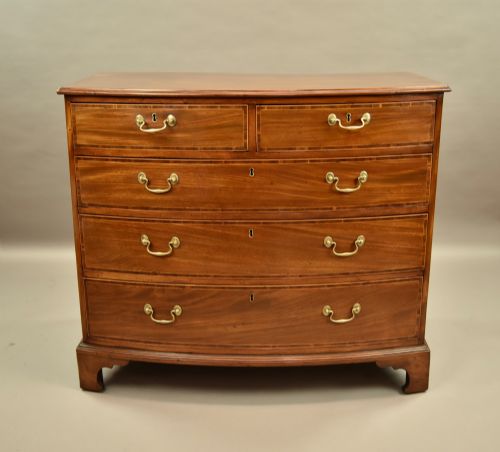
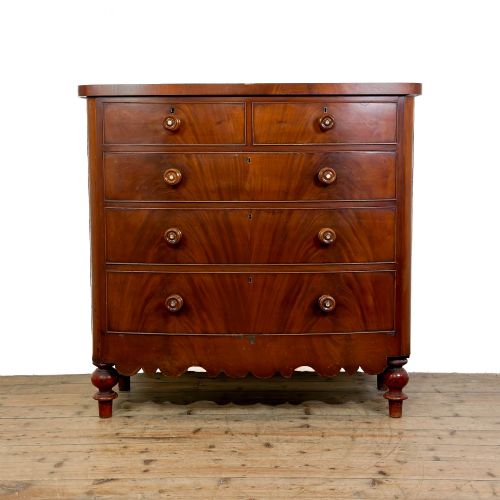
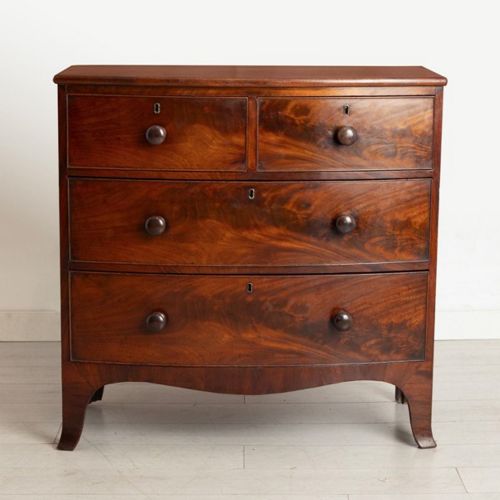
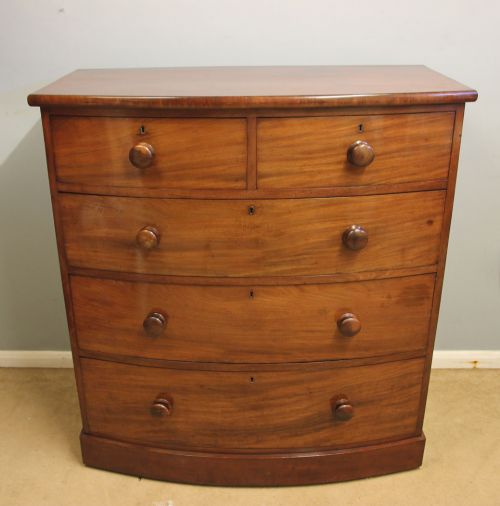
When you search for a victorian bowfronted chest, you encounter a distinct form characterised by a sweeping, convex front that projects outward from the wall. These pieces primarily date from the nineteenth century, spanning periods from early Victorian and Regency designs through to the later decades of the era.
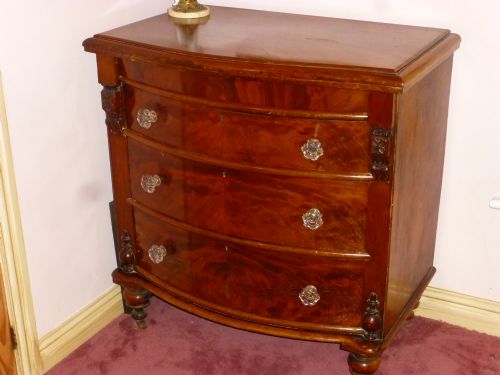
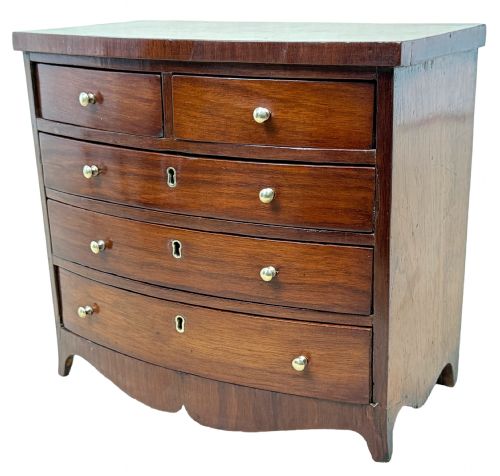
The selection here encompasses standard chests of drawers alongside smaller proportions, miniature versions, and occasional variations such as washstands and commodes. Most examples adhere to traditional room layouts, offering generous drawer depths contained within a polished mahogany carcass.
Materials and Construction
Makers built these pieces predominantly using solid mahogany and flame mahogany veneer applied over secondary timbers such as pine. The curved drawer fronts required skilled carpentry to bend and shape the wood precisely, often complemented by hand-turned wooden knobs or brass fittings.
Internal construction relied on traditional dovetail joints for the drawers and sturdy secondary framing to support the heavy timber carcasses. Surface finishes were carefully rubbed down and polished to highlight the natural grain patterns of the wood.
Victorian Bowfronted Chest Retail Price Guide 2026
Typical asking prices for victorian bowfronted chest among the pieces listed under this phrase on Sellingantiques today, from the lower quarter to the upper quarter. They describe what is for sale here now, not the wider market.
Several miniature chests appear here, once built by ambitious apprentices hoping to prove their joinery skills to the master.
Assessing Quality and Execution
The distinction between ordinary and exceptional pieces lies in the choice of timber and the precision of the cabinet work. Superior examples utilise richly figured flame mahogany veneers that match symmetrically across the drawer fronts, creating a cohesive visual impact.
Attention to detail in the secondary woods, the tightness of the drawer dovetails, and the retention of original turned handles or brass hardware elevate certain pieces above standard utility furniture from the period.
The Victorian Bowfronted Chest Glossary
- Bowfront
- A convex, outwardly curving furniture front popular during the Georgian and Victorian periods. This curved design softens the room's angles while increasing internal volume.
- Flame mahogany
- A veneer cut from timber where the branches join the main trunk, producing a flickering, flame-like grain pattern. Cabinetmakers reserved this decorative wood for principal drawer fronts.
- Dovetail joint
- An interlocking woodworking joint formed by interlocking wedge-shaped fingers. It provides superior tensile strength for drawer construction.
- Apprentice piece
- A miniature version of a standard furniture form created by a trainee artisan to demonstrate skill. These smaller items replicate full-scale techniques in miniature proportions.
- Scotch chest
- A regional furniture style featuring a central concealed drawer above deeper primary drawers. These pieces often display substantial proportions and bold mahogany veneers.
Victorian Bowfronted Chest: Frequently Asked Questions
What is a bowfront chest?
A bowfront chest is a set of drawers featuring a rounded, convex front profile that projects outward into the room. This design originated in the Georgian period and remained exceptionally popular throughout the Victorian era.
The curved shape adds visual movement and presence to traditional bedroom furniture while offering practical storage capacity within the sweeping drawers.
How do I date a Victorian chest?
Dating involves examining the construction methods, wood types, handle styles, and secondary timbers used in the carcass. Earlier pieces from the mid nineteenth century often display finer dovetails and different secondary woods compared to later Victorian examples.
Changes in hardware styles and veneer thickness also provide reliable clues for narrowing down the decade of manufacture between eighteen-forty and nineteen-hundred.
Where should I place one?
These chests suit bedrooms, hallways, or living spaces where their curved silhouette can be appreciated without obstructing thoroughfares. Ensure adequate wall space is available to accommodate the outward projection of the bow.
Pairing the chest with appropriate lighting allows the polished mahogany grain and flame veneer patterns to catch the light effectively.
What are miniature chests?
Miniature chests are scaled-down versions of full-size drawer units, sometimes created as apprentice pieces or salesman samples during the nineteenth century. Despite their smaller size, they incorporate the same joinery and timber selection as standard furniture.
Collectors prize these smaller items for their charming proportions and the high level of craftsmanship required to build them on a reduced scale.