





Victorian Billiard Score Board
These Victorian billiard score boards bring the authentic atmosphere of the nineteenth-century games room into a modern interior.
Victorian Billiard Score Board
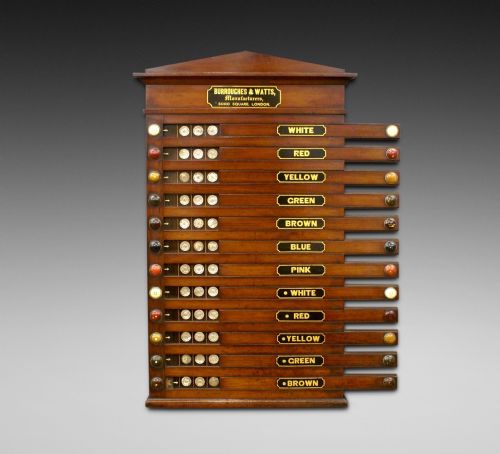
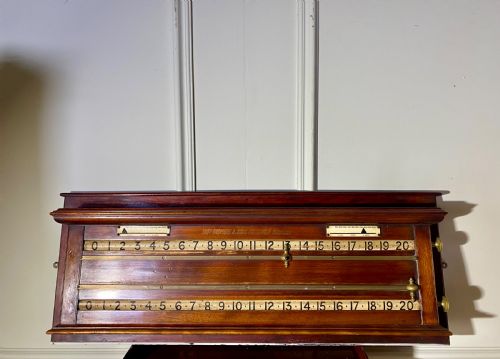
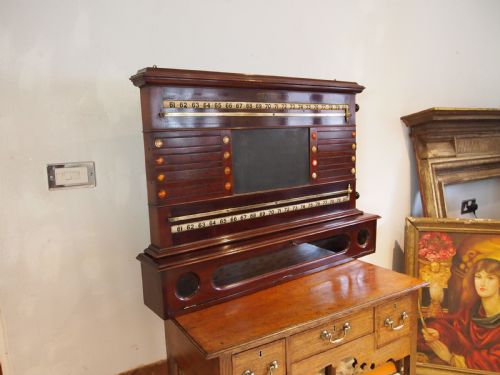
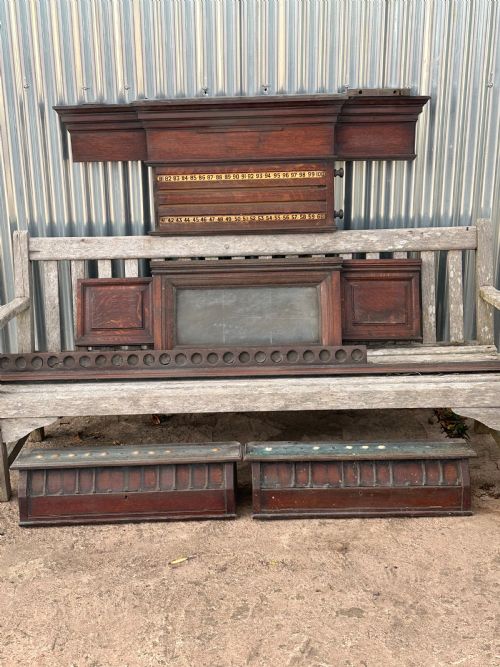
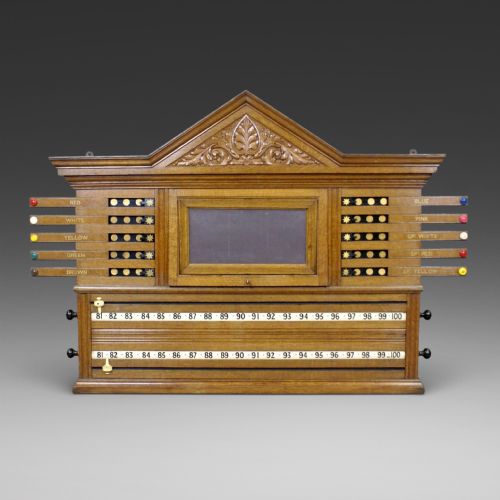
A victorian billiard score board is a purpose-built wall-mounted marker used to record points during matches of billiards, snooker, and pool. The pieces seen on this page span the nineteenth century, including specific dates from eighteen-eighty to nineteen-hundred, alongside pieces attributed broadly to the Victorian and Edwardian periods.
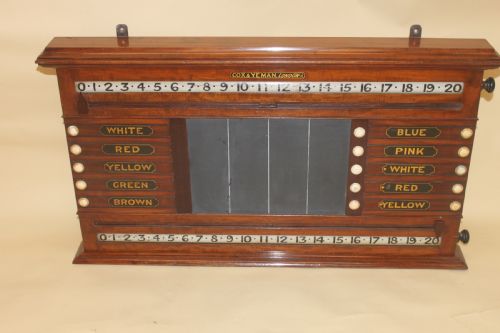
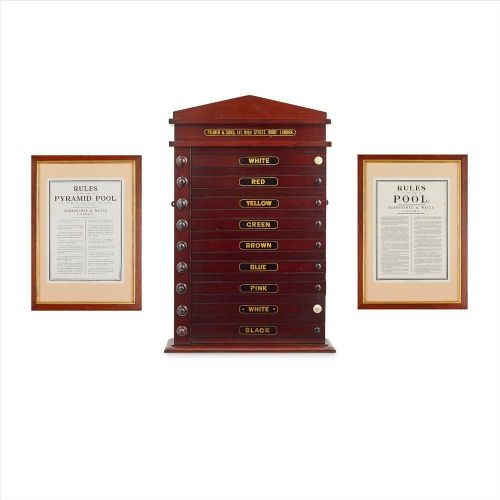
The primary forms are dedicated scoreboards and scoring cabinets designed for the games room. Most examples cater to multiple games, featuring sliding pointers and revolving rollers to track traditional formats like life pool alongside standard billiards and snooker.
Materials and construction
The primary timbers used in construction are mahogany and oak, often worked into substantial wall-hanging panels or enclosed cabinets. These heavy woods provided the stable, durable foundation required for daily use in nineteenth-century billiard rooms.
Functional details are articulated in contrasting materials such as brass for the sliding pointers and mounts, alongside slate, bone, glass, and paper components. These secondary elements provide the mechanical tracking tracks and visual markers essential for gameplay.
Victorian Billiard Score Board Retail Price Guide 2026
Typical asking prices for victorian billiard score board among the pieces listed under this phrase on Sellingantiques today, from the lower quarter to the upper quarter. They describe what is for sale here now, not the wider market.
Listings feature nineteenth-century materials including mahogany, oak, brass, bone, slate, glass, and paper.
What separates the best examples
Quality rests upon the selection of timber and the sophistication of the maker's workshop. Examples bearing attribution to prominent makers such as Thurston and Co, Orme and Sons, or Cox and Yeman display superior cabinetwork and mechanical precision.
The degree of decorative ambition also defines the tier of a piece, ranging from plain functional boards to elaborate glazed cabinets accompanied by specialised engravings or prints.
Orme and Sons Manchester·Thurston and Co of London·Cox and Yeman London·Burroughes and Watts
The Victorian Billiard Score Board Glossary
- Scoreboard
- A wall-mounted apparatus fitted with sliding indicators for tallying points during cue sports. These boards were standard fixtures in nineteenth-century residential and public billiard rooms.
- Life Pool
- A variation of pool where each player starts with a specific number of lives represented on the board. Scoring involves tracking the loss of lives as players miss shots or foul.
- Sliding Pointer
- The mechanical marker that moves along numbered brass tracks to record the score. This component allowed players to keep a clear tally from across the room.
- Revolving Roller
- A cylindrical mechanism built into the board to display different point totals or player names. It added mechanical complexity to the higher-grade scoring cabinets.
Victorian Billiard Score Board: Frequently Asked Questions
How do you mount a heavy wooden scoreboard?
These pieces require secure fixing directly into structural wall studs or masonry using heavy-duty brackets. Given the substantial weight of mahogany and oak panels, professional installation ensures safe wall hanging.
Most antique boards retain their original hanging points or heavy brass eyelets on the rear frame. Evaluating the structural integrity of the timber backing before installation is essential.
Can these boards still be used for modern snooker?
The sliding markers and numbered tracks function effectively for keeping score during casual games of snooker or pool. The numerical divisions accommodate standard break building and game totals.
Some boards include specialised scoring rows for historical variations like life pool that are less common in modern play. However, the primary billiards and snooker tracks remain entirely practical for contemporary use.
How do I clean mahogany and brass parts?
Maintenance involves gentle dusting with a soft dry cloth to protect the polished wood surfaces and aged timber patina. Avoid modern chemical sprays that can degrade nineteenth-century finishes.
Brass pointers and runners benefit from occasional light cleaning with a non-abrasive cloth to maintain their metallic lustre without stripping historical character. Care should be taken around paper or bone inlay elements.
How do you distinguish oak from mahogany boards?
Mahogany exhibits a reddish-brown tone with a fine, uniform grain pattern that darkens gracefully over time. It was the preferred timber for formal billiard room furnishings.
Oak displays a pronounced, open grain with visible medullary rays, often presenting a paler golden-brown hue unless intentionally darkened. Both timbers reflect the prevailing interior aesthetics of the Victorian period.