




Victorian Bed Side Tables
Victorian bed side tables are practical bedroom pieces built from timber like mahogany and burr walnut that give your room period character.
Victorian Bed Side Tables
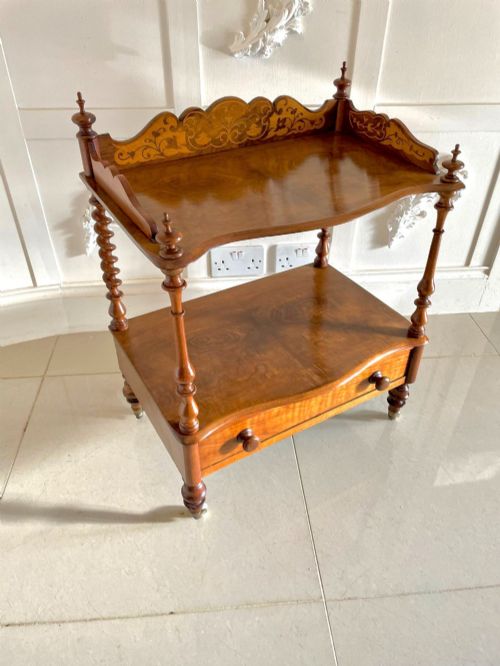
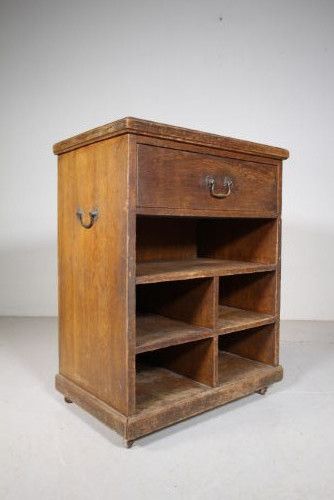
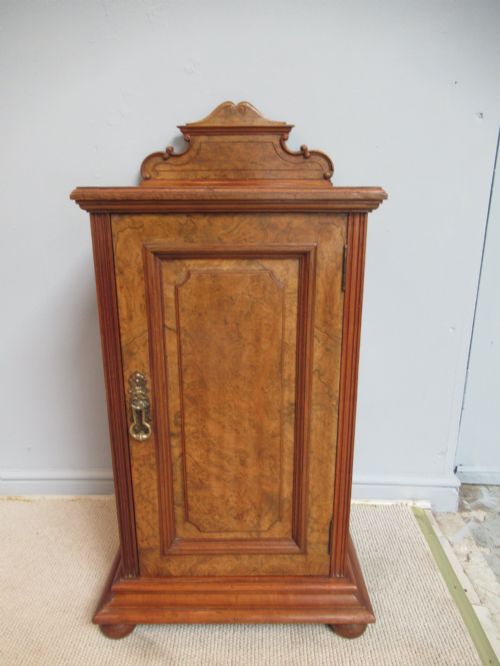
When you search for victorian bed side tables, you meet compact bedside cabinets, cupboards, chests, and occasional tables dating across the nineteenth century. Mahogany and burr walnut examples dominate the selection, often featuring enclosed storage or compact surface space designed for nineteenth-century chambers.
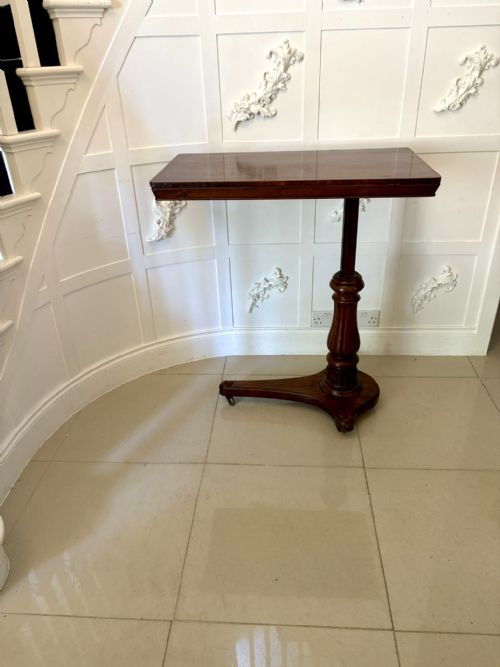
The assortment includes pieces spanning from the mid-nineteenth century up to the Edwardian period, alongside related items such as adjustable reading tables and table lamps. Cabinets with panelled doors or marble tops appear frequently alongside simpler wooden stands.
How they were made
Cabinet makers utilised dense hardwoods such as mahogany and figured burr walnut for the primary structures and decorative veneers. Brass hardware, cast iron mechanisms for adjustable tables, and inset marble tops provide functional contrast to the timber.
Joinery techniques relied on traditional solid wood construction, housing drawers and cupboards securely within sturdy frames. Inlaid details and polished wood finishes highlight the natural grain of the walnut and mahogany.
Victorian Bed Side Tables Retail Price Guide 2026
Typical asking prices for victorian bed side tables among the pieces listed under this phrase on Sellingantiques today, from the lower quarter to the upper quarter. They describe what is for sale here now, not the wider market.
Some nineteenth-century readers clearly possessed strong opinions on angle, judging by the heavy cast iron gears on the adjustable tables.
What varies in quality
The distinction between standard examples and superior pieces rests on the choice of timber and the finesse of the figuring, particularly in burr walnut veneers. Richly figured grain and careful matching across panels elevate a piece above plain utilitarian items.
Structural refinement also marks out better examples, seen in the smooth operation of adjustable reading mechanisms and the quality of inset marble tops. Integrated design details like inlaid decoration demonstrate greater workshop skill than basic construction.
Carters Of London
The Victorian Bed Side Tables Glossary
- Burr Walnut
- A beautifully figured wood veneer taken from the wart or growth on a walnut tree. It creates a swirling pattern prized on nineteenth-century cabinet doors.
- Marble Top
- A stone slab fitted to the upper surface of a cabinet. This provides a durable, wipe-clean surface resistant to water and heat.
- Adjustable Reading Table
- A specialised table fitted with a mechanical column or ratchet. This allows the top to change height or tilt for books and papers.
- Bedside Cabinet
- An enclosed wooden storage piece with a door or drawers. It keeps chamber items tucked away beside the bed.
Victorian Bed Side Tables: Frequently Asked Questions
What materials are used for these tables?
The pieces rely principally on timbers such as mahogany, oak, and burr walnut for their main structures and decorative surfaces.
Additional materials include brass handles, cast iron support frames, leather inserts, and marble tops.
How do cabinets and reading tables differ?
Bedside cabinets provide enclosed storage space behind doors or within small chests to keep items out of sight.
Adjustable reading tables offer open surfaces with mechanical height or tilt functions designed for books and lamps.
How do I date these pieces?
Dating relies on stylistic markers, timber choices, and construction methods characteristic of the nineteenth century.
Specific dates are often supported by workshop stamps, cabinet designs, or documented periods like the Victorian and Edwardian eras.
Where should I place a bedside cabinet?
These compact wooden units fit neatly beside a bed to hold evening essentials and small lamps.
Their enclosed cupboards and drawers also suit smaller rooms needing discreet storage surface space.